

$1.3 Billion Later, the Keystone XL Pipeline Is Back in Play
Jason Kenney says Canada should "finish the damn project" after Donald Trump hinted the long-dead line could be revived as part of a tariff deal — but much of the work quietly restarted months ago.

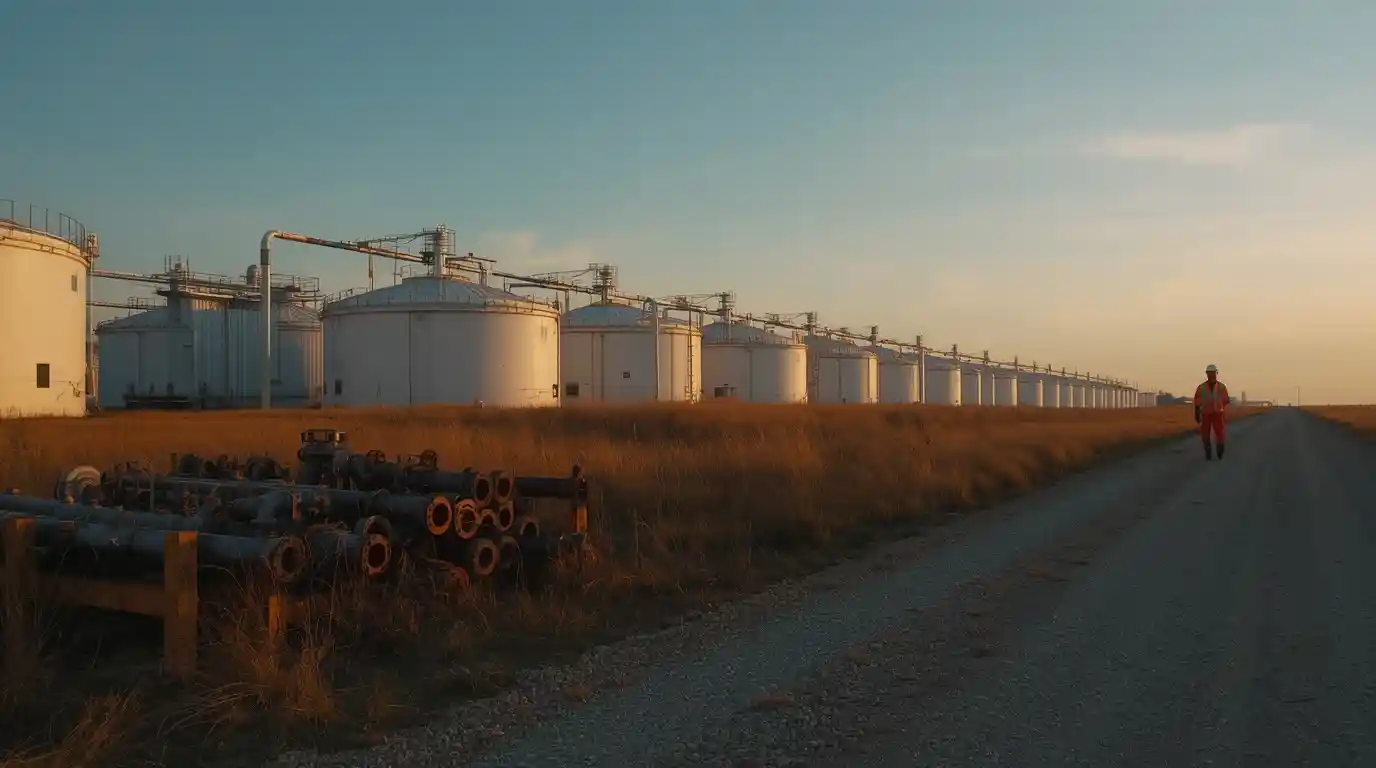
The Keystone XL pipeline is suddenly back in the national conversation, and the man who bet $1.3 billion of Alberta taxpayers' money on it wants Canada to stop hesitating. Former premier Jason Kenney told CTV News on Wednesday that Ottawa and Edmonton should "just get 'er done" — or, as he put it more bluntly, "let's finish the damn project."
The trigger came from Washington. On Tuesday, U.S. President Donald Trump paused the 50 per cent tariffs on Canadian goods that were due to hit the next day, posted that the two countries "have a DEAL!" pending paperwork, and then wrote that the project "long ago killed by Sleepy Joe Biden, may be awoken from the grave." A follow-up post carried an AI-generated image of Trump hauling a pipe out of the earth beside a headstone reading "buried by Biden."
For Albertans, this is not an abstract trade story. Kenney's government put a loan guarantee and direct equity behind construction in 2020. When Biden cancelled the permit on his first day in office, the province wrote off roughly $1.3 billion. That money is gone regardless of what happens next — which is exactly why Kenney argues the smart move now is to salvage something from it.
What Trump Actually Said, and What He Didn't
Trump framed the pipeline as a prize he extracted at the negotiating table. Prime Minister Mark Carney's own statement on the tariff pause never mentioned it. That silence matters. Carney had already floated reviving the line with Trump nearly a year ago, bundled into a broader pitch on energy cooperation and relief for Canadian steel and aluminum producers.
So the claim of a fresh concession is doing a lot of work. Neither leader has produced a signed document, a route, or a start date. What exists is a social media post, a tariff delay, and a private company that will decide on its own timeline whether any steel gets welded.
Why the Keystone XL Pipeline Never Fully Died
Here's the part missing from most coverage: significant pieces of this were already moving before Trump's post. The corridor, the permits and the customers have been quietly reassembled over the past year under different names.
A Cross-Border Permit Signed Back in April
Trump signed an executive order in April 2026 approving a crude line running through eastern Montana and Wyoming, built by U.S.-based Bridger Pipeline in partnership with Calgary's South Bow Corp. It is designed to move about 550,000 barrels a day across roughly 1,040 kilometres, and it leans on infrastructure already sitting on the Canadian side of the border.
465,000 Barrels a Day Already Under Contract
South Bow — spun out of TC Energy in late 2024 — ran an open season and reported securing roughly 465,000 barrels per day in 20-year shipper commitments from a broad group of producers. Those contracts underpin its proposed Prairie Connector project, with a final investment decision targeted for mid-2027. That is real money from real customers, not a political gesture.
The Steel Already Sitting in Alberta Ground
Kenney's core argument rests on sunk assets. Construction started at Hardisty, the tank-farm town northeast of Red Deer where much of Western Canada's crude is gathered. "We paved the way," he told CTV, adding that the country shouldn't simply leave that pipe stuck in the ground.

The Case Kenney Is Making to Ottawa
His pitch is less about oil than about leverage. Give the U.S. president a visible win, the logic runs, and Canada buys itself calmer trade weather. He also leaned on supply security, noting the U.S. needs a dependable source of energy and Canadian barrels could be it.
One of the best ways to deal with Trump's aggression against the Canadian economy is to give him a win, which is also a win for Canada.
The numbers support the security half of that argument. The Public Policy Forum's Jay Kholsa has pointed out that about one-fifth of daily American oil consumption already comes from Canada. Adam Fremeth of Western University's Ivey Business School has attributed the shift in tone to changed economics, American ownership in the deal, and energy-security jitters from Middle East conflict.
Will Any of This Reach the Pumps?
Not soon, and probably not much. Even on the most optimistic schedule, an investment decision lands in mid-2027, with construction and commissioning years behind it. Canadian pump prices are driven far more by refinery margins, the loonie, provincial taxes and global crude benchmarks than by one export line to Texas.
The clearer effect is on the discount Canadian heavy crude takes against U.S. benchmarks. More export capacity historically narrows that gap, which flows through to producer profits, Alberta royalties and, eventually, provincial budgets. The original line was sized to move more than 800,000 barrels a day — over a 12 per cent lift to Canadian crude exports.
What to Watch Between Now and Mid-2027
Skip the social media posts and track the things that cost money. A few concrete markers will tell you whether this is real:
- Whether the Canada-U.S. tariff agreement is actually signed, and whether energy language appears in the text
- South Bow's quarterly updates — the company posted US$134 million in Q2 profit and has said it "moved on" from the old project while still exploring its existing corridor
- Any move by Premier Danielle Smith to commit provincial capital again, after the last attempt cost $1.3 billion
- Whether producers convert commitments into firm shipping contracts on a specific route
If you hold Canadian energy stocks, watch the shipper commitments rather than the headlines — contracts move share prices; posts don't. And if you're an Alberta taxpayer, the question worth asking your MLA is a simple one: if this line gets built, does the province put money in again, or does private capital carry the risk this time?




Comments 0