

17% of Brits Are Cooking Separate Meals at the Same Table
A YouGov survey and a Telegraph confession have put "food divorce" back in the spotlight — and the weight-loss jab boom is quietly accelerating it.

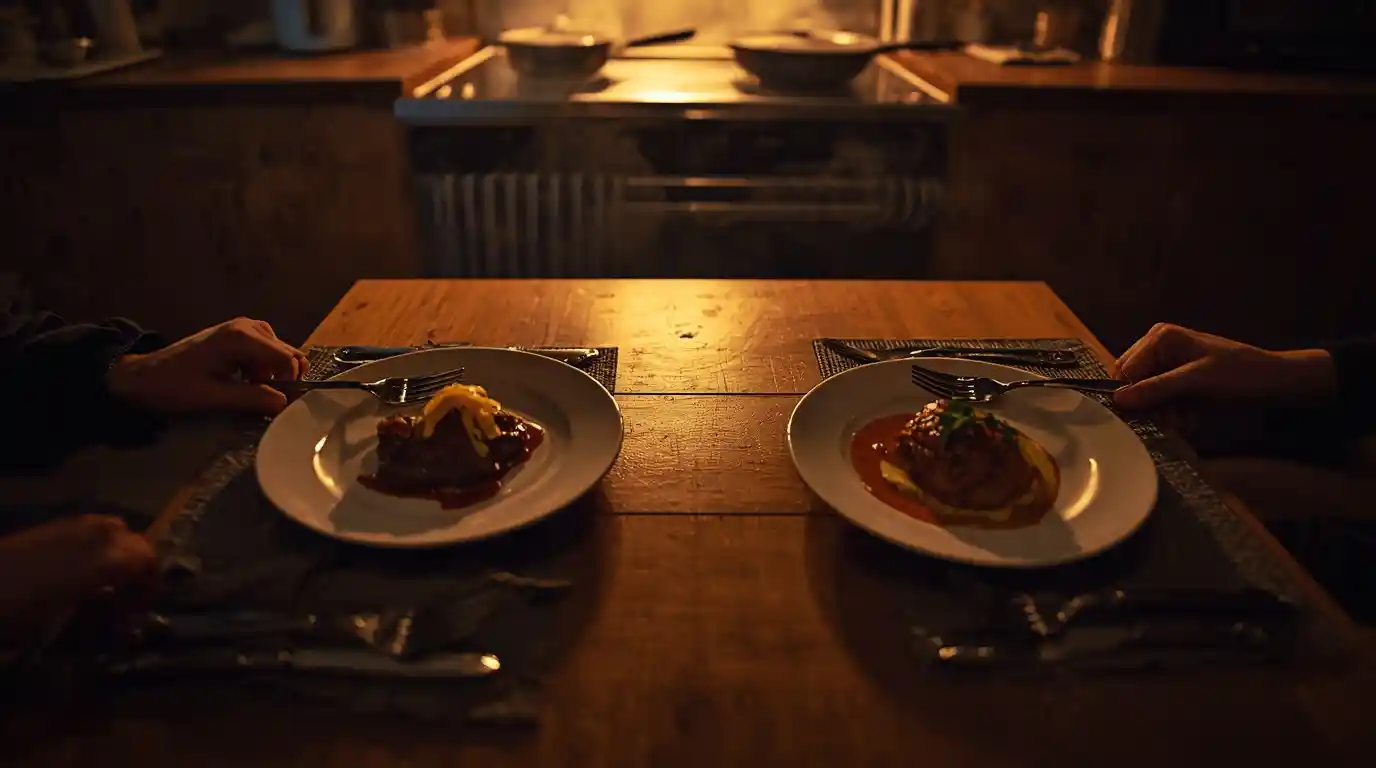
Cooking separate meals for the person you married sounds like the setup to a joke, but a YouGov survey carried out for the frozen food company Fieldfare found that 17 per cent of British adults often eat entirely different dishes while sitting at the same table. Nearly half, 49 per cent, regularly alter a shared dish to suit their own tastes or needs. The family dinner is still happening. It has just stopped being one dinner.
The subject resurfaced on 15 August, when the Telegraph published a first-person piece headlined "My husband cooks like a Michelin-star chef. It's making me miserable." The reaction split fast. Some readers heard ingratitude. Others recognised the situation instantly — dinner as a nightly performance you are expected to applaud, served at a time somebody else chose, in portions somebody else decided.
This matters more than it sounds. The shared evening meal has done a lot of quiet work in British homes for decades. It is when people catch up, argue properly, and notice that the other one has had a bad week. When couples start plating up separately, the shift is almost never announced. It happens one convenient Tuesday at a time, and then it is simply how things are.
What's Behind the Rise in Cooking Separate Meals
Three things moved at once. Supermarket ready meals and premium frozen ranges got good enough that the effort gap between cooking a proper dinner for two and reheating something decent for one has nearly vanished. Household shapes changed too: roughly a third of UK homes now contain a single person, and more than half of British families have both parents working full time. Then came the injections.
The Weight-Loss Jab Nobody Planned Dinner Around
University College London researchers estimated that about 1.6 million adults across England, Wales and Scotland used weight-loss drugs such as Mounjaro or Wegovy between early 2024 and early 2025, drawing on responses from 5,260 people. Four in five of those taking medication purely to lose weight were on Mounjaro. A further 3.3 million said they were interested in starting within the following year.
Dr Leila Fathi of the Centre for Food Policy at City St George's, University of London, has flagged the household consequence. Nausea and a blunted appetite are common side effects, and they rewrite what a kitchen produces. One partner still wants a Sunday roast. The other wants four forkfuls of something plain, eaten slowly, at nine o'clock.

Three Reasons Couples Split the Menu
The Fieldfare research asked people why they end up eating something different from everyone else at the table. The answers are less dramatic than the headlines suggest, and only one of the three is genuinely a medical issue.
Plain Dislike, Not Diet
Forty-five per cent said they simply don't like what the others are having. That is by far the biggest single reason, and it is the one nobody wants to admit at a dinner party. It also explains why the pattern skews to certain ages: 55 per cent of 35- to 44-year-olds said they prefer a different meal, and 56 per cent of 18- to 24-year-olds eat their main meal alone.
Vegan, Vegetarian and Everything Adjacent
Fifteen per cent pointed to a different diet, usually vegan or vegetarian. This is the version households handle best, because it is planned. Couples who have negotiated a meat-free partner for years tend to build a shared base — the same curry, the same traybake — and split at the protein stage rather than running two kitchens in parallel.
Allergies and Intolerances
Thirteen per cent cited an allergy or intolerance, and that share is likely to grow. Research from Imperial College London published in 2024 found that new food allergy cases in the UK almost doubled over a decade. Unlike fussiness, this one is non-negotiable, and it is the reason many families keep two chopping boards and two sets of tongs.
When Separate Plates Signal Something Worse
Not every split menu is a problem. Shift work alone accounts for plenty of it. But counsellors draw a line between practical separation and emotional separation, and the tell is usually whether the couple still sit down together at all, on any night of the week.
"Separate plates, separate lives." Christina Fraser, a BACP-accredited counsellor in London, uses the phrase as shorthand for couples who have stopped eating together — a habit she says can signal "emotional distance, unresolved conflict, or parallel lives".
The Telegraph writer's complaint fits that frame better than it first appears. The problem she described wasn't bad food. It was food as a one-way transaction: effort delivered, gratitude required, no say in any of it. Resentment at the dinner table is almost never about the dinner.
What to Do If Dinner Has Become a Battleground
The practical fix is rarely a full food divorce. Cooking separate meals every night doubles the shopping, doubles the waste and quietly pushes up a weekly grocery bill that most households can't afford to inflate. A cheaper middle path works better for the majority of the couples in that 17 per cent.
- Build meals with a shared base and a split finish — one pot of sauce, two proteins, two plates.
- Alternate who chooses, and make the choice binding, so effort and control land with the same person.
- Ring-fence two or three nights a week as genuinely shared meals; let the rest be whatever is easiest.
- If a weight-loss jab is involved, plan around the appetite dip rather than treating each refusal as a rejection.
Watch the pattern, not the plate. If you have gone from occasionally eating apart to never eating together, and neither of you can remember when that changed, the food is the symptom rather than the cause. Pick one night this week, agree the menu jointly, and see whether the meal feels like company or like an obligation. That answer is the useful one.




Comments 0