

210 Stolen Mozart Figurines Later, Salzburg Called It Off
Two-thirds of a 320-piece birthday tribute in Mirabell Gardens vanished in four weeks, and the artist says it wasn't tourists grabbing souvenirs.

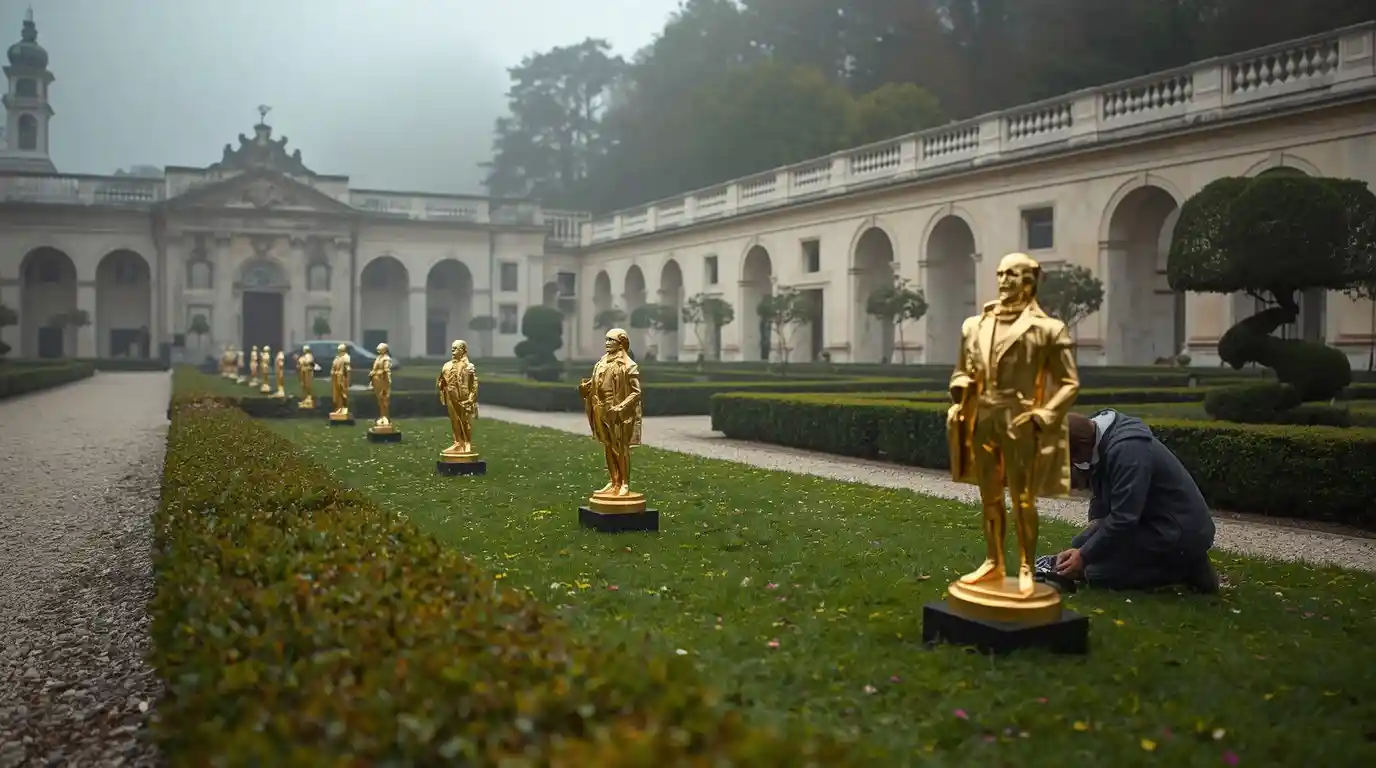
Salzburg has shut down its summer showpiece weeks ahead of schedule, beaten by 210 stolen Mozart figurines. The Internationale Stiftung Mozarteum, the foundation that runs the composer's museums and archive, confirmed on Wednesday that two-thirds of the small gold-coloured statues it had placed around the city's Mirabell Gardens had simply disappeared. The exhibition was meant to stand until August 30.
The piece was called an homage to Mozart at 270 — he was born in Salzburg in January 1756 — and it came from German conceptual artist Ottmar Hörl, who works in cheap, mass-produced polymer rather than bronze. Three hundred and twenty statuettes went out on July 15, each under 50 centimetres tall, each showing the composer with his dog, Pimperl. They sat in the gardens, around his former living quarters and in several pavilions.
Here's the part that stings. Hörl's whole method depends on repetition: one figure is a knick-knack, hundreds of identical figures fill a space and change how you read it. Strip out 210 and the idea collapses. At the roughly €100 the foundation had attached to each figure for sale — call it about C$150 — the missing stock is worth north of C$30,000, but the artwork lost far more than that.
Why 210 Stolen Mozart Figurines Ended the Show
The bleeding was steady rather than sudden. More than 80 figures had already gone within the first two weeks, and by August 12 the count reached 210 — an average of about seven and a half a day for four straight weeks. The foundation said the illegal removals had become rampant and that no replacements would go in, because the manufacturer is away for the summer holidays.
Organisers did hold spares, just nowhere near enough. For a while they thinned the display out, spacing the survivors further apart to cover the same ground. That bought time, not much else. The roughly 110 figures still accounted for have now been taken in, and the public part of the project is formally over.
The Artist Has Watched This Happen Before
Hörl has been building crowd-sized sculpture installations across Europe for decades — Einstein in Ulm, Goethe in Frankfurt, Brecht in Augsburg, Rimbaud in Charleville-Mézières. Wherever the figures go outdoors and within arm's reach, some percentage walks. Salzburg is the extreme case, not the first case, and the pattern across his earlier projects is instructive.
Bayreuth: Every Wagner Gone in 10 Days
His Richard Wagner installation in Bayreuth, the Bavarian town synonymous with the composer's festival, was cleaned out completely inside ten days. Not thinned, not damaged — emptied. Measured as a share of the work, that remains the worst result of the lot, and it is the reference point Hörl himself reaches for when asked about Salzburg.
Bonn: 700 Beethovens and a Guarded Square
In 2019 Hörl filled Bonn's Münsterplatz with 700 green and gold Beethovens, each about a metre tall, from May 17 to June 2. The grounds were supervised. Two men were still caught mid-theft one Sunday morning, and the statue they'd taken turned up standing outside a house in the city centre before being put back. Scale plus staffing changed the outcome.
Nuremberg: 7,000 Hares in One Market Square
His best-known stunt had nothing to do with composers. In 2003 he covered Nuremberg's main market square with 7,000 rabbits riffing on Albrecht Dürer's famous watercolour hare, and in 2014 a pink version of the same hare appeared on the roof of Vienna's Albertina museum. Height and quantity, it turns out, are a form of security.
Was This Organized, or Just Souvenir Hunting?
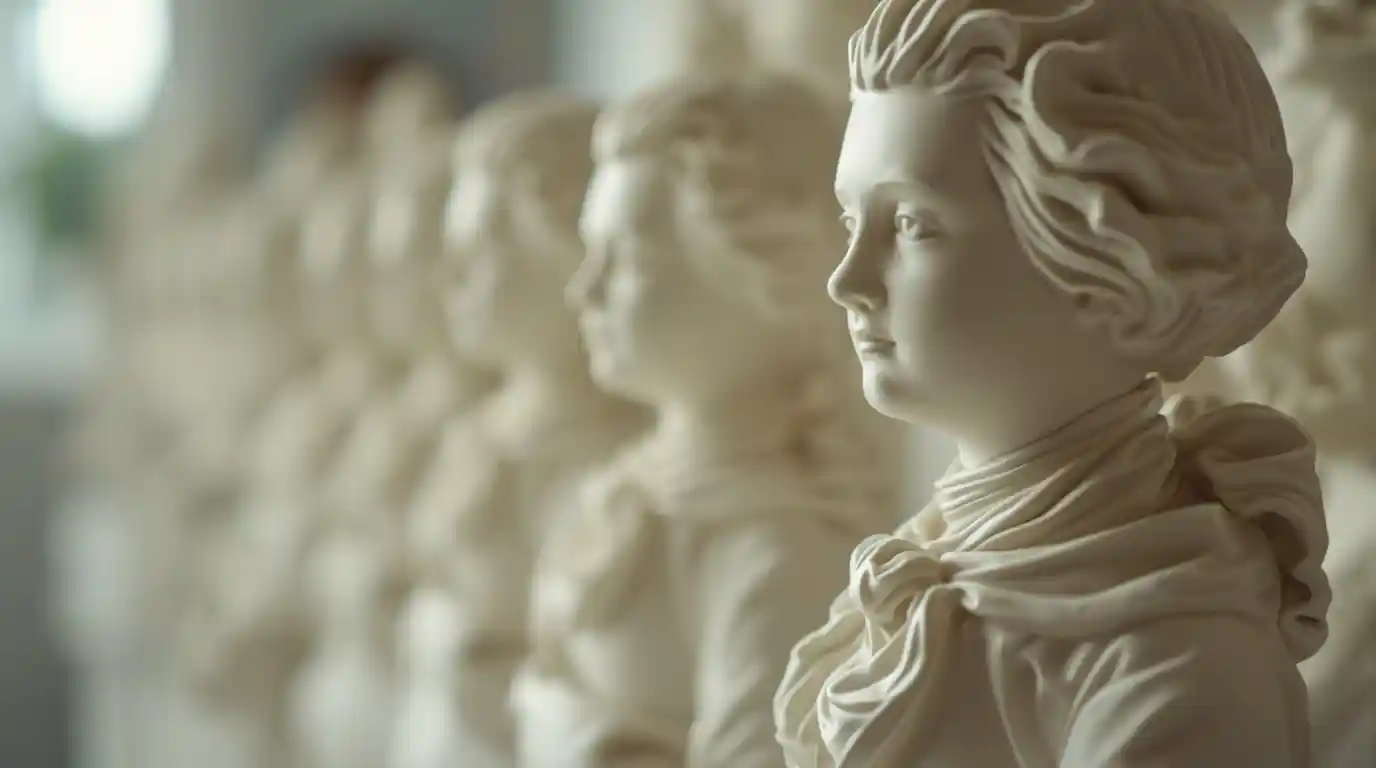
Hörl doesn't think tourists did this one figure at a time. He has said the pieces were most likely lifted at night, after the gardens closed, and called it organized theft. The arithmetic supports him: seven a day, sustained for a month, in a fenced formal garden, is a supply operation rather than impulse.
The worst thing for an artist is when his work dissolves.
There's an uncomfortable second layer. Because Hörl deliberately makes his editions affordable and sells them through his own shop, a gold Mozart is both easy to grab and easy to resell to someone who won't ask questions. Cheap-to-produce and collectible is a difficult combination to leave unattended on grass.
What It Means If Salzburg Is on Your Itinerary
Canadians heading to Austria in late August should cross the figure display off the list — it's finished, and nothing is going back out this season. Mirabell Gardens itself is unaffected and still free to walk through, and the Mozarteum's two museums, the composer's birthplace on Getreidegasse and the family residence, are open as normal. That's where the actual Mozart material lives anyway.
If you wanted a souvenir, the legitimate route is buying one of Hörl's editions directly rather than hunting a suspiciously cheap gold Mozart on a resale site. Anything surfacing now at a bargain price has an obvious provenance problem, and buying it funds the next clearance.
The Design Problem Nobody Has Solved
Open-air multiples are a genuinely brilliant format — they turn a public square into a gallery for the price of a plastic run, and Canadian cities lean on the same trick every summer with sidewalk sculpture trails and biennale pieces. But the format's charm is exactly its weak point: work you can touch is work you can carry. The available fixes all cost something. Bolt the pieces down and you lose the casual, scattered look. Fence them and the art stops being public. Staff the site overnight, as Bonn did, and the budget balloons. Or you accept attrition and build in spares, which is what Salzburg tried before the losses outran the stock.
Watch for two things over the next few weeks: whether the Mozarteum brings the figures back once the manufacturer returns from holiday, and whether any of the 210 turn up in Austrian police recoveries or on classified-ad sites. If you spot a gold Mozart with a small dog at his feet in an online listing, screenshot it and send the link to the foundation rather than bidding — that's the only realistic way any of these come home.
Comments 0