

$2.5 Million Per Job at the Tomago Aluminium Smelter
Canberra and NSW have committed $2.5 billion over a decade to keep Australia's largest aluminium smelter running — and the arithmetic behind that number is doing the arguing.

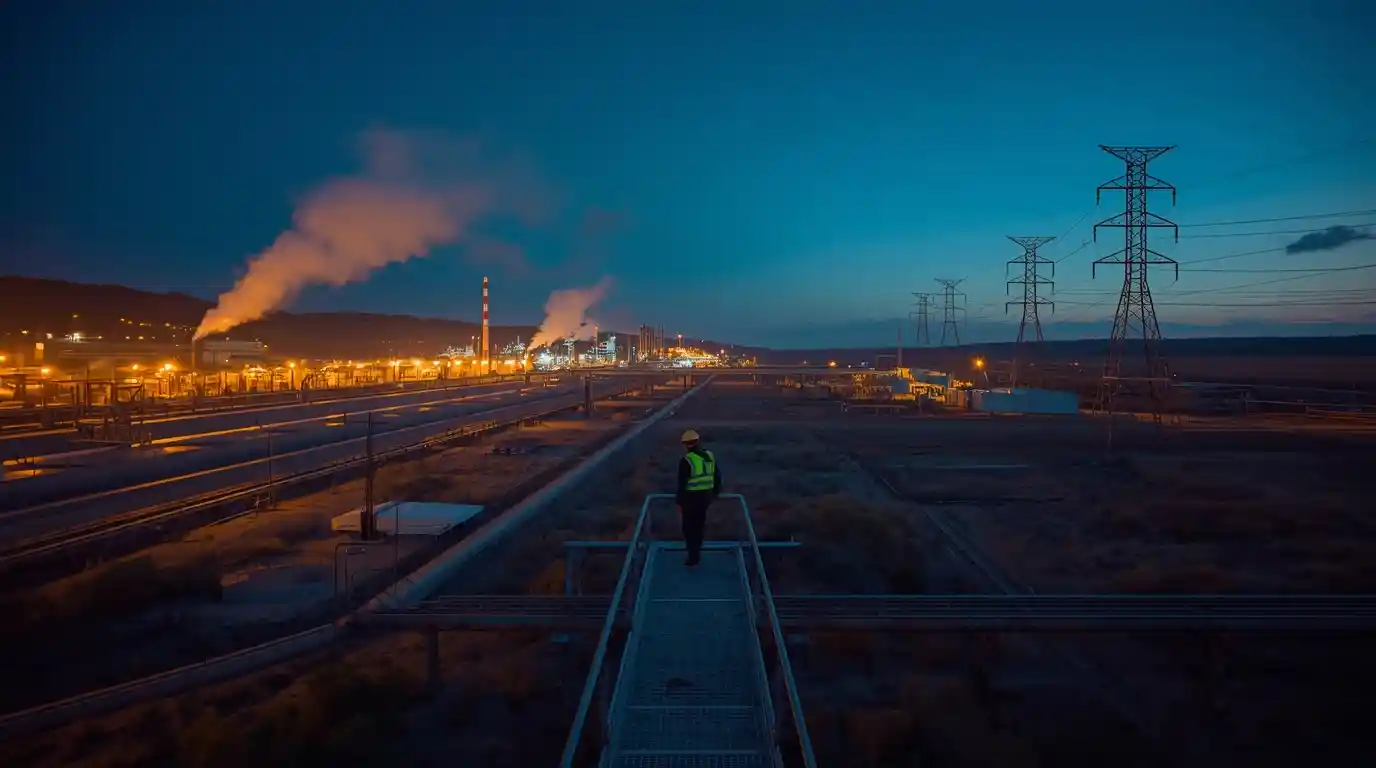
The Tomago aluminium smelter will keep its pots hot for another decade, and taxpayers are covering the shortfall — about $2.5 billion over ten years, which works out at roughly $2.5 million for each of the plant's 1,000 direct jobs. Prime Minister Anthony Albanese and NSW Premier Chris Minns announced the package on Thursday at the Hunter site itself, with the federal and state governments splitting the bill down the middle.
Count the wider workforce and the arithmetic softens. Add the roughly 200 contractors on site plus the suppliers and Hunter businesses that depend on the plant, and analysis by Michael West Media puts the figure closer to $417,000 a job. Still a large number. What sharpens it is the other one in the room: Rio Tinto, Tomago's majority owner, booked a net profit of US$6.7 billion for the half year, up 47 per cent on the same period a year earlier.
That gap — a very profitable parent company, a publicly funded rescue — is why this deal has landed harder than the four industrial packages before it. Supporters argue it isn't a bailout in any conventional sense. Opposition Leader Angus Taylor and others counter that a business which can't cover its own power bill shouldn't be handed one by the state.
Where the $2.5 billion actually goes
Not into Rio Tinto's pocket, at least not directly. From 2028, the two governments will underwrite $250 million a year for ten years, covering the difference between the market price of electricity and the rate Tomago has locked in under long-term supply contracts. Snowy Hydro is the entity doing the work, tasked with assembling around three gigawatts of wind and solar and delivering it at a price the smelter can live with.
The structure also extends concessional finance to the renewable developers building that generation, which is the part its defenders emphasise — public money de-risking projects that would otherwise struggle to reach financial close. Tomago isn't a passenger either. The company has committed at least $1.1 billion of its own capital over the decade, including $100 million for decarbonisation work, and signed up to 50 per cent renewable power by 2030 and 100 per cent by 2035.
Why the Tomago aluminium smelter needed saving
Power is close to half the cost base
Smelting aluminium is essentially a process for converting electricity into metal. At Tomago, energy accounts for roughly 40 per cent of operating costs, a level of exposure almost no other Australian business carries. The plant draws about 12 per cent of everything NSW consumes, which makes it the single largest electricity customer in the country by a wide margin.
The 2028 contract cliff
Tomago's current supply agreement dates from an era of cheap, abundant coal power and expires in 2028. The company has been shopping for a replacement since 2022 without finding one at a price that lets it compete against heavily subsidised producers in China and the Gulf. Management warned it would have to close. Once a smelter's pots freeze solid, restarting is technically brutal and commercially close to impossible.

What the country gets in return
The plant produces up to 590,000 tonnes of aluminium annually, ships around $3 billion in exports and contributes roughly $2.2 billion a year to the economy. Industry Minister Tim Ayres has framed the intervention in terms of what disappears alongside a closure — the engineers, the maintenance trades, the supply chains that don't reassemble once they scatter.
If Australia doesn't produce aluminium, then the knock-on effect in other industries is significant.
Five rescues in 18 months: the running tally
Tomago is not an isolated case. Since February 2025, Australian governments have committed roughly $7.74 billion to keep heavy industry alive:
- Tomago Aluminium, NSW — $2.5 billion, 1,000 direct jobs
- Whyalla Steelworks, SA — $2.4 billion, 1,500 jobs
- Boyne Smelter, Gladstone — $2.0 billion, 1,000 jobs
- Mount Isa copper, Qld — $0.6 billion, 600 jobs
- Nyrstar, Hobart and Port Pirie — $0.24 billion, 1,400 jobs
Across all five, the average lands near $1.4 million per direct job. Rio Tinto alone now sits inside two of them, Tomago and Boyne, worth a combined $4.5 billion. Whyalla, announced in February 2025, was the package that set the template — and it remains the cautionary one, because the money went in before a buyer was secured.
What it means for your power bill
Here's the part that gets lost. A customer taking 12 per cent of the state's electricity is not just a cost — it's the anchor demand that makes new wind and solar farms bankable. Underwriting the Tomago aluminium smelter is, in effect, underwriting three gigawatts of generation that gets built regardless, and Tomago has agreed to curtail its load when the grid is under strain. Whether that translates into lower household bills or simply avoids higher ones is the open question.
Watch three things. First, whether Snowy Hydro can actually contract that generation at the assumed prices — the $250 million a year is a gap payment, so if wholesale prices run hot the real cost climbs above $2.5 billion. Second, the conditions: does the deal claw money back if Rio's aluminium earnings surge? Third, who queues up next. Emeritus Professor Roy Green of UTS has already floated the model as a template for Whyalla. If it becomes the default answer for every energy-intensive plant in the country, the arithmetic on the next one deserves the same scrutiny as this one.



Comments 0