

39% Lower Dementia Odds With Estrogen-Only Hormone Therapy
A Stanford Medicine team checked autopsied brains, not just medical charts, and found less Alzheimer's damage in women who had taken estrogen after menopause.

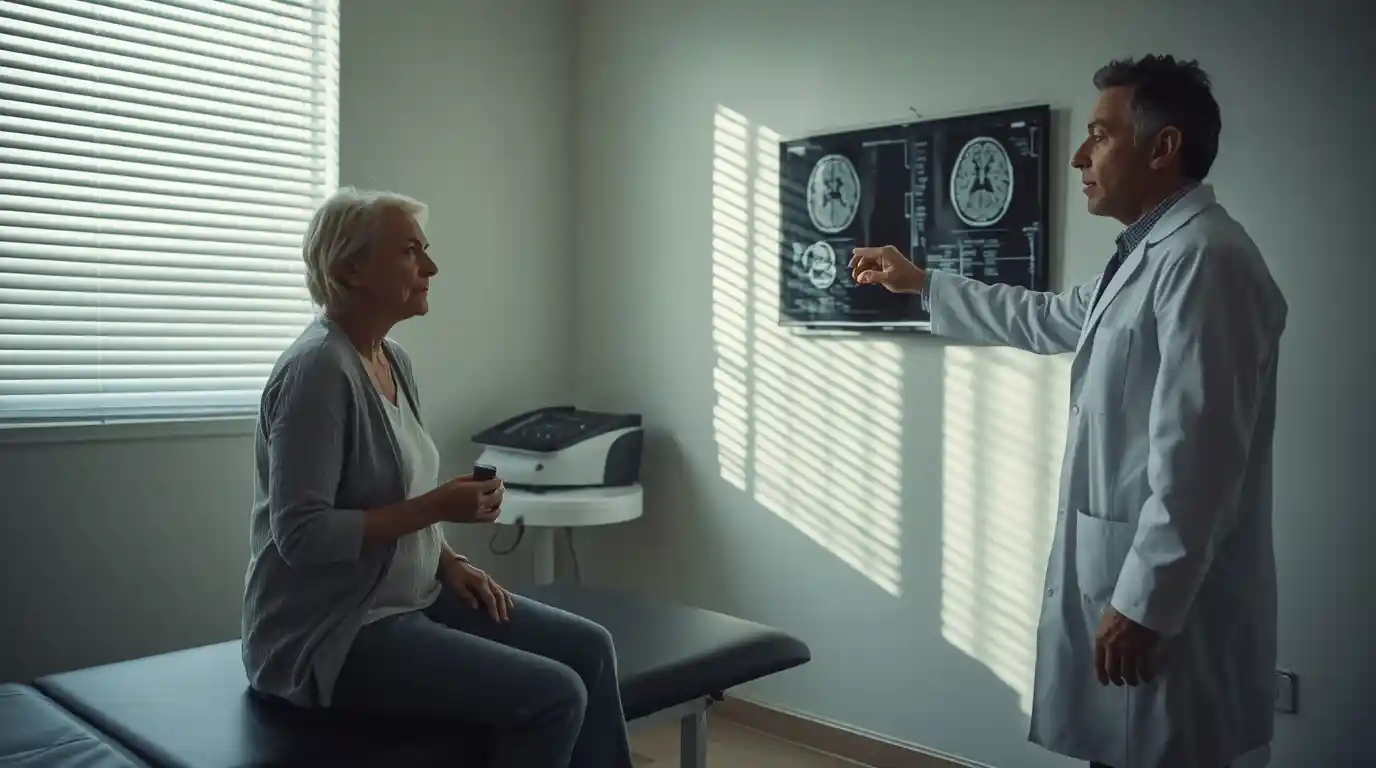
Women who used estrogen-only hormone therapy after menopause were far less likely to be diagnosed with dementia, and their brains carried less Alzheimer's damage, according to a Stanford Medicine study published August 12 in the journal Neurology. The size of the gap surprised even the researchers who found it, and it cuts directly against advice American women have been given for more than twenty years.
Here are the numbers. Compared with women who never took hormones, estrogen users had 39% lower odds of ever receiving a clinical dementia diagnosis. On autopsy, they had 35% lower odds of showing the two hallmarks pathologists look for in Alzheimer's disease: sticky amyloid plaques and the twisted tau tangles that build up inside dying neurons. They also did better on memory testing and stayed independent longer.
The autopsy part is what sets this apart. Most research linking hormones to brain health relies on billing codes, chart diagnoses or blood markers, all of which can be wrong. This team pulled from two long-running databases covering 21,462 participants, then narrowed to women whose brains were examined after death — 258 who had taken oral estrogen alone against 2,701 who had never used hormones. Average age was around 70.
What the brain tissue actually showed
Plaque counts were lower. Tangle counts were lower. The density of individual plaques was lower too. Living-patient biomarkers pointed the same direction: estrogen users had more amyloid-beta protein floating in blood and spinal fluid, which sounds backward until you realize it means less of that protein was getting dumped into the brain as plaque. The team adjusted for age, education, high blood pressure, race and APOE4, the gene variant that raises Alzheimer's risk.
Senior author Hadi Hosseini, an associate professor of psychiatry and behavioral sciences, said the study is unusual because it checked every standard used to diagnose Alzheimer's, including what he called the gold-standard outcome — the hallmarks visible in autopsied brains. Blood and spinal fluid tests have improved a lot, he noted, but they can't tell you how much damage there is or exactly where it sits.
Why estrogen-only hormone therapy got a bad name
If your mother stopped taking hormones abruptly sometime around 2003, this is why.
The trial that emptied the medicine cabinet
The Women's Health Initiative Memory Study tracked 4,532 postmenopausal women aged 65 and up across 39 US clinical centers for an average of 4.2 years. Half took Prempro, a combined estrogen-plus-progestin pill; half took placebo. Published in JAMA in 2003, it found the drug roughly doubled the risk of probable dementia — 40 cases in the hormone group versus 21 on placebo, or about 23 extra cases per 10,000 women each year.
What that trial never tested
Two things got lost in the panic. First, that result came from a combination pill, not estrogen alone. Second, every woman in it was already 65 or older when she started, meaning many began a decade or more after menopause. Doctors now call this the timing hypothesis: hormones may protect a brain still in transition and do nothing, or harm, once damage is underway. The new work leans the same way.

The caveats you shouldn't skip
This is an observational study. It shows association, not cause, and women who get prescribed hormones and stay on them tend to differ from women who don't in ways no statistical adjustment fully erases. The findings cover oral estrogen-only formulations, which are typically given to women who've had a hysterectomy. Combined estrogen-progestin products couldn't be assessed — too few autopsies. Topical estrogen users were excluded outright.
Other evidence disagrees. A 2025 systematic review in The Lancet Healthy Longevity found no signal that menopausal hormone therapy raises or lowers dementia risk either way, and a European Society of Endocrinology guideline the same year said hormones shouldn't be prescribed to prevent or treat dementia, citing low certainty in the evidence.
What changed on US prescription labels
The regulatory ground already shifted. On November 10, 2025, the FDA announced it was pulling the boxed warnings from estrogen-containing menopause products, including the probable dementia language, and adding age-specific guidance about starting treatment before 60 or within ten years of menopause. One boxed warning stays: endometrial cancer risk for systemic estrogen-alone products.
For a long time, the going recommendation was "Don't use MHT for memory decline." This study flies in the face of that recommendation. — Jennifer Bruno, lead co-author
What to do if you're weighing hormones
Nothing here justifies starting estrogen purely to protect your brain, and no doctor should offer it on that basis yet. What it does justify is a real conversation. If you're having hot flashes, night sweats or sleep collapse in your fifties, the calculation your physician was taught in 2005 may no longer be the right one — bring up the label change and ask whether timing works in your favor.
Watch for two things next. Whether an independent group can reproduce the autopsy result, and whether anyone funds a randomized trial in women who start estrogen at menopause rather than fifteen years later. The NIH paid for this work. Until that trial exists, treat 39% as a strong lead, not a settled answer, and make the decision on your symptoms.




Comments 0