

449 Feet on the First Pitch of the Joshua Báez Debut
A 23-year-old from Dorchester homered on the first big-league pitch he ever saw, then twice more off the same pitcher, becoming the first player ever to go deep in his first three career at-bats.

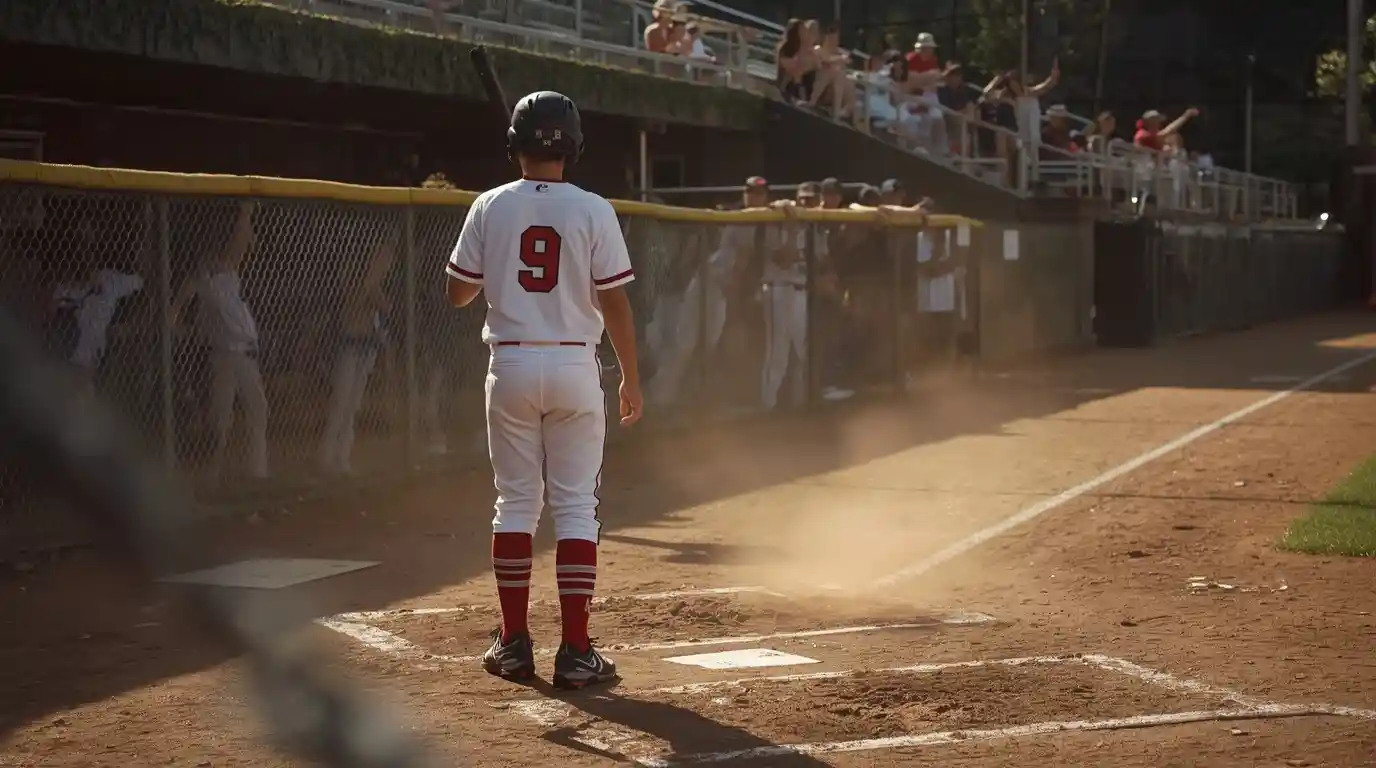
The Joshua Báez debut lasted four at-bats, and three of them ended in the seats. On Saturday at Wrigley Field, the 23-year-old outfielder swung at the very first major league pitch he ever saw — a 93.4 mph fastball from Cubs starter Matthew Boyd — and drove it 449 feet to center. Then he did it twice more, off the same pitcher, on two completely different pitches.
Nobody in more than a century of major league baseball had done that. Báez is the first player to hit three home runs in his debut, and the first to homer in each of his first three career at-bats. St. Louis won 8-4. He finished 3-for-4 with five runs batted in, which means every hit he has recorded in the big leagues so far has left the ballpark.
What makes it stranger is how sudden it was. Báez was called up from Triple-A Memphis on Friday night. Roughly 30 members of his family got to Chicago in time to watch. He was born in Boston, spent part of his childhood in the Dominican Republic, and grew up in Dorchester, about five miles from Fenway Park — the kind of detail that would have made a Red Sox story, if the Cardinals hadn't drafted him first.
How the Joshua Báez Debut Actually Unfolded
All three homers came off Boyd, an established left-hander having a solid year, and none of them looked alike. The first was a mistake fastball annihilated to dead center at 108.6 mph off the bat. The second took six pitches to arrive and came on a changeup. The third was a slider that Báez didn't pull at all — he shot it the other way, a low line drive that carried just enough.
- First inning: 93.4 mph fastball, 449 feet to the center-field bleachers, 108.6 mph exit velocity
- Third inning: changeup, 382 feet down the left-field line
- Sixth inning: slider, 368 feet to right field, 99.8 mph exit velocity
That variety is the part scouts will replay. A rookie ambushing one fastball is normal. Covering a changeup and then staying back on a breaking ball, in the same afternoon, against a pitcher actively adjusting to him, is a different skill. Cubs manager Craig Counsell said afterward that Báez hit three different pitches for home runs and simply had a great game.
Why No One Had Ever Managed This Before
Multi-homer debuts happen, but rarely. Trevor Story hit two for Colorado in April 2016. J.P. Arencibia did it for Toronto in 2010, Bert Campaneris for Kansas City in 1964. Earlier this season alone, Chase DeLauter and Jose Fernandez each managed two in their first game. Three had never been done, by anyone, ever.
The closest historical parallel is Bob Nieman of the St. Louis Browns, who homered in his first two career at-bats in 1951 and then stopped. Cardinals fans may also remember Keith McDonald, who went deep in his first two career at-bats in 2000 — but across two separate games. Báez is also the first St. Louis position player to homer on the first pitch he saw since Chris Richard in July 2000.

Who Is the 23-Year-Old From Dorchester?
A $2.25 Million Bet in the Second Round
St. Louis took Báez 54th overall in the 2021 draft and paid him a $2.25 million signing bonus, well above slot for that range. Pre-draft evaluations were blunt about the profile: enormous raw power, real questions about contact. One widely circulated scouting line suggested that if everything clicked, he could have peak Giancarlo Stanton-type seasons.
Four Seasons of Slow, Ugly Progress
Everything did not click quickly. It took parts of four seasons for Báez to reach High-A. During a 2023 stint in Low-A, he struck out in more than a third of his plate appearances — the kind of number that ends careers quietly. He was not a top-of-the-list prospect heading into this year, and he wasn't close to a call-up.
The Triple-A Season That Forced the Issue
Then 2026 happened. Across 103 games in Memphis, Báez hit .256/.328/.573 with 34 home runs — the most in Triple-A — plus 90 RBIs, 21 stolen bases and a .901 OPS. The strikeout rate had already come down in 2025, when he posted 20 homers and an .884 OPS between High-A and Double-A. The power was never in doubt. The at-bats finally caught up.
What It Meant Inside the Clubhouse
Manager Oliver Marmol described a rookie who looked oddly settled all afternoon, and a dugout that stopped functioning as a dugout.
It became must-watch TV. No matter what you were doing, you were going to stop to watch it.
Báez was less composed about it later, calling the day unreal and a dream come true, and admitting that getting one hit would have been enough. The win nudged St. Louis to 62-61, hanging around the fringe of the playoff conversation rather than out of it — which is exactly the situation where a sudden power bat matters most.
What to Watch Over the Next Two Weeks
Enjoy the highlight, but set expectations honestly. One game is not a scouting report, and the concern with Báez has always been contact, not thump. The number to follow isn't home runs — it's how often he swings and misses, and whether pitchers start burying breaking balls below the zone once the league's advance reports circulate. That adjustment usually arrives within a week.
If you're a Cardinals fan, the practical question is playing time: whether Marmol pencils him into a corner outfield spot every day or eases him in against right-handers only. Watch the lineup card for the next homestand. If Báez is out there against left-handed starters too, the organization believes this is real — and not just the best single afternoon anyone has ever had.




Comments 0