

$49 Billion Deal, and the Churchill Falls Referendum Is Off
Premier Tony Wakeham says a federal partnership and the U.S. trade war forced him to swap a promised public vote for a one-day sitting of the legislature on Sept. 14.

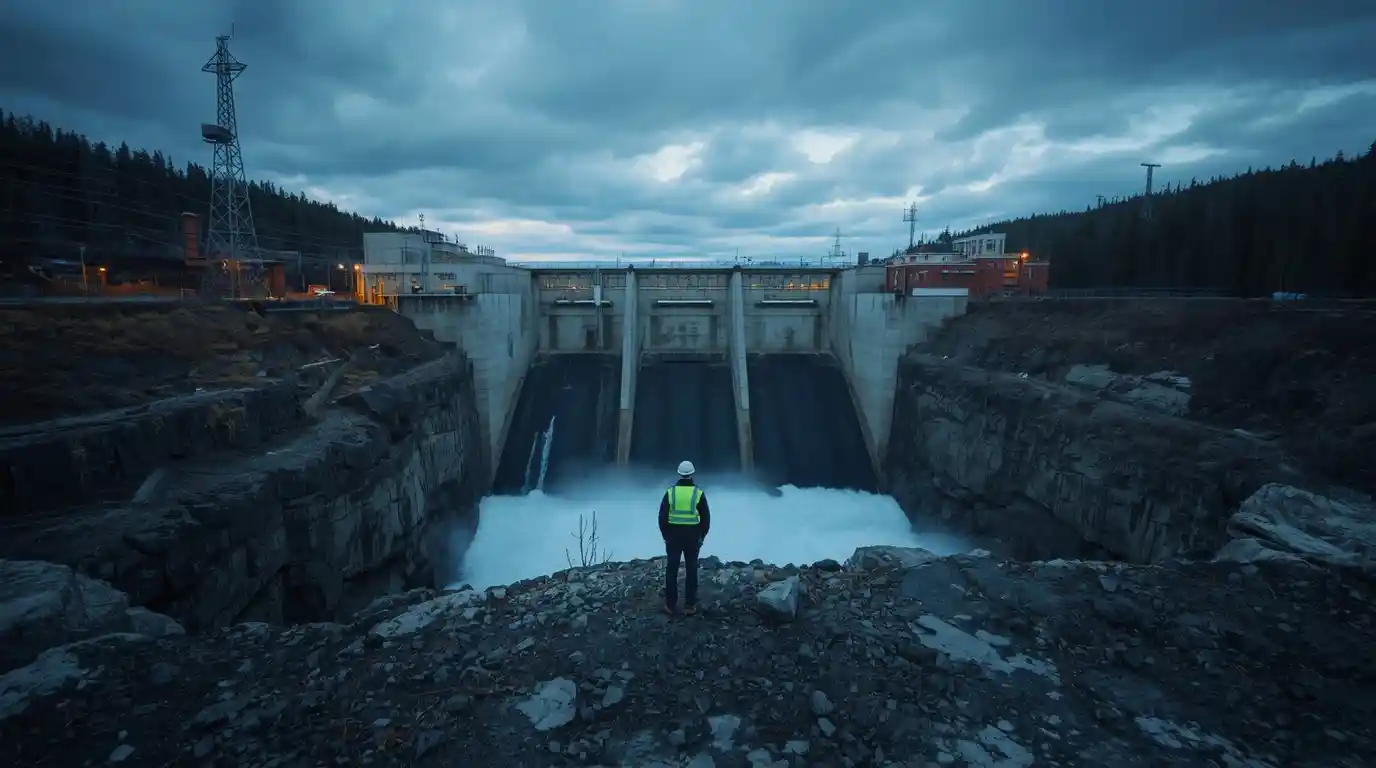
The Churchill Falls referendum that Premier Tony Wakeham promised on the campaign trail last fall is not going to happen. On Aug. 17 — the same day Newfoundland and Labrador, Quebec and the federal government unveiled a new agreement over the Labrador power complex — Wakeham told reporters the public ballot he had pledged would be swapped for a special sitting of the House of Assembly. MHAs are due back on Sept. 14 to debate and vote.
What they will be voting on is not small. The province says the package is worth roughly $49 billion to Newfoundland and Labrador over 50 years, sitting inside a broader build-out valued at more than $50 billion. Ottawa is putting up $10 billion in financing. For a province of roughly half a million people, that works out to close to a billion dollars a year in expected returns, spread across five decades.
Wakeham's explanation, as reported by CBC and VOCM, comes down to two things that did not exist when he made the promise: the federal government is now a paying partner, and the trade war with the United States has put a clock on North American energy deals. He said the facts on the ground changed. He also conceded, plainly, that plenty of people back home will not accept that as good enough.
Why the Churchill Falls referendum was dropped
A referendum is slow. Writing a fair question, funding both sides, running a campaign and counting ballots would eat months — and the parties want a final, signed deal by the end of 2026. Quebec must also go to the polls by Oct. 5, which means the government on the other side of the table could change before a ballot question was even printed.
I know there will be people in our province who will be disappointed in that, but I accept that.
Wakeham has framed the moment as one of urgency rather than convenience, saying the time is now. Critics will note that urgency is exactly the argument every premier reaches for when a promise becomes inconvenient. Both things can be true at once.
What Ottawa's $10 billion actually buys
Federal money is the genuinely new ingredient. Ottawa's $10 billion is aimed at upgrades, new generation, transmission and co-investment with the Innu of Labrador on wind projects. That matters because Newfoundland and Labrador has been burned before by carrying megaproject risk alone — Muskrat Falls is still a live memory and a live line on ratepayers' bills. A federal partner absorbs some of that exposure, and it also makes the deal harder for any future provincial government to unwind.
How this deal differs from the 2024 version
There was already a memorandum of understanding, signed in 2024 under the previous Liberal government. It was debated in the legislature and backed by most MHAs, though the Progressive Conservatives walked out before the vote. The new agreement is a rework of that document, and the changes are measurable.
The price Hydro-Québec pays, then and now
Under the 1969 contract — the one Wakeham has called one of the darkest chapters in the province's history — Hydro-Québec pays about 0.2 cents per kilowatt hour, a rate courts including the Supreme Court of Canada declined to overturn. The 2024 MOU proposed an average of 5.9 cents through 2075. The new version starts at 1.8 cents in 2027 and averages 7.4 cents over 50 years. That is roughly 37 times the current rate, and about a quarter richer than last year's offer.
The power the province keeps at home
Newfoundland and Labrador Hydro's share rises to 2,750 megawatts, about 760 megawatts more than the 2024 proposal set aside. Hydro-Québec takes 8,515 megawatts. The wider plan contemplates up to 14,000 megawatts in total, including a 2,700-megawatt Gull Island station, 2,000 megawatts of wind, and up to 985 megawatts of transmission running from Labrador toward the U.S. market.
The 2041 deadline that shaped everything
The old contract does not expire until 2041. By starting new pricing in 2027, the province collects a much higher rate 14 years earlier than it otherwise could. That early start is a real concession from Quebec — and the trade-off is that Quebec locks in supply well past 2041, out to 2075, with guaranteed access stretching to 2077.
What happens when MHAs sit on Sept. 14
A special session is not a rubber stamp, but it is a much shorter road than a referendum. Wakeham's Progressive Conservatives won a majority in 2025, so the arithmetic favours passage unless his own caucus balks. Watch whether the government tables the full agreement text or a summary, how many sitting days are allotted, and whether the opposition can force the deal to committee for line-by-line scrutiny.
What to watch before December
Three dates matter. Sept. 14 in St. John's. Oct. 5 in Quebec, where a change of government could reopen terms nobody wants reopened. And the end of 2026, the stated target for a final signature. If you live in the province, the practical question is not the headline $49 billion — it is what your Newfoundland Power bill looks like once new Labrador supply and transmission costs land in the rate base. Read the agreement when it is tabled, and ask your MHA that question before the vote, not after.


Comments 0