

600 Hours of Work for an 84-Second Wingsuit Eclipse Photo
Nine months, four rehearsals and a flash burst lasting one 2,500th of a second went into a single frame over a Spanish ridge — and Britain only saw the partial version.

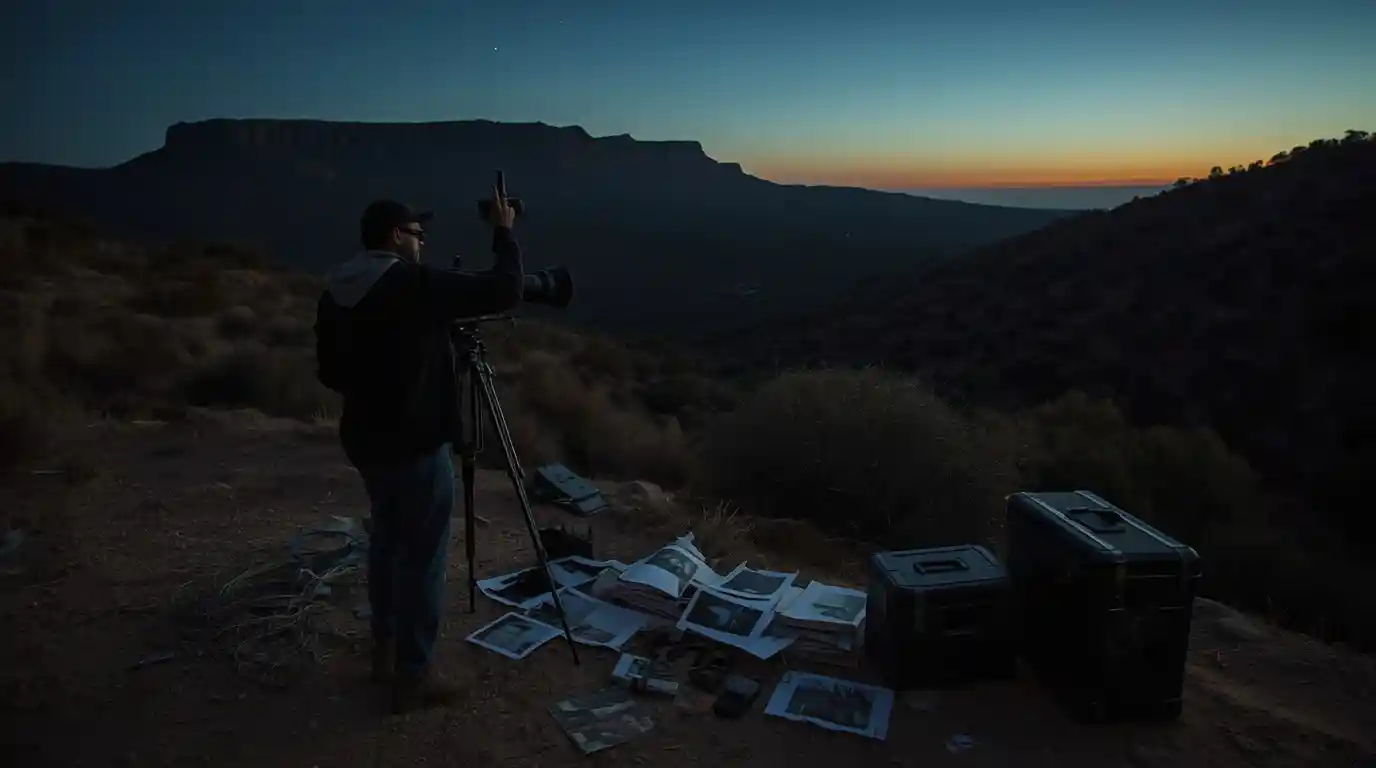
The wingsuit eclipse photo that spread across photography feeds this week took nine months and roughly 600 hours to arrange, for a window that lasted 84 seconds. American photographer Noah Wetzel made it on 12 August from a hillside near Alarilla, about an hour north of Madrid, as Red Bull Air Force flyer Mike Brewer crossed in front of a Sun that had just gone black.
Brewer was doing more than 150mph — around 200 feet a second — roughly 15 feet above the Balcón de la Muela ridgeline. Wetzel stood almost a mile back, about 1,400 metres, looking through a 600mm lens. At that range and that speed his subject was inside the frame for a sliver of a second, in near darkness, with no possibility of a retake.
For anyone in Britain, the wingsuit eclipse photo is a souvenir of an event we only half saw. London got around 91% coverage that evening and Dublin about 94%, which is eerie but nowhere near dark. Totality stopped well short of us. The last time it touched the UK was 1999, and it isn't due back until September 2090.
What Made This Harder Than a Normal Eclipse Shot
Eclipse photography is usually a patient, static job: heavy tripod, long lens, filter off at the right moment, and the sky does the rest. Wetzel had to add a human being travelling at motorway-plus speeds, light him artificially, and keep an appointment set by orbital mechanics. Totality at that spot ran 84 seconds. Do the sums on 600 hours and you get roughly 25 hours of preparation per usable second.
The clock made it worse. Brewer flew at 8:31pm local time with the Sun sitting low over the ridge, which is exactly what puts the black disc and the flyer in the same frame — and also what left almost no margin. A few seconds early or late and the alignment simply would not have existed.
How They Froze a Man Flying at 150mph
The counterintuitive part is that the shutter did very little of the work. The hero frame was made on a Canon EOS R5 II with an RF 600mm f/4, wide open, at one 200th of a second and ISO 2500 — a shutter speed that would smear a jogger, let alone a wingsuit.
Light, Not Shutter Speed, Stops the Motion
Wetzel's answer was flash. Three Godox AD1200 Pro heads plus a smaller AD360 II, dialled down to an eighth of full power, each fired for about one 2,500th of a second. In a dark scene the burst of light is the real exposure, so flash duration, not shutter speed, is what pins the subject. Firing was handled by PocketWizard radio triggers with up to 200 feet of cable strung between units.
Four Rehearsals, One Before Dawn in Utah
The team ran four full test productions before Spain, including a pre-dawn simulation in Moab, Utah, where the light levels roughly matched what totality would deliver. Spanish wingsuit flyer Dani Román flew tests on the ridge itself. That mattered, because the one thing nobody can rehearse is the Moon — so everything else had to be rehearsed instead.
A Second Camera Doing the Opposite Job
A backup rig run by photographer Dane Cronin used an original EOS R5 with two Godox 600B heads at ISO 1250, one 25th of a second and f/3.2, on rear-curtain sync. That slow shutter deliberately let a streak of motion build before the flash landed — a completely different look, and cheap insurance in case the long lens missed.
The Wingsuit Eclipse Photo Almost Missed the Frame
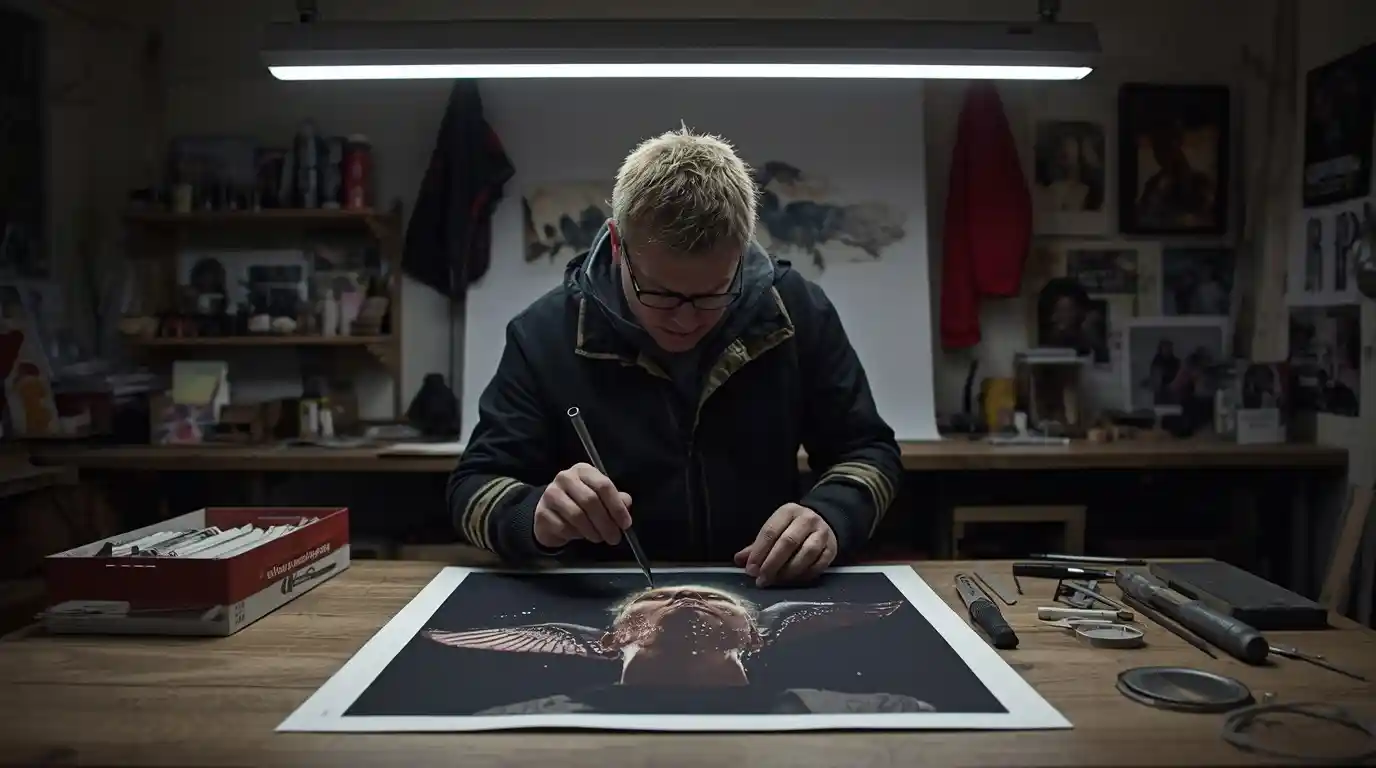
By Wetzel's own account he was still tightening the tripod head, locking the composition horizontally and vertically, as Brewer left the aircraft. With a 600mm lens aimed at a target nearly a mile off, a nudge of a millimetre or two swings the frame a long way. He has called it one of the most complex and pressure-saturated photographs ever attempted, which is a big claim but not a silly one.
The feeling of opening my parachute knowing we got the shot was one of the most powerful in my flying career.
That was Brewer, who had no way of knowing mid-flight whether any of it had worked. Red Bull has form here: a 2017 eclipse frame featuring a mountain biker won a category at its own Illume awards. This one is the same idea, made vastly harder by adding speed, altitude and a foreign ridgeline.
Britain's Long Wait, and Spain's Short One
Some perspective on why the crowds went to Spain at all. The 12 August event was the first total solar eclipse over mainland Europe since March 2006, and the first over mainland Spain in generations — the country's previous one, in 1959, was visible only from the Canary Islands. Spain's next arrives almost immediately, on 2 August 2027, less than a year later.
Where to Stand for the Next One
If watching a 91% partial from a British pavement felt like a near miss, 2 August 2027 is the date to plan around, and southern Spain is a cheap flight and a familiar holiday map. Rooms inside a path of totality routinely sell out a year or more ahead and prices near the centre line climb steeply, so booking early is not paranoid.
For photographers, the transferable lesson from the wingsuit eclipse photo is smaller and far more useful than the spectacle: in a dark scene, flash duration is your shutter. If you have ever failed to freeze a fast subject at night, that one idea is worth more than any lens upgrade. Put 2 August 2027 in the diary — and leave 2090 to the grandchildren.

Comments 0