

95% of Thames Water Leaks Never Reach the Street
A thousand repairs a week is the visible tip of a much larger loss, as baked London clay pulls Victorian mains apart in the fifth heatwave of the year.

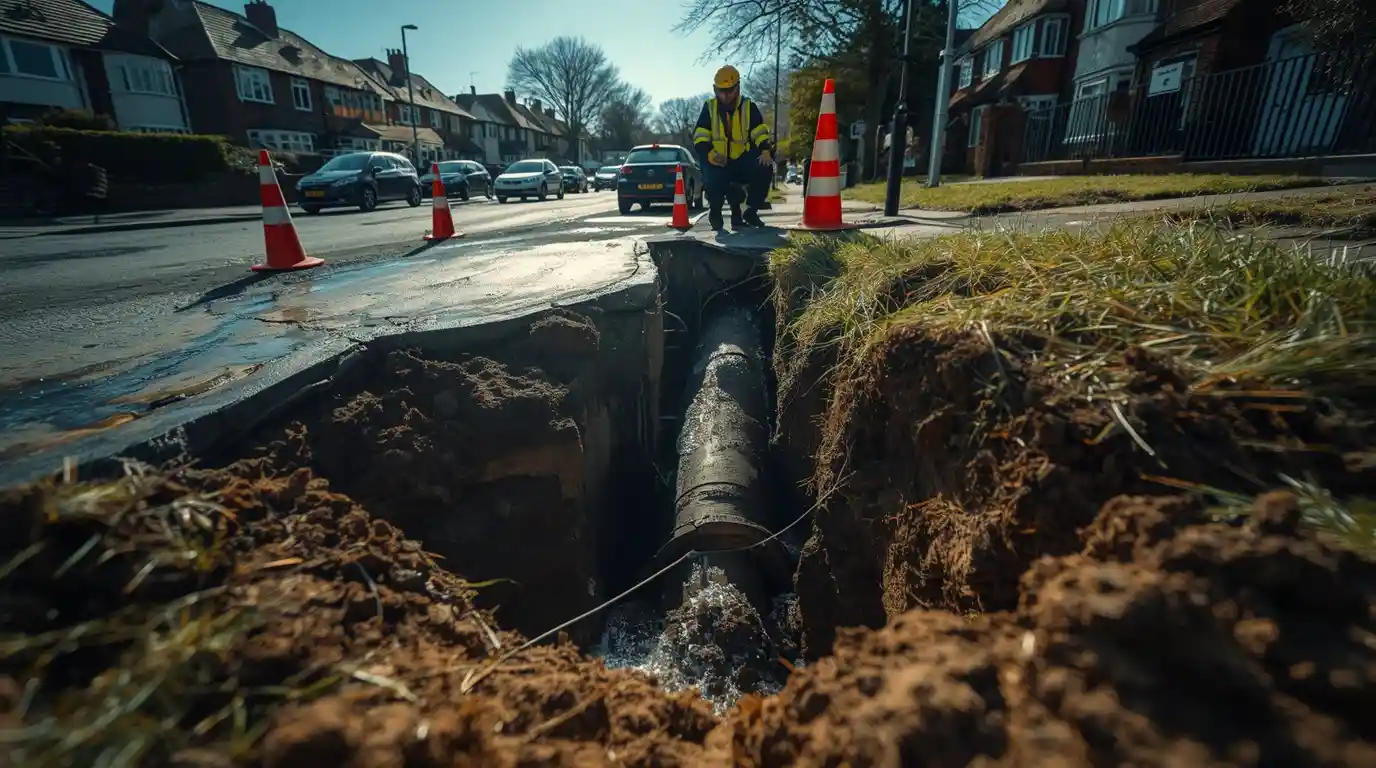
Thames Water leaks are running at more than a thousand a week across London and the Thames Valley, and the uncomfortable part is that most of them are invisible. The company reckons about 95 per cent of the water escaping its network never surfaces as a puddle or a fountain in the road. The burst you can photograph on your street is the small minority.
The visible ones are bad enough. Thames logged 2,871 street-level bursts in July alone, close to double the figure for the same month last year. Even in an ordinary year the company loses an average of 592 million litres a day. Spread across its 16 million customers, that works out at roughly 37 litres per person, every day, soaking into the ground before anyone gets to drink it.
This lands at an awkward moment. Thames customers are already living under a hosepipe ban, ignoring it can cost up to £1,000, and the Environment Agency moved London and half of England into official drought on 29 July. Being told to leave the sprinkler off while water runs down the hill from a cracked main is what turns an engineering problem into a political one.
Why the baked ground is cracking London's mains
London sits on clay. Clay shrinks as it dries and swells when the rain returns, and it does this with enough force to shift the foundations of houses — which is why subsidence claims climb every dry summer. Buried mains, plenty of them Victorian iron with old lead services hanging off them, get dragged along with the soil. The ground pulls, a joint gives, and a hairline fracture turns into a burst.
England has just come through its driest July since records began in 1836, with rainfall somewhere between 7 and 10 per cent of the long-term average depending on the measure. Nearly three-quarters of England and all of Wales are in drought. This is the fifth heatwave of 2026, with 38C forecast in places, and the soil has had months to bake solid.
This prolonged period has an effect on ground conditions which impacts pipes and causes more leaks than we usually experience in a similar period of time.
The true scale of Thames Water leaks
A thousand repairs a week sounds like a company working flat out, and it is. But repairs are a count of jobs, not of water. The bigger loss is the slow seepage from thousands of small fractures that never break the surface, found only by listening equipment walked along the street at night. That is the gap between the leaks Thames fixes and the volume it actually loses, and it is why the daily figure barely moves in a bad year.
None of this is new. Ofwat fined Thames £8.55m back in 2017 for missing its leakage target, and the industry as a whole has fallen well short of the reductions promised for 2025. What has changed is the weather doing the damage twice in consecutive summers.

What this means for your household
Restrictions are on now and are unlikely to lift until the ground has had sustained rain, not a single thundery afternoon. Two things are worth doing before the bill arrives.
The hosepipe rules and the £1,000 fine
The ban covers watering gardens, washing cars, filling paddling pools and cleaning paths with a hose. A watering can is still allowed, as is a bucket and sponge. Enforcement is rare and usually starts with a warning letter, but the penalty on the statute book is up to £1,000, and it applies to the account holder rather than whoever held the hose.
The leak that is legally yours, not theirs
The supply pipe running from your boundary into the house belongs to you, not the water company. If your meter is spinning with every tap off, the fault is on your side and the repair is your bill unless you have cover. Check the meter last thing at night and again first thing — a moving dial with nothing running is the clearest signal you will get.
Is this worse than the summer of 2022?
In 2022 Thames waited until 24 August to bring in a hosepipe ban. This year restrictions arrived weeks earlier and follow a dry 2025, which is the real difference: groundwater and reservoirs never fully recovered. Reservoir storage across England is down to 69 per cent, almost 12 per cent below normal for the date, with Blagdon, Wimbleball and Hanningfield classed as exceptionally low.
Who is paying to fix any of this?
That question is unresolved. Thames is still working through a creditor-led rescue: the London & Valley Water consortium put its plan to Ofwat and ministers in March, offering roughly £5bn of new capital alongside the write-off of around £12bn of debt. The Telegraph notes the company's finance chief collected a £1m bonus. Whatever the outcome, the money for replacing pipe comes from customers or from investors expecting a return from customers.
Watch two things over the next fortnight. First, whether the Environment Agency extends drought status further after the Cobra meeting chaired by Prime Minister Andy Burnham on 12 August. Second, whether the rain, when it finally comes, brings a second wave of bursts — soaked clay swelling back is every bit as hard on old pipes as clay shrinking. If your pressure drops or your street starts weeping, report it early; the repair queue is long and getting longer.



Comments 0