

A $10 Etsy Spell and the Return of Medieval Medicine
A CNN report and a new manuscript catalogue land on the same week, and together they show how much of today's wellness industry is running on 800-year-old logic.

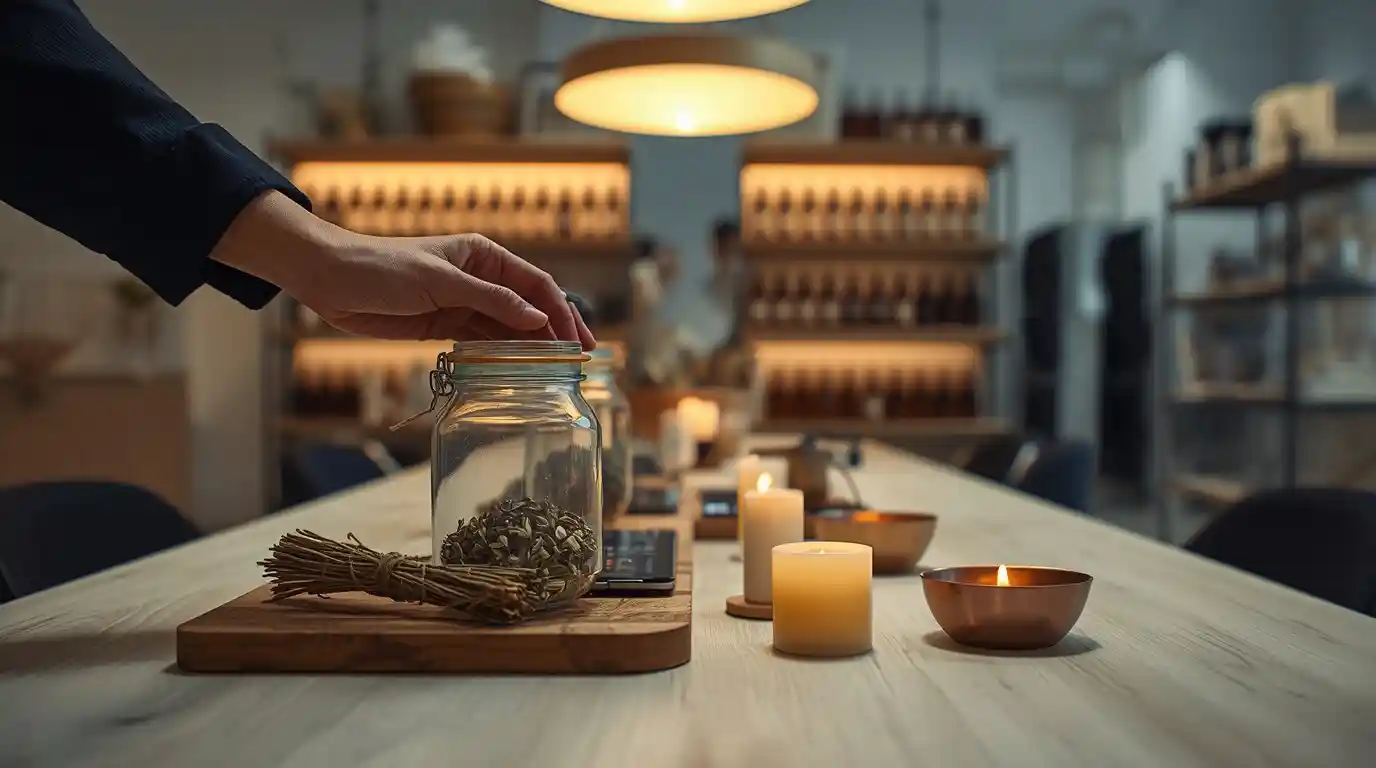
The oddest thing about a $10 "body transformation" spell for sale on Etsy is not that someone is selling it — it's how neatly it slots into the long history of medieval medicine. CNN reported this week that the listing promises rapid weight loss and a "dream body," and charges extra if you want the charm in a hurry. That's under C$15, rush fee included.
The piece, published August 16, argues that a lot of 21st-century wellness has quietly rebuilt the machinery of the Middle Ages. Bloodletting became the juice cleanse. Purging became the detox protocol. Enemas became the ayahuasca retreat, with its nights of nonstop vomiting. Cupping didn't even bother changing its name. CNN spoke with Roy Perlis, a professor of psychiatry at Harvard Medical School, and with medieval historians at Binghamton University and Seattle University.
This matters here, not just south of the border. Canadians buy the same supplements, watch the same creators and sit in the same waiting rooms wondering why the appointment took eleven months. When confidence in a health system drops, the space it leaves doesn't stay empty. Something fills it — and what's filling it right now is very old.
What the Middle Ages Actually Believed
Medieval doctors worked from humoral theory: four fluids in the body, health as a balance between them, illness as an excess. A 12th-century medical school in Salerno, Italy described a condition called plethora — simply too much blood. The treatment followed logically from the diagnosis. Open a vein, drain some off, restore the balance. It was internally consistent, taught formally, and wrong.
Where Medieval Medicine Shows Up Today
The through-line isn't the specific remedy. It's the underlying story: something impure has built up inside you, and the fix is to expel it. That premise survived the germ theory of disease, the randomized controlled trial and the entire pharmaceutical century, and it is thriving on your phone.
Cleanses, Cupping and the Urge to Purge
Detox protocols promise to flush out toxins that are rarely named. Extended juice fasts drain you of food. Ayahuasca retreats market the vomiting itself as the therapeutic event. In each case the discomfort is the proof — you feel something leaving, so something must have been wrong. That's the exact reasoning that made bloodletting persuasive for centuries.
Spells, Reiki and the Energy Healing Circuit
Thousands have attended Energy Healing Conference events in Utah, Montana and Idaho, where breathwork practitioners, Reiki masters and herbalists gather to pass on what's framed as ancient wisdom, according to CNN. Nobody at those events calls it humoral theory. The structure is the same: an invisible force, out of alignment, correctable by a trained hand for a fee.
Silver, Supplements and the Cure-All Pitch
CNN singles out Florida chiropractor Eric Berg, who promotes colloidal silver without supporting evidence. The single-substance cure-all is a genuinely medieval product category. So is the diagnostic shortcut: U.S. Health Secretary Robert F. Kennedy Jr. said in August 2025 that he could spot "mitochondrial challenges" in children by watching their faces and how they moved through an airport.

The Part the Middle Ages Got Right
Here's the wrinkle. Medieval healers were not simply credulous. Meg Leja, an associate professor of history at Binghamton University, spent two years reviewing manuscripts across Europe for the Corpus of Early Medieval Latin Medicine, a British Academy-funded catalogue built with Fordham, St Andrews, Utrecht and Oslo. It nearly doubled the count of known Dark Ages medical texts.
Some entries are the kind of thing that would do well on TikTok — crushed peach stone in rose oil, rubbed on the forehead for a headache; lizard ash mixed with oil, summer savory, salt and vinegar for the hair. But the volume tells a different story than "superstitious peasants."
People were engaging with medicine on a much broader scale than had previously been thought. — Meg Leja, Binghamton University
The medieval shift was toward treating medicine as a learnable craft rather than divine whim. The modern drift runs the other way.
Why Canadians Are Drifting the Same Way
Trust is the whole mechanism, and Canada's is thinning. Environics Institute research found the share of Canadians who trust neither the federal nor their provincial government to manage the health system nearly doubled, from 15 per cent in 2019 to 28 per cent in 2024. Roughly 60 per cent describe the system as deteriorating or in crisis. In the OECD's 2026 trust survey, Canada placed 11th of 28 countries, with about half of respondents saying they trust government to do what's right.
There's precedent. The Black Death in the 14th century shattered faith in physicians who could not explain or stop it, and quackery rushed into the vacuum. COVID did a compressed version of the same thing. The difference is distribution speed.
How to Tell a Real Remedy From a Good Story
Canada has a check most people don't use. Natural health products sold legally here need a licence from Health Canada under regulations in force since January 1, 2004, and licensed products carry an eight-digit NPN or DIN-HM number on the label. No number means it was never assessed. That covers vitamins, herbal remedies, traditional medicines, homeopathics and probiotics.
Two more habits worth building. Ask what the product claims to remove, and whether that substance has a name — "toxins" almost never does. And be suspicious of any remedy that treats your own discomfort as evidence it's working, because that test passes for every purge ever invented, including the ones that killed people. Check the label before the testimonial.



Comments 0