

A Himalayan Herb Named This Thakali Restaurant in Gurugram
Jimbu Thakali, a four-outlet Kathmandu chain named after a mountain herb, has opened its first restaurant outside Nepal in Sector 65.

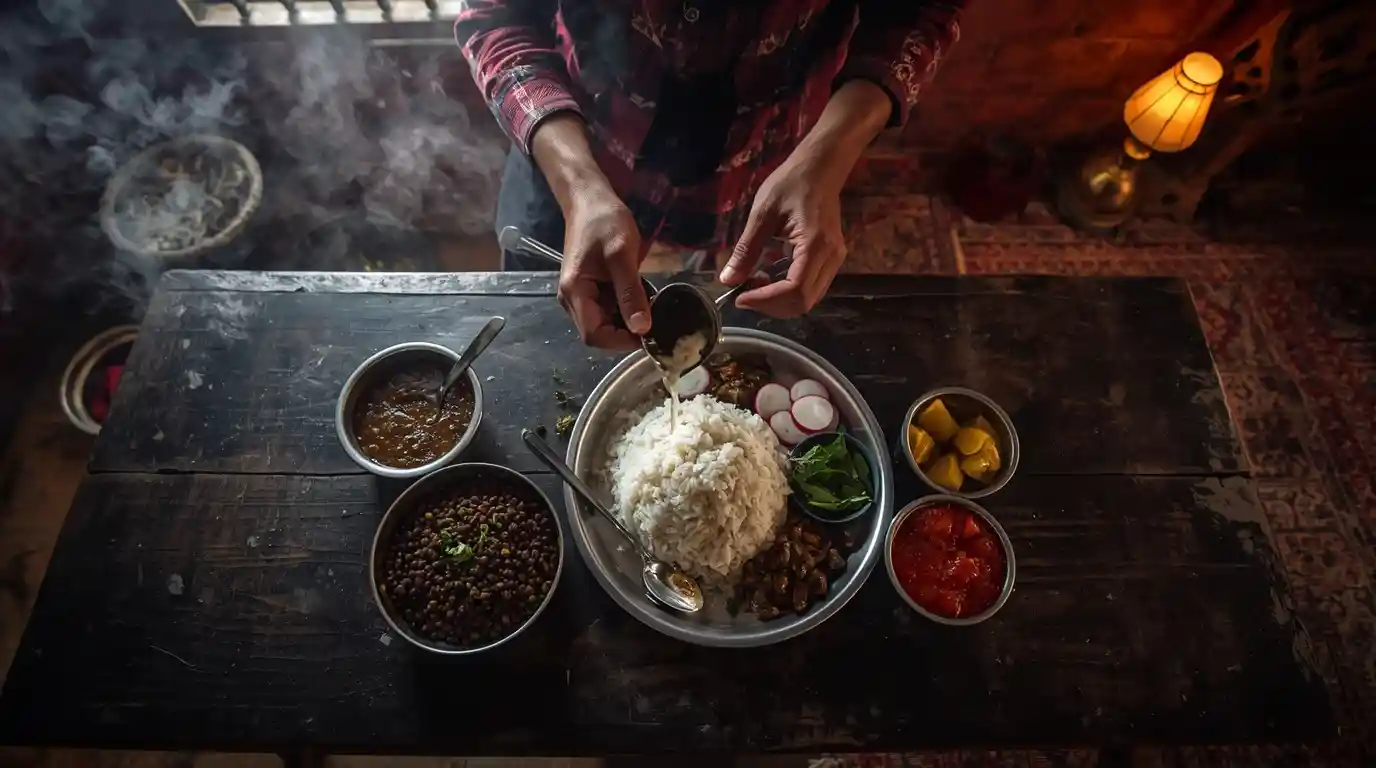
Nepal's best-known thali chain has crossed the border: Jimbu Thakali opened its first Thakali restaurant in Gurugram on 5 August 2026, at M3M 65th Avenue in Sector 65. It's the brand's first outlet anywhere outside Nepal, where it already runs four restaurants across Kathmandu. The Gurugram room measures roughly 2,500 square feet and seats more than 80 people, according to BW Travel.
Here's why that's worth a paragraph of your attention. For most people in Delhi NCR, Nepali food means momos — steamed, fried, tandoori, in a bun, at a thela outside the metro station. The everyday meal that Nepalis actually eat at home and on the road, the Thakali thali, has almost no presence here as a restaurant category. This is one of the first serious attempts to sell it as the main event rather than a side note.
And the name isn't a surname or a village. Jimbu is an aromatic herb that grows in the Himalayas, dried and dropped into hot ghee to season dal. That single ingredient is the reason the dal in a Thakali thali smells like nothing else on an Indian table — and the reason the chain is called what it is.
Why the Name Is a Herb, Not a Family
Jimbu is used across Nepali kitchens the way we use hing or curry leaves: sparingly, at the tempering stage, for a smell that announces the dish before you taste it. It's closer to a wild chive than to anything in a standard masala dabba. Building a restaurant brand around it is a small statement — the promise is that the pantry is genuinely Himalayan, not a Nepali label on north Indian cooking.
What Lands on a Thakali Thali
The thali is the anchor of the menu, and it arrives as a set of small bowls rather than a single plate of curry and rice. Reports from The Week, BW Travel and Indian Retailer describe broadly the same spread, with a choice of chicken, mutton or a vegetarian option. What follows is what each part actually is, because most of it won't be familiar.
The Black Dal and the Jimbu Tempering
The lentils are cooked long and dark, then finished with jimbu. In Thakali kitchens the dal is usually poured over the rice rather than eaten alongside it, which changes the whole meal — it becomes one soupy, seasoned thing instead of separate compartments. If you eat it the way it's served in Mustang, you mix first and taste later.
Gundruk, Sukuti and the Mountain Pantry
Gundruk is leafy greens fermented and dried, sour and slightly funky, and it does the job a pickle does on a South Indian plate. Sukuti is air-dried meat, tossed here into a sadheko-style salad with onion, chilli and oil. Timmur, which shows up in the chicken, is a cousin of Sichuan pepper — expect a tingle on the tongue, not just heat.
The Snacks That Aren't Momos
Beyond the thali, the menu leans playful: kanchyamba, or buckwheat fries; buckwheat jimbu nachos; chicken choila wings, borrowing from the Newar community's grilled, spiced meat; mutton momo; even a Nepali pizza and a jimbu burger. Buckwheat matters here — it grows at altitudes where rice and wheat won't, so it's a mountain staple rather than a health-food import.
How This Thakali Restaurant in Gurugram Got Here
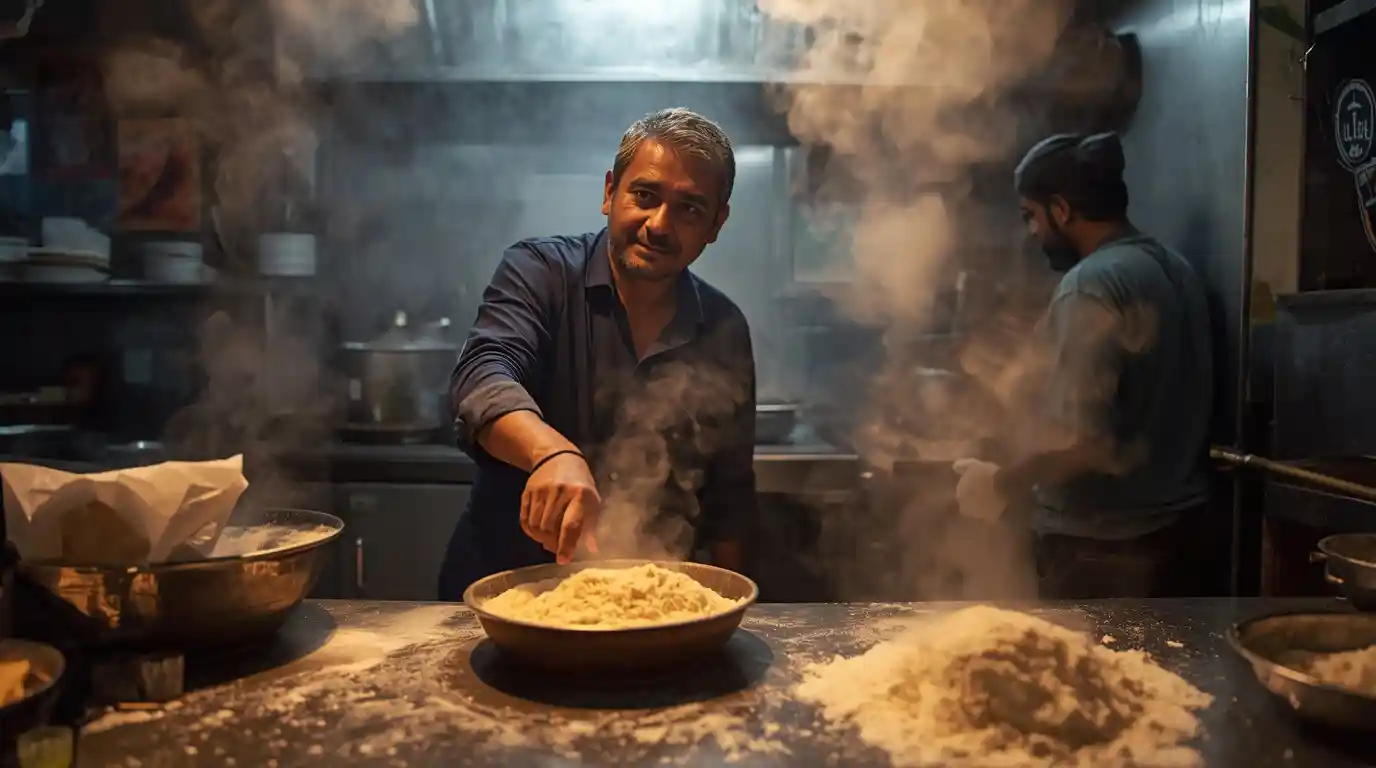
Founder Vivek Sherchan's family traces back to Thak Khola in Mustang district, the valley the Thakali community comes from. The community's cooking spread across Nepal through the roadside inns it ran along the old trans-Himalayan trade route, which is exactly why a regional cuisine from a thinly populated district became the country's default good meal.
Indian food has long been popular in Nepal, but Nepali cuisine hasn't reached India to the same extent.
That line, quoted by The Week, is Sherchan's own read on the gap he's betting on. The same report says central kitchens are planned to support more Indian outlets, with New York also on the map — though India is the priority. In other words, Gurugram is a pilot, not a one-off.
What to Check Before You Go
One practical warning: the address isn't reported consistently. Most trade coverage places it at M3M 65th Avenue in Sector 65, while The Week lists M3M IFC in Sector 66. Call the restaurant or check a maps listing before you drive out, because those two are a good few minutes apart on Golf Course Extension Road.
No menu prices have been published in the coverage so far, so budget the way you would for any new high-street mall restaurant in that belt rather than assuming momo-stall rates. Go with at least one vegetarian and one meat thali at the table so you can taste both the mutton and the gundruk side of the pantry.
Watch what happens next: if the central kitchen plan moves, a second and third Indian outlet should follow within a year or so, and that's the real test of whether NCR will pay for Nepali food that isn't shaped like a momo. Until then, order the thali, pour the dal over the rice, and go easy on the timmur chicken the first time.




Comments 0