

A Pickaxe Left Behind Cracked the Italy Art Heist
Five arrests and three recovered masterpieces later, the break in the Parma museum robbery came not from the art world but from a discarded tool with its serial number filed off.

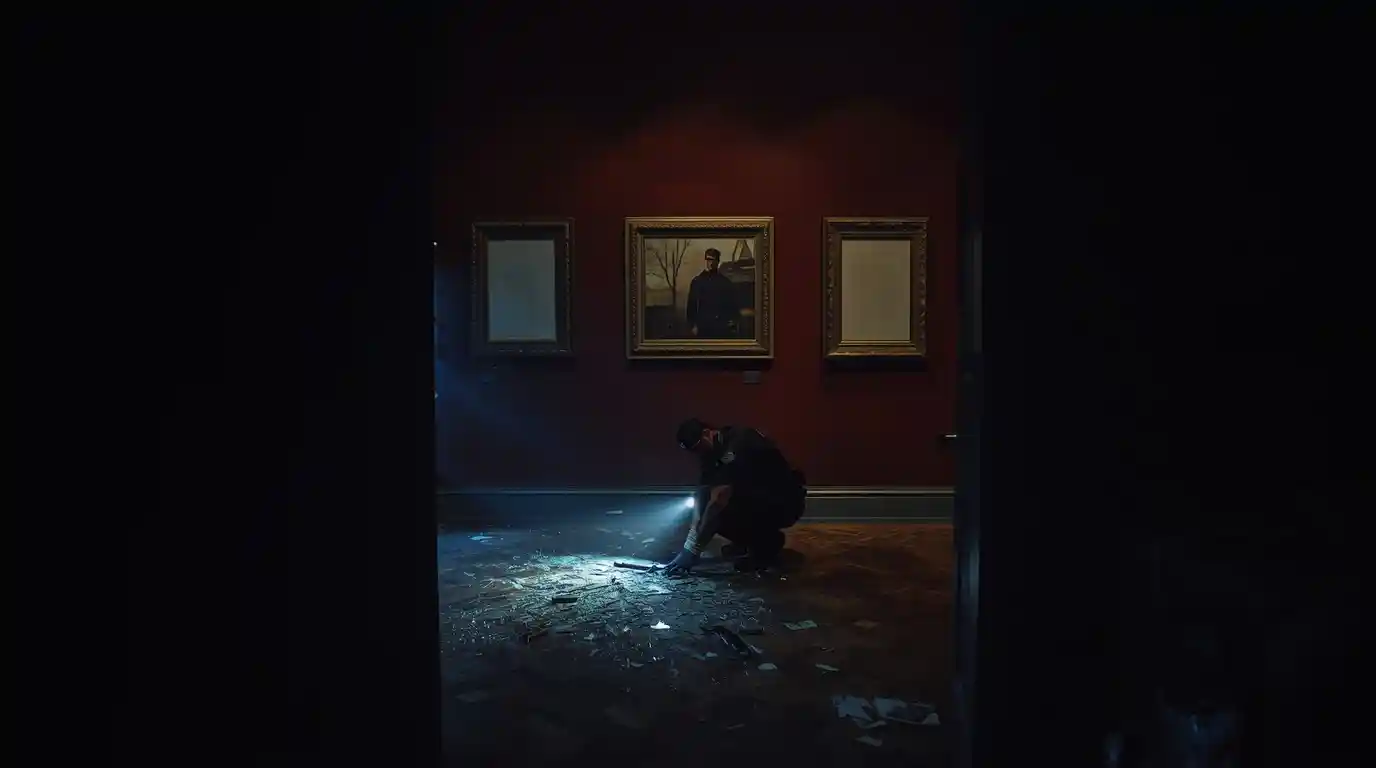
The Italy art heist that stripped three paintings from a country-house museum outside Parma in under three minutes has ended in a way nobody in the art trade predicted. Italian police announced on Friday that all three works are back, five men are in custody, and the thread they pulled was not an underworld tip-off. It was a tool the gang dropped on the way out.
The raid happened on the night of 22 to 23 March at the Magnani Rocca Foundation, a private museum in Mamiano di Traversetolo, about 12 miles from Parma. The thieves took Renoir's Fish, Cézanne's Cup and a Plate of Cherries and a Matisse print, Odalisque on the Terrace. Together the works are valued at roughly €9 million, or about £7.7 million at current rates.
That matters more than the sums suggest. Estimates cited by art-crime researchers put the global recovery rate for stolen art below 10 per cent, against somewhere between 50,000 and 100,000 works taken every year. Most vanish for decades or for good. Getting three back inside five months, with arrests attached, puts this case in a very small minority.
Three Minutes, Three Paintings, One Alarm
The CCTV released by the Carabinieri this week is short and unglamorous. Masked men come through the smashed glass of a door, and two of them go straight to the walls where the works hung side by side. There is no abseiling, no cutting torch, no clever bypass of the security system. The alarm went off almost immediately and the group ran out across the museum gardens.
- Paul Cézanne, Cup and a Plate of Cherries — around €6m (roughly £5.1m)
- Pierre-Auguste Renoir, Fish — around €3m (roughly £2.6m)
- Henri Matisse, Odalisque on the Terrace, a print — around €20,000 (roughly £17,000)
The foundation is not a household name outside Italy, which is part of the point. Set up in 1977 around the collection of the art historian Luigi Magnani, it holds work by Dürer, Rubens, Van Dyck, Goya and Monet in a converted villa. Small institutions with world-class walls are exactly the soft target professional crews have been probing across Europe.
How Police Cracked the Italy Art Heist
The gang left two objects at the scene: a pickaxe and a fire extinguisher, both with their serial numbers deliberately removed. That is standard practice for anyone who expects to abandon kit. It usually works. This time it didn't.
The Pickaxe With the Filed-Off Number
Forensic officers reconstructed the erased serial numbers — a routine metallurgy technique, since stamping a number distorts the metal below the surface even after the digits are ground away. The rebuilt numbers traced the tools back to an apartment building connected to one of the suspects. From there it was ordinary police work: surveillance, searches, warrants.
A Cardboard Box in a Parma Flat
Officers from the Carabinieri's cultural heritage unit searched addresses across Parma province and neighbouring areas on 14 August. The paintings turned up in a flat, stored in a cardboard box. Five men were detained, all born in Moldova and living in the Parma area, and investigators say they are linked to an organised crime group behind a run of property thefts. Other stolen goods worth tens of thousands of euros were seized alongside the art.

Why One Stolen Work Was Worth Just £17,000
The value gap between the Cézanne and the Matisse print is the tell. A crew that understood the market would not have wasted a second of a three-minute window on a €20,000 print hanging next to a €6 million oil. It suggests men grabbing what was closest and framed, not connoisseurs filling a shopping list — and that fits the profile of a group better known for burgling houses than trading masterpieces.
The Louvre's Jewels Are Still Missing
Compare it with the Louvre. In October, thieves dressed as workmen took eight pieces of the French crown jewels, valued at about €88 million, and were out of the building in roughly eight minutes in broad daylight. Suspects have been charged. The jewels have not been found, and gold and stones can be broken up and melted in a way a signed canvas cannot. Paintings are almost unsellable, which is precisely why they come back.
What UK Museums Should Take From This
Britain has plenty of the same profile: independent trusts and historic houses holding a handful of extremely valuable pictures with modest staffing. The Parma case is a reminder that alarms did their job — the gang was in and out in minutes because the alarm forced them to be — while the case itself was solved by forensics, not by cameras or the art market.
If you run or volunteer at a small collection, the practical lesson is unfashionable: photograph and record every object properly, register it with a stolen-art database, and keep the scene untouched if the worst happens. What the Parma thieves dropped on the floor mattered more than anything the CCTV caught. Watch for the trial dates in Italy this autumn, and for whether the Louvre gets the same luck.



Comments 0