

A Public Road Sale That Can't Touch the Council's Debt
North Sydney councillors have voted to close and sell a Cremorne cul-de-sac to an elite private school — but state law bars the proceeds from going anywhere near the council's real problem.

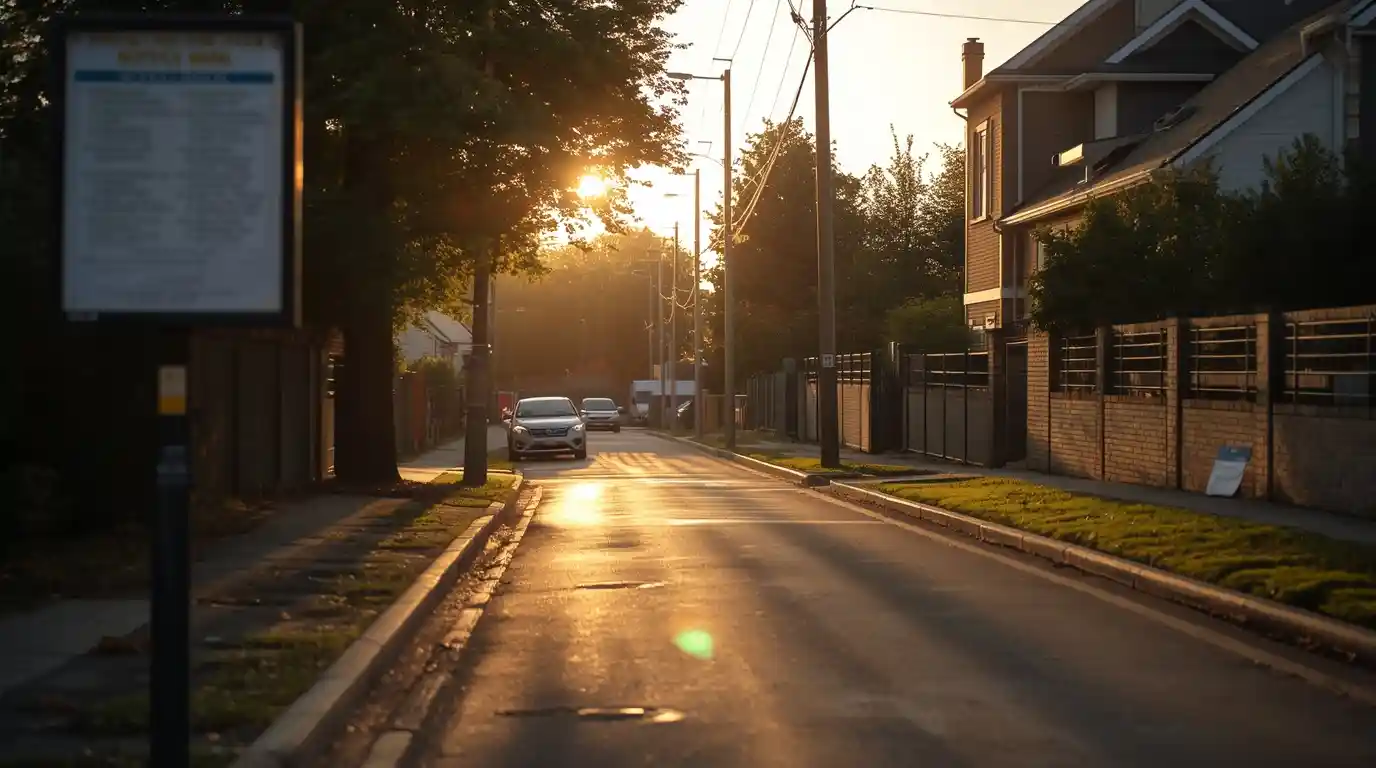
A public road sale on Sydney's lower north shore cleared its biggest hurdle this week, and the strangest part of the deal is what the council is forbidden from doing with the money. On Monday night, North Sydney Council voted to begin closing Monford Place — a 791.4-square-metre cul-de-sac in Cremorne — and selling it to SCEGGS Redlands, the private school that already owns every property lining it.
The council needs money. Its infrastructure backlog sits at roughly $157 million. The North Sydney Olympic Pool redevelopment, budgeted near $64 million when work began in 2021, climbed to a forecast $122 million before the pool finally reopened on 7 August this year. Residents copped a permanent rates increase of more than 50 per cent, phased through to 2028-29, after the state pricing regulator rejected an even steeper request. (All figures here are Australian dollars.)
So a cash injection from selling a dead-end street sounds like relief. It isn't. Under NSW's Roads Act, money raised by closing and selling a public road can only be spent acquiring or repairing other public roads. Not the pool. Not the debt. Not staff costs. That one restriction reframes the entire argument, and it's the detail most coverage buries near the bottom.
What's Actually Being Sold in Cremorne
Monford Place is a short cul-de-sac off Military Road that has been a public road since roughly 1940. It carries 18 on-street parking spaces, ten of them unrestricted. Redlands has been quietly buying the houses around it since the 1980s — public records show purchases of $800,000 in 2015, $1.1 million in 2018 and $1.99 million in 2019. By 2021 the school owned every abutting property, leaving a public street effectively landlocked inside a private campus that charges senior students $47,100 a year.
Redlands is willing to acquire Monford Place road at market value to facilitate the future expansion of our Senior Campus.
Why the Public Road Sale Money Is Locked Up
Council has indicated the proceeds would flow into its integrated transport strategy — footpaths, cycling links, road resurfacing. Useful work, and legally the only work available. But scale matters here. Sealed roads alone need an estimated $20.1 million to reach standard. A 791-square-metre strip of asphalt, in a suburb where the neighbouring houses fetched between $800,000 and $1.99 million, is unlikely to move that number much. The June 2024 valuation has been kept confidential.
How the Council Got Into This Position
None of this happened suddenly. Three separate pressures converged, and each one narrowed the options available to councillors.
A Pool That Nearly Doubled Its Budget
The Olympic Pool project ran five years past its original schedule and roughly doubled its budget, driven by design changes and contractual disputes. The council has also faced legal action over the delays. A single capital project became the defining line item on the balance sheet, and everything else got squeezed behind it.
A Rates Rise Residents Fought Hard
The council first asked the Independent Pricing and Regulatory Tribunal for a cumulative increase above 87 per cent across two years. That was knocked back in May 2025 after fierce community pushback. A revised application later succeeded, delivering a permanent 52.66 per cent lift in general income over three years.
Capital Works Deferred Year After Year
Roughly $12 million a year in capital works has been pushed back in each of the past three years, with further savings targeted this financial year. Deferral is how backlogs grow: the pothole you don't fix in 2024 becomes a resurfacing job in 2027 at several times the cost.

The Condition Councillors Added at the Last Minute
A committee had already backed the proposal 8-0 in July. At Monday's full council meeting, deputy mayor MaryAnn Beregi moved to strip out any reference to the school's existing offer and replace it with a requirement that the street sell for "no less than the independent valuation price". It's a small edit with real teeth — it removes the buyer's own number as the starting anchor and forces the valuer's figure to set the floor instead.
How This Would Play Out in Canada
Canadian readers will recognise the mechanism. Under Ontario's Municipal Act, British Columbia's Community Charter and equivalent provincial statutes, a municipality can close a road allowance by bylaw and sell it, typically offering it first to the abutting landowner. What's different is the money: in most Canadian jurisdictions, proceeds from a public road sale generally land in general revenue or a land reserve, with no legal ringfence forcing them back into roads.
That freedom cuts both ways. A Canadian council in North Sydney's position could plug an operating hole with the cash — and then face the same asset backlog next year, having spent a one-time windfall on a recurring problem. Canada's municipal infrastructure deficit runs into the tens of billions, and selling land to cover it is a well-worn trap.
What to Watch For Next
The formal road-closure process now begins, including a 28-day window for public submissions. Officers have flagged that displaced parking will spill into Winnie, Parraween, Murdoch, Hampden and Waters streets. The full process could take 18 to 24 months, and nothing is final until it completes.
If you live near a school, hospital or campus that keeps buying up neighbouring lots, the practical lesson is procedural: road-closure notices are published, but they run in the dullest corners of a municipality's website and the submission windows are short. Check your council's bylaw notices and land-disposal agendas quarterly. In this case, a five-year campaign only became public news at the point councillors voted — and the deciding factor wasn't the school's ambition, it was the council's balance sheet.
Comments 0