

Europe's Heatwave Cost Hits €180bn, Nearly a Year's Growth
A Dutch bank has put a price on Europe's summer — €180 billion, roughly the entire year of growth the bloc was counting on.

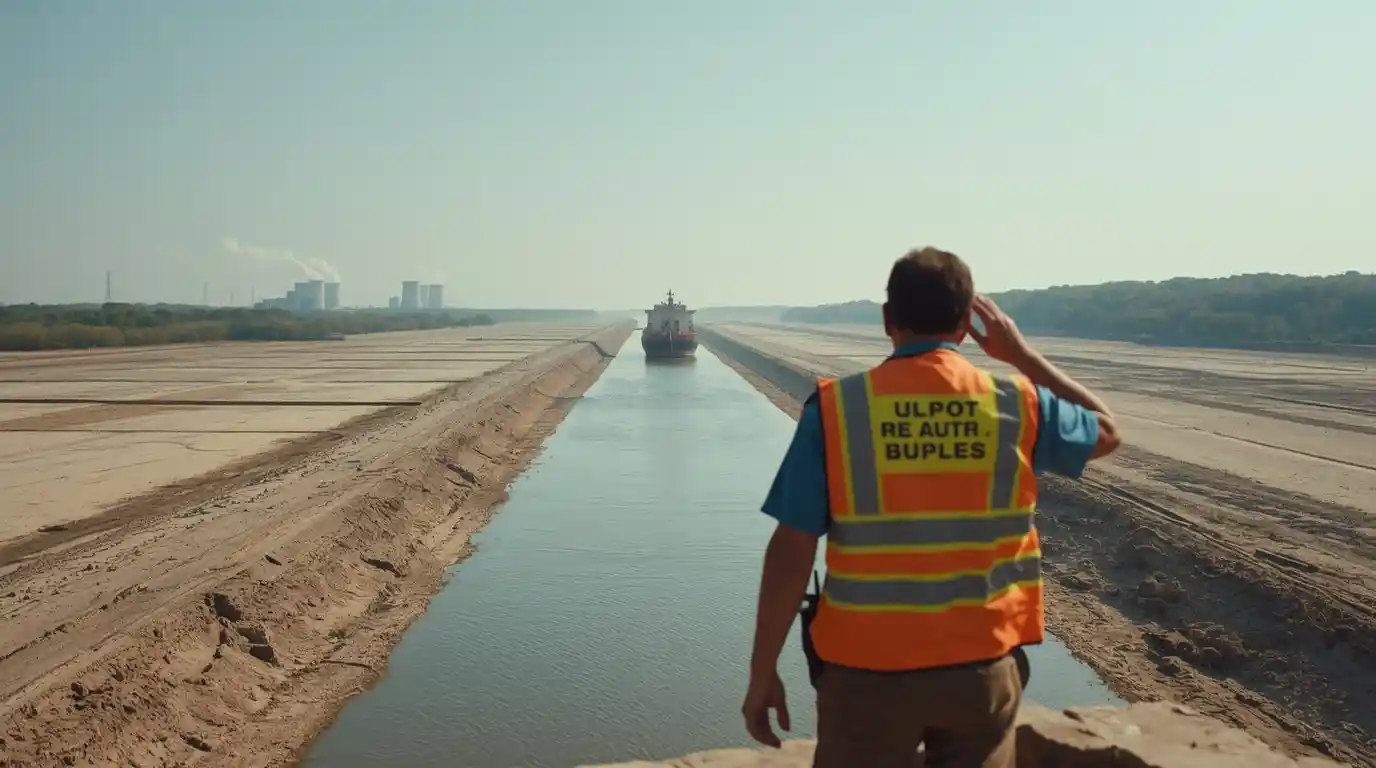
Europe's heatwave cost for 2026 finally has a figure attached to it: €180 billion, or somewhere near A$300 billion, gone from the European Union's economy in a single year. The estimate comes from economists at the Dutch lender Triodos Bank and works out at roughly 1% of EU output. Set that against the 1.1% growth the bloc was penciling in for this year and the summer has all but cancelled the recovery.
The human toll arrived first. Researchers counted about 20,400 heat-related deaths across France, Germany, Spain and Italy during June's heatwave alone, with the full-summer tally tracking towards 25,000. Fires have burned more than 490,000 hectares across the EU, against a 20-year average of 197,000. Spain accounted for around 275,000 hectares of that, according to the EU's Copernicus monitoring service, and France set a wildfire record of its own.
None of this is abstract from Australia. Europe absorbs a large share of our northern-summer travel, sits inside almost every balanced super fund's international equity slice, and grows a lot of what ends up on our shelves — olive oil, pasta, wine, hard cheese. When a continent loses a percentage point of output to the weather, that shows up in prices and portfolios a very long way from the fire lines.
The €180 billion number, and what's inside it
The damage is spread thin rather than concentrated in one dramatic failure. Weaker crop yields, lower dairy output and the food price rises that follow account for about 0.15% of GDP. Constrained power generation and higher wholesale electricity prices add another 0.12% to 0.15%. Disrupted rail, road and river freight contributes a further 0.15%. The single biggest hit — and the hardest to measure — is simply people working slower.
The country-level splits are uneven, which is the part most summaries skip:
- France: about 1.4 percentage points off growth, enough to tip it into a contraction near 0.6%
- Italy: roughly 1.1 percentage points erased
- Spain: close to a full point shaved off a 2.8% forecast, with 47 excessively hot days expected by summer's end
- Germany: a hit of just under one point
- Netherlands: around 0.8 points
- Poland: barely moved, still near 2.9%
Where the money actually leaks out
Heat doesn't bill an economy directly. It works through three unglamorous channels, and each one has a physical bottleneck behind it that no amount of monetary policy can loosen.
Power stations that can't cool themselves
France draws about two-thirds of its electricity from nuclear plants, and roughly 15% of that capacity was offline at one point this summer. Rivers used for cooling ran too warm and too shallow. Solar panels, counter-intuitively, lose efficiency in extreme heat just as air conditioners are drawing hardest. Poland shut down power plants on the Vistula for the same reason, a stretch Prime Minister Donald Tusk described as a very difficult period.
A river too shallow to carry freight
The Rhine moves the bulk of Germany's inland waterway cargo — coal, crude, gas, refined fuels. Levels at Kaub, near Frankfurt, fell well under critical marks, forcing barges to run half-loaded and at times stopping traffic outright. Half a barge costs the same to crew as a full one, so the freight rate per tonne climbs immediately.
Alarm bells are ringing loudly: the extremely low water levels are increasingly pushing logistics and supply chains to their limits.
That was Wolfgang Grosse Entrup, head of Germany's chemical industry association VCI, whose members sit directly on that river.
Workers who slow down past 30C
Allianz Research put numbers on this in its May study: above 30C, every extra degree cuts output per hour worked by around 3% while lifting energy demand about 1.2%. The insurer reckoned June's two-week heatwave alone clipped 0.3 percentage points off European GDP, and expects climate change to take 5% to 7% off growth by 2030 in the most exposed economies — Spain, France and Italy.
Did the tourists actually stay away?
Not in the way you'd assume. Spanish credit card data showed no clear drop in spending by non-residents, so the money still landed. What moved was where people chose to go. Searches for Copenhagen rooms on Hotels.com jumped 246% after May's first heatwave, Oslo bookings ran 154% ahead of last year, and Dublin searches rose 151%. The industry has a name for it now: coolcations.

What Europe's heatwave cost means for Australians
If you're booking a 2027 northern trip, the practical read is to move your dates rather than your destination. May, June's first half and September now buy you the same cities without the 44C afternoons that shut Spain's outdoor sites. Expect food to carry some of Europe's heatwave cost too: Italian farm lobby Coldiretti puts agricultural losses at €20 billion over four years, about 12.5% of output. Britain's tab reached £4.4 billion by the end of July, per the Verdant thinktank.
Australia already ran this experiment
We have local evidence that heat is an economic problem, not just a comfort one. Research published in Nature Climate Change estimated heat stress cost the Australian economy close to A$7 billion in 2013-14 through lost productivity. Seven in ten surveyed workers said they got less done on hot days and 7% missed at least one day entirely. In 2019, outdoor construction workers lost more than 67,500 hours to heat — over double the 1991-2000 average of 25,240.
What to watch between now and Christmas
Three things worth tracking. First, EU third-quarter GDP prints from late October, which will show whether the €180 billion estimate holds or was too gloomy. Second, European food inflation into the northern autumn, since crop damage takes months to reach shelves and eventually our import prices. Third, closer to home, whether Australian employers and regulators tighten hot-weather work rules before our own summer — because the same physics applies here, and we get it in January.




Comments 0