

Free Qurans Sit at the Center of a Mosque Field Trip Lawsuit
Ten plaintiffs say a Palo Alto class crossed from learning about Islam into practicing it — and the school district says it hasn't even been served yet.

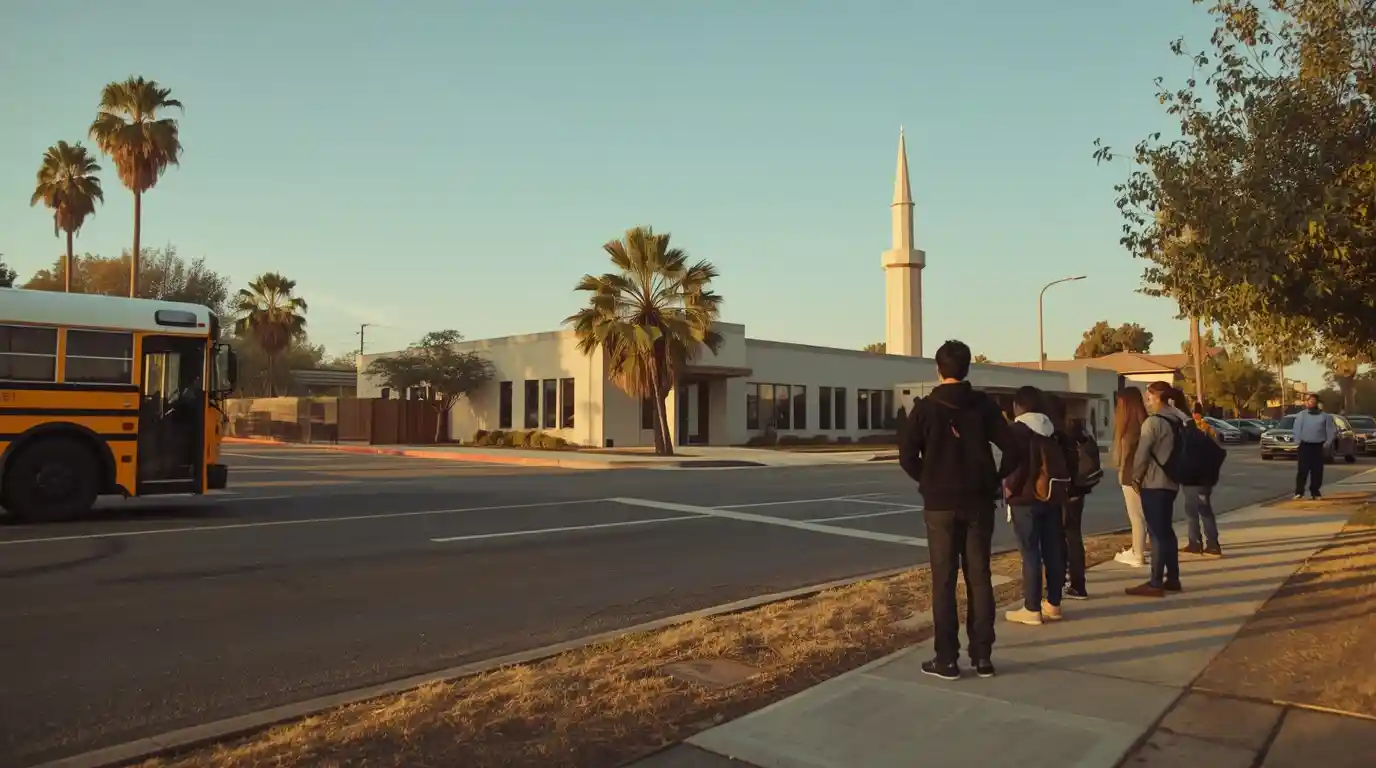
A mosque field trip lawsuit filed in federal court this month has put a Palo Alto high school class — and the Qurans students say they carried home — at the center of an argument about where cultural education stops and religious practice starts. Ten plaintiffs brought the case in the U.S. District Court for the Northern District of California, naming the Palo Alto Unified School District and Palo Alto High School principal Brent Kline as defendants.
The trip itself happened back in fall 2025. Students in Paly's Social Justice Pathway, a voluntary three-year program open to sophomores and up, visited the Muslim Community Association on Scott Boulevard in Santa Clara. According to the Palo Alto Daily Post and Palo Alto Online, the complaint says girls were offered hijabs to wear, students were given copies of the Quran, and photographs of the teenagers inside the building were taken and shared publicly without parents signing off.
None of that has been tested in court, and the district says it first learned about the case from news coverage. But the reason this matters well beyond one Bay Area campus is simple: visits to churches, temples, synagogues and mosques are a standard part of world-history and social-studies teaching across the country. What a court decides about this trip could shape how carefully every district writes its next permission slip.
What the Families Say Happened That Day
The plaintiffs filed as a group called Community Members for Religious Neutrality in Public Schools – San Francisco Bay Area. Named individuals include Josh Lehrer, Sasha Ava Lehrer, Linor Levav, Pawan Deshpande and Dinsha Mistree, alongside several parents identified only anonymously. Coverage of the filing describes the group as mostly Jewish parents and former students, joined by a Hindu parent and a Zoroastrian — a coalition, in other words, of families from minority faiths.
Their central complaint isn't that students learned about Islam. It's that the visit allegedly slid into participation: wearing the garment, receiving the scripture, sitting in on prayer, and hearing Islam presented as uniquely aligned with social justice work. The suit also says students engaged with Noor Hifz Academy, the mosque's youth religious program, which the families argue is not a neutral educational partner.
Inside the Mosque Field Trip Lawsuit
The legal architecture here is worth a close look, because it isn't the one most people would expect. Rather than leading with the Establishment Clause, the complaint as described in local reporting leans on free speech, equal protection and California's own constitutional protections.
The Constitutional Claims
Coverage cites First Amendment violations, a Fourteenth Amendment equal-protection claim, and state-law claims covering religious preference and privacy. The Daily Post summarized the theory of the case as four failures: to stay religiously neutral, to treat faiths equally, to protect student privacy, and to vet outside speakers. Attorney David Rosenberg-Wohl filed the action.
The Photographs Nobody Approved
The privacy piece may end up being the most practical part. Districts routinely collect a media-release form at enrollment, but that form usually covers school-controlled publication. Images captured by a host organization and posted on its own channels sit in a much grayer zone, and that's the gap the families are pointing at.
The Guest Speaker Nobody Vetted
The complaint singles out Zahra Billoo, executive director of the Council on American-Islamic Relations' Bay Area chapter, who addressed the students. The plaintiffs argue her past public statements about Jews made her an inappropriate speaker for a public-school audience, and that the district never checked.

How the School District Has Responded
Palo Alto Unified hasn't filed anything in court yet and declined to litigate the case in the press. Superintendent Jason Glass did restate district policy plainly.
Instruction about religion in our schools must be academic, not devotional. No faith may be promoted, and no faith may be denigrated.
That's the standard line districts everywhere use, and it maps closely onto decades of federal case law. The fight will be over whether a hijab handed to a 16-year-old is academic or devotional.
A Nearly Identical Case Already Failed
Parents pushing this kind of claim have lost before. In February 2019, the Fourth Circuit ruled against a Maryland student who argued that her world-history coursework on Islam endorsed the religion over Christianity. The court found the material, read in context, neither endorsed a faith nor forced her to profess one. The Supreme Court declined to take the appeal.
Two things make Palo Alto different. That case involved worksheets; this one involves clothing, gifted scripture and an off-campus religious site. And the Supreme Court has since retired the Lemon test the Fourth Circuit applied, replacing it with an approach built on historical practice — meaning the ground rules for a mosque field trip lawsuit have genuinely moved since 2019.
What Parents Should Watch For Next
A case management conference is on the calendar for November 2026, so nothing substantive gets decided this fall. In the meantime, the useful move for any parent is to read the next permission slip properly rather than signing it in the carpool line. Ask three questions:
- Is there an alternative assignment if we opt out, and does it cost my kid credit?
- Will anyone outside the school photograph students, and where do those images go?
- Who is speaking, and did the district vet them?
Districts tend to rewrite policy long before a judge rules, and Palo Alto is a closely watched system. If your school sends home a revised field-trip or guest-speaker form this year, that's not a coincidence — read it, and say something at the board meeting while the language is still up for grabs.


Comments 0