

Funded on Paper, Unpaid in the Field: Congo's Ebola Fight
Congo's surveillance teams are fielding 70 alerts a day, going three months without pay, and still watching most new Ebola cases appear in people no one was tracking.
Ebola contact tracing in eastern Congo has stopped keeping up with the virus it is supposed to chase. Between 60% and 70% of newly detected cases are now turning up in people who were never on anyone's contact list, according to reporting by The Associated Press. In an outbreak response, that single ratio is the scoreboard. When most new patients were already being watched, the response is winning. When they weren't, the virus is moving through places nobody is looking.
The numbers behind that gap are ugly. Congo has logged more than 4,700 cases and over 2,200 deaths since the outbreak was declared in May, AP reported this week. The World Health Organization's own tally, which counts only lab-confirmed cases and runs through July 30, listed 3,626 confirmed cases and 1,589 deaths, a case fatality ratio of 44% inside Congo. Both counts point the same direction: this is the second-largest Ebola outbreak on record, and the fastest-growing.
For readers in the US, the direct risk is still low, and WHO rates the global risk from this outbreak as low. Two things make it worth watching anyway. One case has already been diagnosed in France, and two patients from Congo were flown to Germany for treatment. More importantly, the medical toolkit that shut down Congo's last major outbreak — a licensed vaccine and two approved antibody drugs — does not work on this strain.
Why Ebola Contact Tracing Keeps Missing People
Ebola contact tracing works like a net. Every confirmed patient names the people they were near, those people get checked daily for 21 days, and anyone who develops a fever is isolated before they can infect a household. WHO counted 17,863 contacts under monitoring across the affected provinces, but follow-up rates ran only 66% to 81% depending on the area. Flip that around and roughly 3,400 to 6,000 people who should be getting a daily check are not getting one.
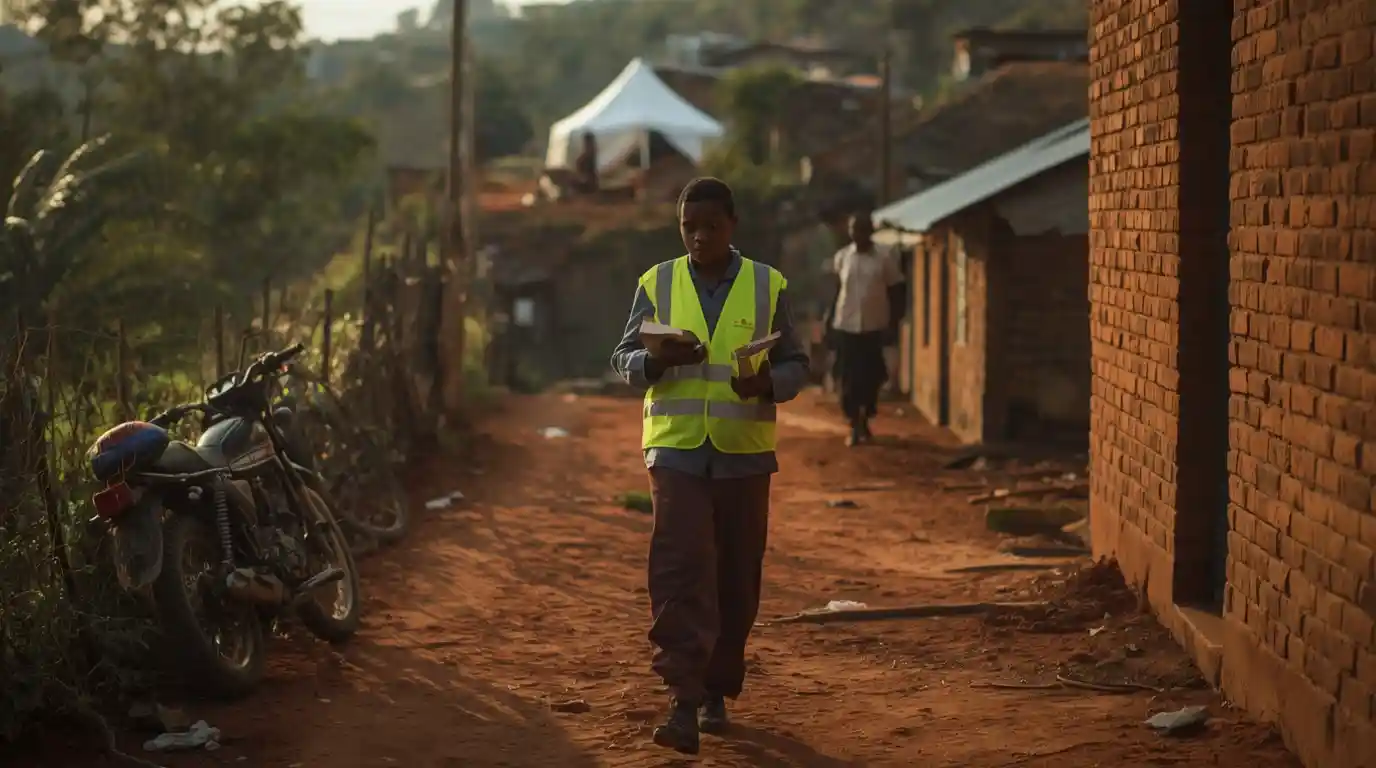
In Nizi, one of the hardest-hit health zones in Ituri province, surveillance teams field 60 to 70 alerts a day. Each alert is a possible case someone has to visit, assess and write up. Community health worker Gédéon Banga Ngbape told AP he leaves at 8 in the morning and gets back around 11 p.m., sometimes midnight. Ituri alone accounts for about 90% of Congo's cases and 80% of its deaths.
"We are chasing the virus; the virus is ahead of us." — Dr. Mohamed Yakub Janabi, WHO regional director for Africa
The People Doing the Tracing Haven't Been Paid
Here is the part that explains the rest. The tracing system holding back Africa's fastest-growing Ebola outbreak rests almost entirely on locally hired workers who are owed months of wages, and the strain is starting to snap things.
Fifty dollars a month, three months late
Community health workers are paid roughly $50 a month for door-to-door surveillance — about $1.65 a day, less than a US minimum-wage worker earns in fifteen minutes. Staff at health facilities have gone more than three months without pay, AP reported. The risk is not theoretical: WHO has recorded 151 confirmed cases among health workers, with 44 deaths, a 29% fatality rate inside that group.
A treatment center that closed mid-outbreak
Unpaid workers at the Nizi treatment center walked out last Thursday and the facility temporarily shut its doors — in one of the worst-affected zones in the country. A closed treatment center doesn't just stop care. It pushes sick people back into homes and funerals, which is exactly where Ebola spreads fastest.
Door to door without boots or disinfectant
Ana Ndroy Kasime, a community health worker in Nizi, told AP her team goes house to house without protective equipment such as boots and disinfectant. Tracers are the people most likely to meet an infectious patient before anyone knows they're infectious, and they're doing it in street clothes.
One Strain, No Vaccine, No Approved Drug
This outbreak is caused by Bundibugyo virus, a rarer Ebola species first identified in Uganda in 2007. The Ervebo vaccine and the two antibody treatments US regulators approved in 2020 all target Zaire ebolavirus, the strain behind Congo's 2018–20 epidemic. None are approved for Bundibugyo. Trials of candidate products are underway, but for now the response has no ring vaccination to fall back on. Tracing isn't one tool among several — it's the main one.
How This Compares With Past Outbreaks
The 2014–16 West Africa epidemic remains the worst, with roughly 28,600 cases and 11,300 deaths. Congo's 2018–20 outbreak in North Kivu produced about 3,470 cases and 2,280 deaths, and it held second place until this year. This outbreak has now passed it in under four months. The 44% fatality rate is also high for Bundibugyo, which historically killed closer to a quarter to a third of those infected — a signal that many patients are reaching care too late, or not at all.
What to Watch in the Coming Weeks
Spread is still widening: Al Jazeera reported on August 13 that a death in Bas-Uele pushed the outbreak into a sixth province, on top of 49 health zones already affected. Uganda closed its own linked outbreak on July 28 after 42 days without local transmission, which shows containment is possible when the basics hold. Against that, armed groups including the Allied Democratic Forces have threatened responders, health facilities were attacked in mid-July, and about $30.5 million in emergency funding has been announced — a fraction of the hundreds of millions spent on the 2018–20 response.
Track two things. First, whether that 60–70% figure falls; if Ebola contact tracing starts catching cases before they're symptomatic, the curve bends within weeks. Second, whether back pay actually reaches the field, because a strike in Ituri costs more than a funding shortfall. If you're planning travel to the region, check the CDC's Ebola situation summary and travel notices before booking, and tell a clinician about recent East or Central Africa travel if you develop a fever within three weeks of returning.



Comments 0