

Google Raised the Pixel 11 Pro Price and Cut the Memory
Google's new flagship lands in British shops today with a better zoom lens, a chip that still can't keep up, and a quiet downgrade at the entry price.

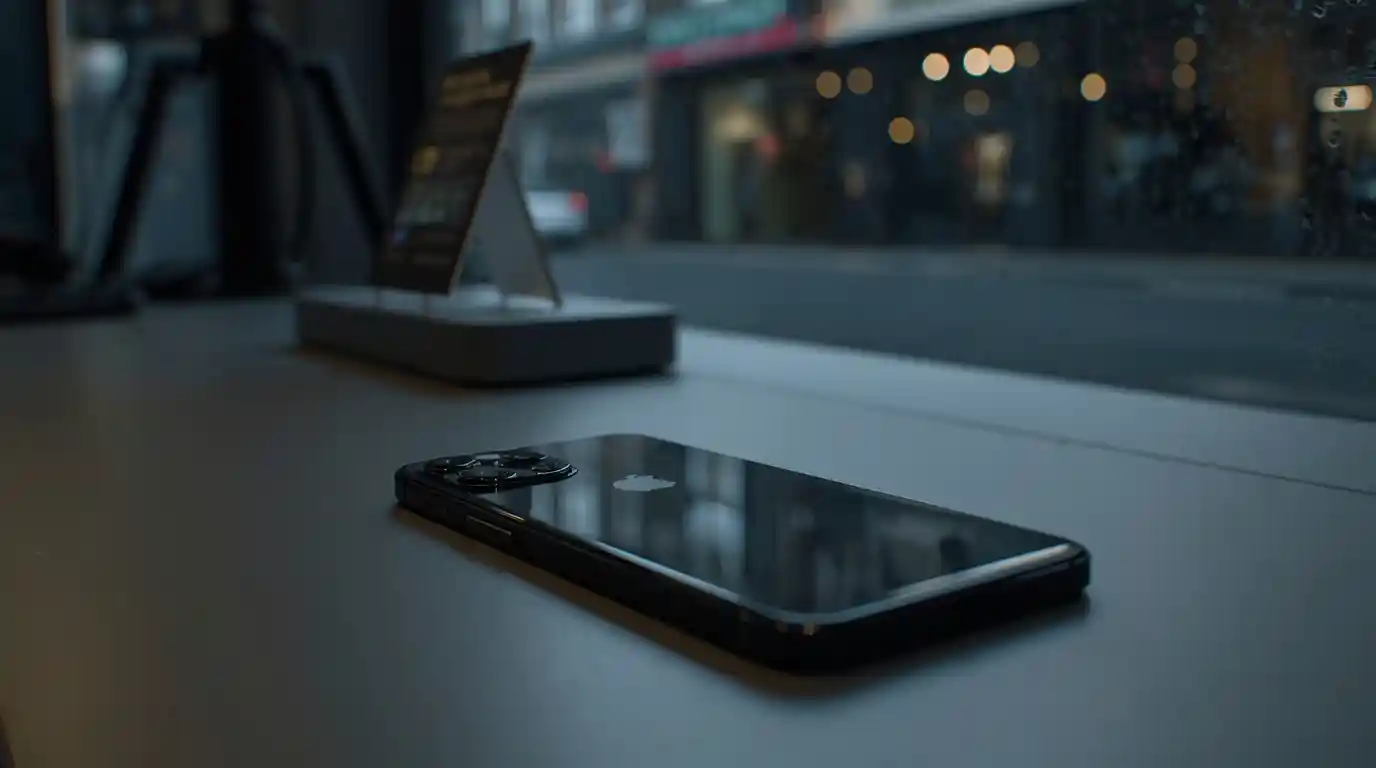
The Pixel 11 Pro reaches British shops today at £1,079, eight days after Google announced it, and the most revealing thing about this launch isn't in the keynote slides. It's what left the box. The entry-level handset now ships with 12GB of memory, where every tier of last year's Pixel 10 Pro came with 16GB as standard, a change Android Authority flagged as the reason it is skipping this generation.
The larger Pro XL tells a similar story with a bigger number attached. It starts at £1,279 for 256GB, which Expert Reviews notes is £80 more than the equivalent model cost twelve months ago. Pay £1,399 and you get 512GB with 16GB of memory. The 1TB version is £1,629. In other words, the memory you used to get by default is now something you buy back.
That matters more than it did a few years ago. Google has staked this whole product line on Gemini and on-device AI, and those features sit in memory. Trimming it at the cheapest tier, in the same year you raise the price, is an awkward look. Android Central's review of the pair carries the headline "It didn't have to come to this", which tells you roughly how the launch has landed.
What You Actually Pay in the UK
Both phones went on general sale on 20 August, having been announced on 12 August, and they're available through the Google Store and the main UK networks. The smaller Pro has a 6.3-inch screen; the XL stretches to 6.8 inches at 2,992 x 1,344 with a variable 1-120Hz refresh rate, the same panel dimensions as before. Expert Reviews measured it at 1,274 cd/m² manually and 2,104 cd/m² on HDR content, which is genuinely excellent.
Put the XL's £1,279 across a typical 24-month contract and you're at roughly £53 a month for the handset alone, before airtime. That's the frame worth using. This isn't a phone you buy on impulse; it's a two-year commitment competing against a Galaxy S26 Ultra and a Xiaomi 17 Ultra that both cost broadly similar money.
The Pixel 11 Pro Chip Still Trails Its Rivals
Google's seven-core Tensor G6 is built on a 3nm process and runs up to 4.1GHz. Google claims 25% faster web browsing, 15% quicker app launches and 50% more compute for the AI-handling TPU. In Expert Reviews' benchmarks the chip landed 19% ahead of its predecessor on single-core and 22% ahead on multi-core, which is a real generational jump by Pixel standards.
It still isn't close. The same tests put the Galaxy S26 Ultra around 55% ahead on multi-core, with the Xiaomi 17 Ultra roughly 50% ahead. That gap has been the Pixel story for five years now, and at this price it has stopped being a footnote.
The gulf between it and the competition in both performance and power efficiency make it difficult to recommend, Expert Reviews concluded of the Tensor chipset.

What Changed on the Cameras
The camera hardware is where Google spent its effort, and it shows. The rear array is a 50MP f/1.7 main lens, a 48MP f/2.1 periscope at 5x, and a 48MP f/1.7 ultrawide, with a 42MP selfie camera on the front.
A Bigger Sensor Behind the 5x Zoom
The periscope now uses a 1/1.95-inch sensor, larger than the one it replaces, and maximum digital zoom climbs to 120x. Sensor size is the honest upgrade here: more light per shot means cleaner long-range photos in British weather, which is precisely when phone zoom usually falls apart. Video tops out at 8K, with 4K portrait video added.
Magic Capture Pulls Stills Out of Video
The marquee software feature, Magic Capture, digs sharp photographs out of a video clip so you stop choosing between filming a moment and photographing it. It's useful. It's also not new to the category — Samsung shipped something comparable as Single Take years ago. The on-device night video processing many expected didn't arrive.
How Long It Lasts and How Fast It Fills
The XL's battery is 5,115mAh, slightly smaller than the 5,200mAh cell it replaces, yet Google quotes up to 30 hours between charges against 24 for the previous model. Expert Reviews' looping video test returned 25 hours 44 minutes. Decent, not class-leading.
Charging is where the numbers diverge. The spec sheet claims 45W wired will hit 75% in half an hour, but Expert Reviews measured 55% in that window. Wireless is 25W over magnetic Qi2.2. Either way, budget for an overnight charge rather than a ten-minute top-up before you leave the house.
Should You Upgrade or Sit This One Out?
If you bought a Pixel in the last two years, there's no case here. A better zoom sensor and a chip that closes a fifth of a gap it needed to close entirely doesn't justify four figures. If you're coming from a phone that's four or five years old, the screen, the cameras and Android 17 will feel transformative, and the smaller £1,079 Pro is the sensible buy.
One practical thing before you tap order. Check the memory on the tier you're choosing, because 12GB and 16GB models sit side by side in the same listing and the difference will matter as Google adds more on-device AI. And wait a fortnight if you can — UK network deals on Pixel launches have a habit of improving once the pre-order rush clears.




Comments 0