

Hand Sanitiser Doesn't Stop Petting Zoo E. coli. Soap Does.
Victorian children are in hospital with kidney failure after a farm-animal outbreak — and the bug ignores the one precaution most parents rely on.

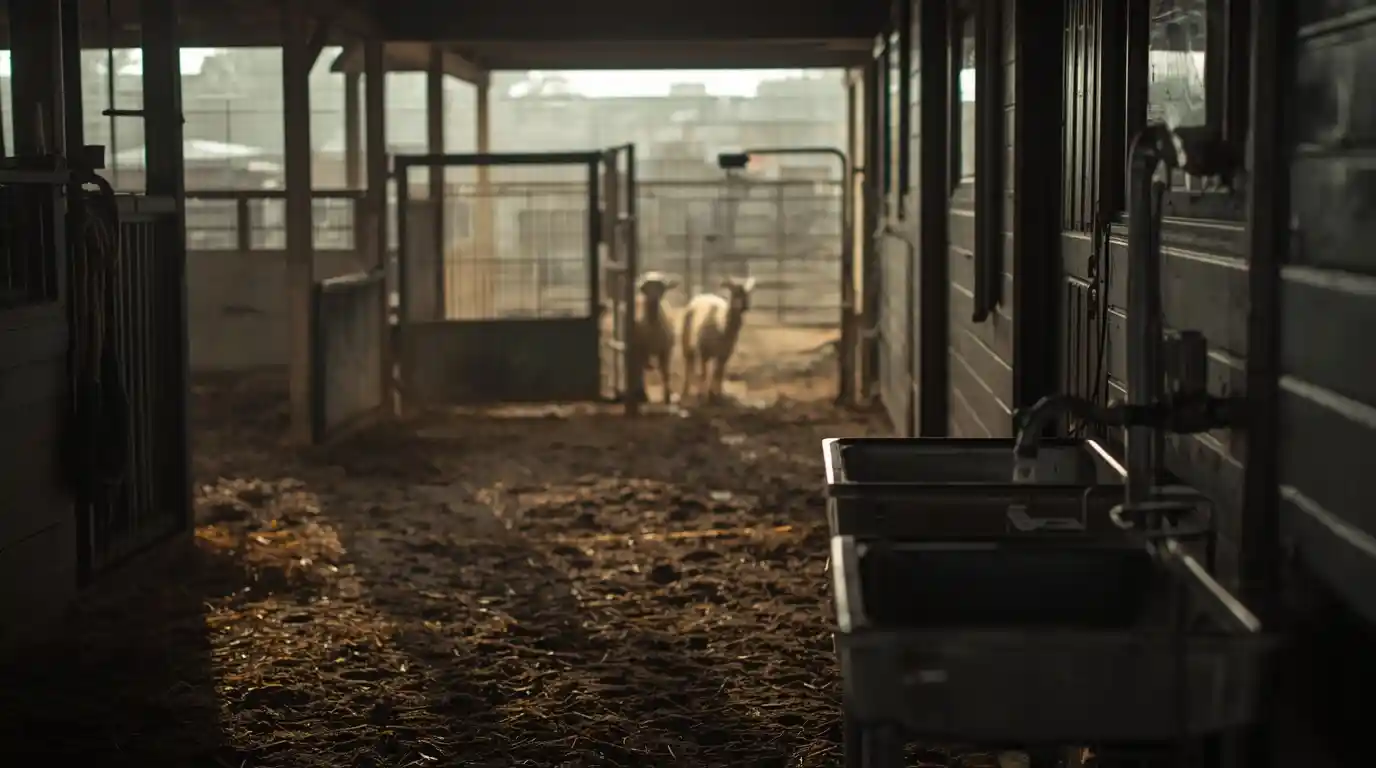
Victorian health authorities are working through a petting zoo E. coli outbreak that has put children in hospital with kidney failure, Nine reported this week. The bacteria involved is Shiga toxin-producing E. coli, known in health circles as STEC — one of the very few gut bugs capable of turning a cheerful hour with a lamb into weeks of dialysis for a small child.
Here's the detail most parents never hear. The pump bottle of alcohol gel sitting at the exit gate is close to useless against this particular organism. Alcohol rubs work well on many viruses and bacteria, but health authorities are consistent on this point: at animal contact venues, soap and running water is the standard, and gel is a fallback at best.
That matters because the dose required is tiny. Most stomach bugs need a decent mouthful of contaminated food to take hold. STEC does not. A smear of manure invisible on a child's fingers, transferred to a sandwich or a thumb in the mouth, is enough. And children under five — the exact age group these venues are built for — are the ones whose kidneys are most likely to fail.
What Victorian Parents Have Been Told
Both haemolytic uraemic syndrome and STEC detections are on Victoria's immediate-notification list, meaning a doctor or lab cannot sit on the result overnight. The moment a case is confirmed, the Department of Health is told and an investigation opens. It's why clusters like this one surface publicly within days rather than weeks, and why the case count often climbs after the first report as contacts are traced and tested.
How Petting Zoo E. coli Reaches a Child's Gut
The bacteria lives quite happily in the intestines of healthy cattle, sheep and goats. The animals show no signs of illness at all — no weight loss, no diarrhoea, nothing a handler or a parent could spot. They simply shed the organism in their manure, and that manure ends up on their coats, on the fence rails, on the straw and on the ground.
Which means the risk isn't really the animal. It's every surface in the pen, plus the pram wheels, the shoes and the water bottle that leave with you. Cases have been traced to children who never touched an animal but walked through the enclosure. Contamination can persist in soil and bedding for weeks after the animals have moved on.
The Warning Signs You Shouldn't Wait Out
Days one to four: the stomach bug stage
Symptoms usually appear one to ten days after contact, most often around day three. It begins as ordinary gastro — stomach cramps, then diarrhoea. Fever is often mild or absent, which is part of why it gets dismissed. The signal that this is different is blood in the stool. That is not a wait-and-see symptom in a young child; it's a same-day trip to a GP or emergency department.
Day five to ten: when the kidneys are hit
In roughly five to ten per cent of young children with STEC, the toxin damages small blood vessels and the kidneys start to shut down. This is haemolytic uraemic syndrome, and it typically arrives about a week in — often just as the diarrhoea is settling and everyone has relaxed. Watch for paleness, unusual drowsiness, bruising, puffiness around the eyes, and a sharp drop in wet nappies or trips to the toilet.
The two things not to reach for
Anti-diarrhoeal medicines keep the toxin sitting in the gut for longer. Antibiotics, in several studies, appear to raise the risk of HUS rather than lower it by triggering toxin release. Do not give either to a child with bloody diarrhoea without a doctor's direction. Treatment is supportive — fluids, monitoring, and dialysis if the kidneys need the rest.
Why This Keeps Happening at Animal Displays
Victoria isn't an outlier. Food Safety News reported in August that a Belgian petting zoo linked to a cluster of HUS cases has reopened, after eight children in the Brasschaat area were hospitalised with the syndrome between late June and mid-July, traced to STEC O26. In the United States, health authorities counted sixteen cases connected to the 2025 Arizona State Fair across November and December, and a six-year-old boy who ended up on dialysis is now at the centre of a lawsuit against the fair.
The pattern repeats because the design of these attractions is fundamentally at odds with the biology. Small children, animal manure, food stalls nearby, and a single handwashing point that's often understocked by mid-afternoon.
What to Do Before Your Next Farm Visit
Spring show season is coming, and animal nurseries are a fixture of it. A few practical rules go a long way:
- Wash with soap and running water on the way out, before anything else — not gel.
- Keep food, drinks, dummies and bottles out of the enclosure entirely.
- Leave prams and strollers outside the pen where you can.
- Change shoes or wipe them down before the car, especially with crawling babies.
- Ask staff where the taps are before you go in. If there aren't any, that tells you something.
If your child develops diarrhoea in the ten days after any farm or animal display visit, mention that visit to the doctor without being asked. It changes which tests get ordered. And if there's blood in it, go the same day — the window where HUS can be caught early is measured in days, not weeks.



Comments 0