

Judges Must Visit 123 Buildings for the AJ Architecture Awards
The third batch of 2026 shortlists lands with 28 housing, landscape and public realm projects — and a judging panel that turns up on site at every single one.

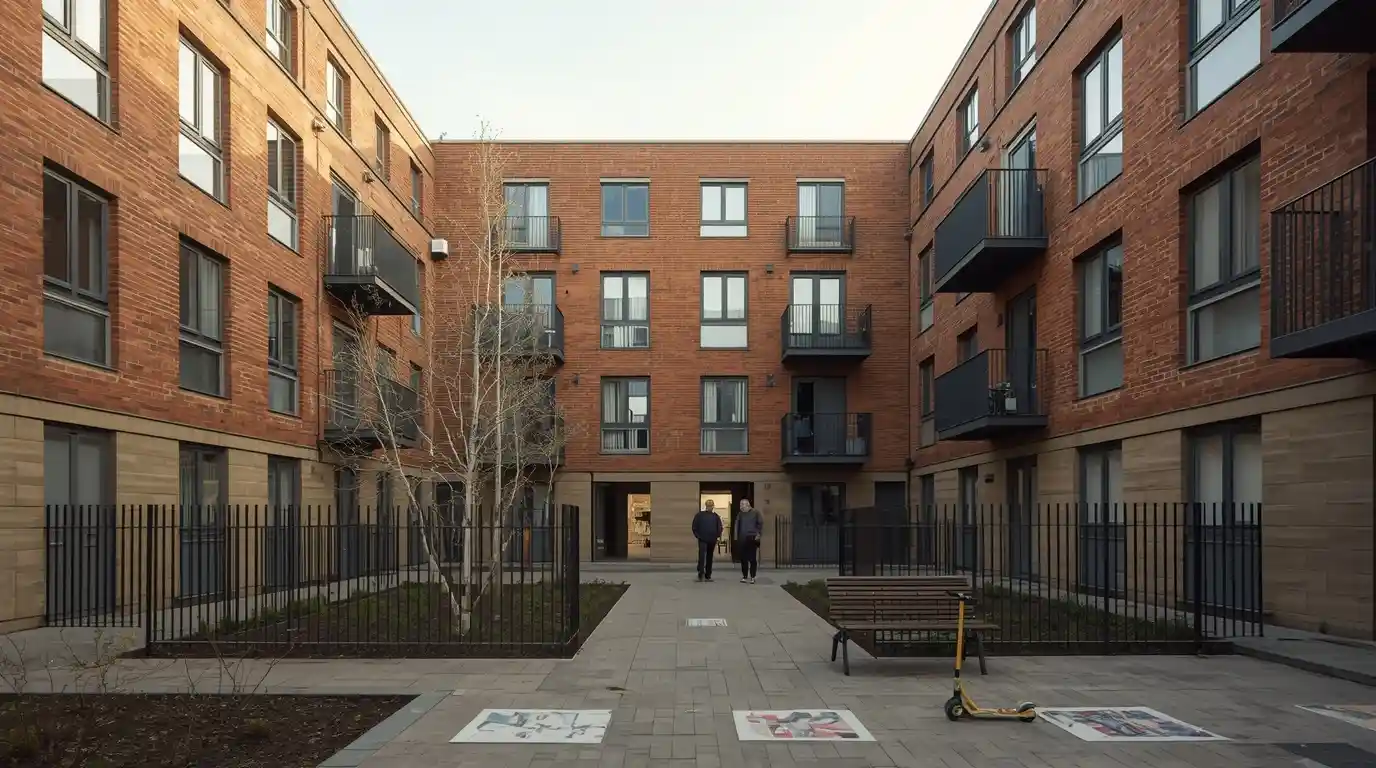
The AJ Architecture Awards released the third slice of its 2026 shortlists on 19 August, and it covers the two categories most people outside the profession actually notice: housing, and landscape and public realm. That's 28 projects in this batch alone. Housing is split into three brackets by construction cost, and the top bracket — £20 million and over — pulled the longest list of the lot, with nine schemes.
Here's the detail that sets this prize apart from most industry gongs. Every one of the 123 shortlisted projects, across all 21 categories, gets a physical site visit from the judging panel before a single winner is picked. Not a photo pack. Not a rendered PDF. Someone turns up, walks the building and talks to whoever is standing in it. Between now and the ceremony on 26 November at the Royal Lancaster London, that is a genuinely punishing amount of travel.
Why should that matter if you don't work in architecture? Because the entry rules only allow projects completed between 1 January 2025 and 31 July 2026. What you're looking at is a fairly honest audit of what Britain actually finished in a 19-month stretch — not what got planning permission, not what's on a hoarding, but what people have moved into.
The 28 projects on the AJ Architecture Awards list
The housing categories run in three cost bands, which is a sensible way to stop a £60 million regeneration scheme being marked against six flats on an awkward backland plot. Each band is judged on the same criteria — how well the brief was met, community engagement, sense of place and sustainability — but against peers with comparable money in the ground.
Housing under £10 million
Six projects made the smallest band, and it's the one where individual architects tend to punch hardest. Tight sites, small budgets, no room to hide a bad plan. Among them is Metropolitan Workshop's Arts and Crafts-influenced Lewisham housing, an affordable scheme by Gibson Thornley, and a backland development squeezed onto leftover land.
- Edith Road — Satish Jassal Architects
- Farmstead Road — Metropolitan Workshop
- Honor Oak Park — Dowen Farmer Architects with Holloway and Holloway Architects
- Leon House — Gibson Thornley
- Pine Place — Reiach and Hall Architects
- Trace — Bureau de Change
The £10-20 million middle band
Five made the cut here, and the mix is telling. One is a Hemel Hempstead development delivered as 100 per cent social housing. Another is an intergenerational scheme — homes designed so older and younger residents share the same site rather than being sorted into separate developments. A third is mixed-use, with flats above active ground floors.
- Albion Street — Bell Phillips with RM_A
- Bridge House — Studioshaw
- Ebbisham Drive, Ashmole Estate — FBM Architects
- Melfield Gardens — Levitt Bernstein
- Mountbatten View — Studio Partington
Nine contenders above £20 million
The heavyweight band is where the estate regenerations and city-scale masterplan chunks sit. Read the names and the geography gives itself away: Brent Cross, Wembley, and a clutch of London estate phases. These are the schemes that reshape a postcode rather than fill a gap in a terrace.
- Braund Mansions — HTA Design
- Conductor House and The Delamarre, Brent Cross Town — Maccreanor Lavington with Whittam Cox Architects
- Enclave: Acton — HTA Design
- Golf Links Estate Phase 3 — Stephen Taylor Architects with ECE Architecture
- Lightbody Street — Tim Groom Architects
- New Road Triangle — RUFFARCHITECTS
- The Eades — Assael Architecture
- The Octagon — Howells
- Wembley North East Lands — Haworth Tompkins
Eight schemes for streets, parks and bridges
The landscape and public realm shortlist is the one to watch if you care about the bits between buildings. It runs from a single river crossing to an entire town centre: Down Lane Park by Levitt Bernstein, the Eden Campus Development Framework by Reiach and Hall, Falcon Road Bridge by GPAD, Finsbury Circus Gardens by Realm with Studio Weave, Sloane Street by John McAslan + Partners, Stratford Waterfront at East Bank by Allies and Morrison with LDA Design, The Queen Elizabeth II Garden by HTA Design, and Woolwich Town Centre Regeneration by LDA Design.

Which practices are having the best week?
HTA Design is the standout, with three projects in this batch — two in the largest housing band and one in landscape. Levitt Bernstein, Reiach and Hall and LDA Design each landed two. For a mid-sized practice, that spread matters commercially: a shortlist across two different disciplines is a much stronger pitch to a local authority client than one lucky building.
What the housing list says about Britain right now
Context worth having. Inside Housing reported that affordable housing starts under Greater London Authority programmes hit 9,366 in 2025-26, up from 3,991 the year before, with social rent homes rising 143 per cent to 7,074. The buildings on this shortlist were finished before that surge — they're the tail end of the lean years, which makes the number of social and affordable schemes on it more impressive, not less.
What happens between now and 26 November
The panel includes Open House founder Victoria Thornton, Eva Jiřičná, Russell Curtis, Biba Dow, Ingrid Petit, Jas Bhalla and Daisy Froud. This is the ninth edition, and it has grown — 123 projects across 21 categories, against 120 across 19 last year, when winners were announced at the same venue on 27 November.
If you live near one of these, the practical move is to go and look before the judges do. Sloane Street, Finsbury Circus Gardens, Woolwich town centre and Stratford Waterfront are all public space you can walk through this weekend for nothing. Form your own view, then check it against the results in November.


Comments 0