

Last Year It Took 15 Days. Galaxy Z Fold8 Preorders Took 3.
Samsung's eighth-generation foldables cleared 2.71 lakh Indian bookings in three days, and the cheaper Fold is doing most of the work.

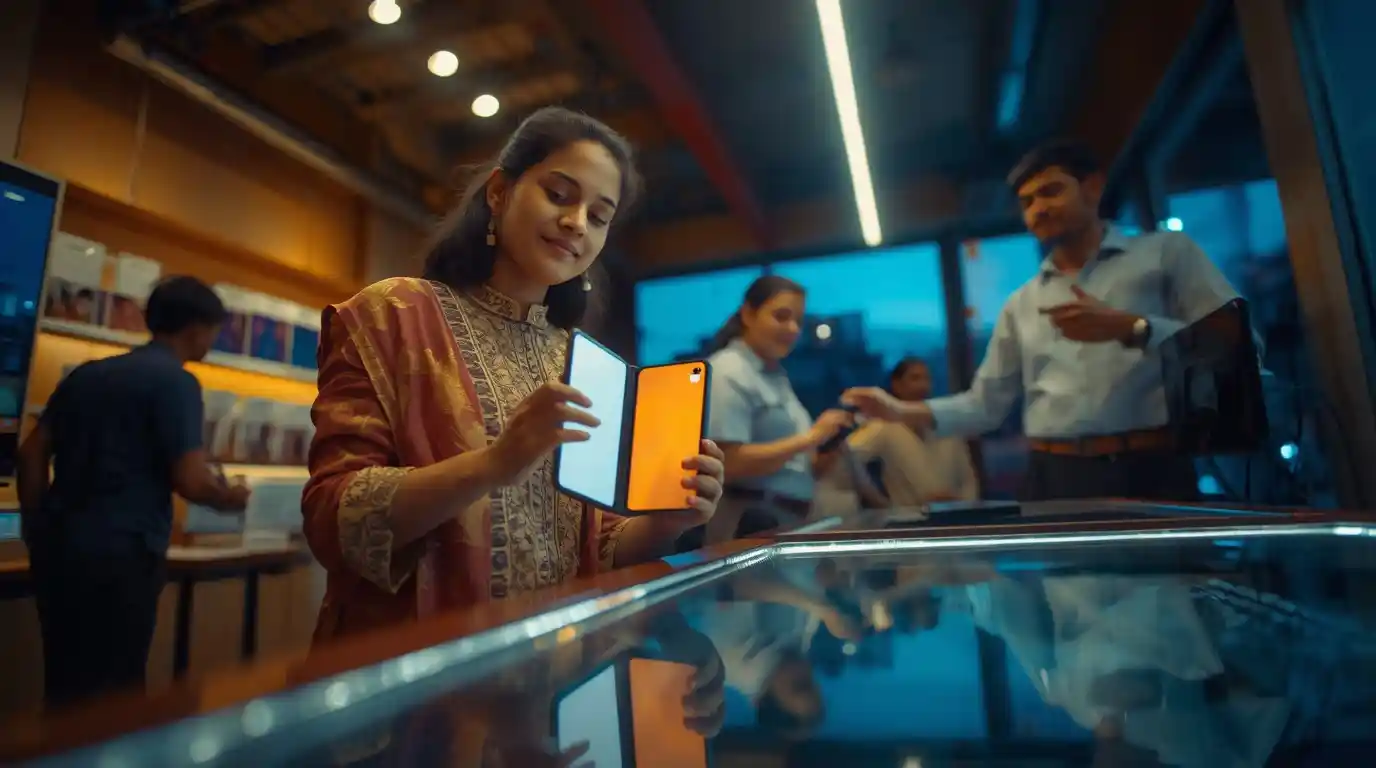
Galaxy Z Fold8 preorders in India crossed 2.71 lakh units within 72 hours of bookings opening on 22 July, according to Samsung's India newsroom. The detail worth pausing on is the one Samsung tucked into the same announcement: last year, the Galaxy Z Fold7 and Z Flip7 needed a full 15 days to reach a comparable number. Same country, same price bracket, five times the speed.
It isn't only an India story. Counterpoint Research, cited by Investing.com, put global bookings for the Z8 series more than 30% ahead of the previous generation. South Korea rose 39%, Europe climbed past 20%, and in the United States — where only Fold data is public — the increase was also around 30%. The phones reached shelves worldwide on 7 August.
Why should this matter if you have no intention of spending two lakh on a phone? Because folding phones have spent seven years as a showroom novelty, and this is the first cycle where the volume starts to look like an actual market. Apple is expected to reveal its own folding iPhone in September. What Samsung sells this quarter sets the price everyone else has to argue with.
The 72-Hour Number Nobody Saw Coming
Samsung India reported that 45% of those bookings came from tier-2 cities and beyond. That's close to half the demand for a device costing more than most two-wheelers, arriving from outside the Mumbai–Delhi–Bengaluru triangle that usually absorbs premium launches. It suggests the buyer base has widened rather than simply upgraded, which is a very different thing for a category that has struggled to escape the enthusiast niche.
What Galaxy Z Fold8 Preorders Look Like Elsewhere
The pattern repeats across markets, with one consistent surprise: the cheaper standard Fold8 is doing the heavy lifting, not the Ultra. Counterpoint's split has it at roughly 70% of Korean bookings, close to 50% in the US and about 40% in Europe. In previous generations, the halo model carried the launch. This time the mainstream one does — and mainstream is where volume lives.
Fortune reported another shift inside the American numbers. More than three times as many existing Flip owners moved to a Fold8 or Fold8 Ultra compared with earlier launches. People who chose the small clamshell are now paying up for the big one, which is the opposite of the downgrade path most phone makers expect.

Why the Cheaper Fold Is Beating the Flip
A Shape That Actually Fits a Pocket
The Fold8 is shorter and wider than its predecessor — closer to a passport than a TV remote. Folded, it behaves like a normal phone you can text on one-handed. Opened, it's a comfortable screen for video and scrolling. That single geometry change removed the compromise that kept cautious buyers away for seven generations.
Teenagers and Women Are Driving Korean Demand
Seoul Economic Daily, drawing on Samsung's domestic data, found buyers aged 13 to 39 made up over half of Korean orders, and purchases by women in that age band more than doubled from the prior model. An industry figure quoted in the same report framed it as foldables finally reading as ordinary phones rather than gadgets for a specific crowd. That reframing is the whole ballgame.
What It Actually Costs You in India
The listed India pricing is steep, and worth seeing plainly before the launch-offer maths clouds it:
- Galaxy Z Fold8: around ₹1,79,999
- Galaxy Z Fold8 Ultra, 256GB: ₹1,99,999
- Galaxy Z Fold8 Ultra, 512GB: ₹2,19,999
- Galaxy Z Fold8 Ultra, 1TB: ₹2,59,999
Launch offers included an upgrade bonus of up to ₹10,000 or bank cashback of ₹9,000, plus no-cost EMI stretched across as much as 30 months. That last one explains a good chunk of the tier-2 surge. Spread over 30 months, a ₹1.8 lakh phone becomes roughly ₹6,000 a month — the same ballpark as a mid-range phone bought outright each year.
Two Things That Could Stall the Run
Counterpoint flagged both. The first is sell-out rate: preorders measure intent from the keenest buyers, and the honest test is whether ordinary walk-in demand holds through September and the festive season. The second is Apple. A folding iPhone unveiled in September, reportedly in a similar shape to the Fold8, would validate the category and split it at the same time. Google's Pixel 11 Pro Fold, out on 12 August, adds a third option.
Counterpoint expects first-year Z8 shipments to grow by double digits over the Z7 and by more than 70% over the Z6 — a reminder that this is a two-year recovery story, not a one-launch spike.
If you're tempted, wait for Apple's September event before committing. Not because the iPhone will necessarily be better, but because Samsung has historically sharpened its exchange bonuses and bank offers once a serious rival lands. Watch the festive-season pricing in October too — that's when the discounting on the standard Fold8 usually starts, and it's the model everyone else is buying.




Comments 0