

Middle East Tourism to Lose $56 Billion, Then Nearly Double
The world's busiest transit corridor is having its worst year in a decade — and its best decade starts right after.

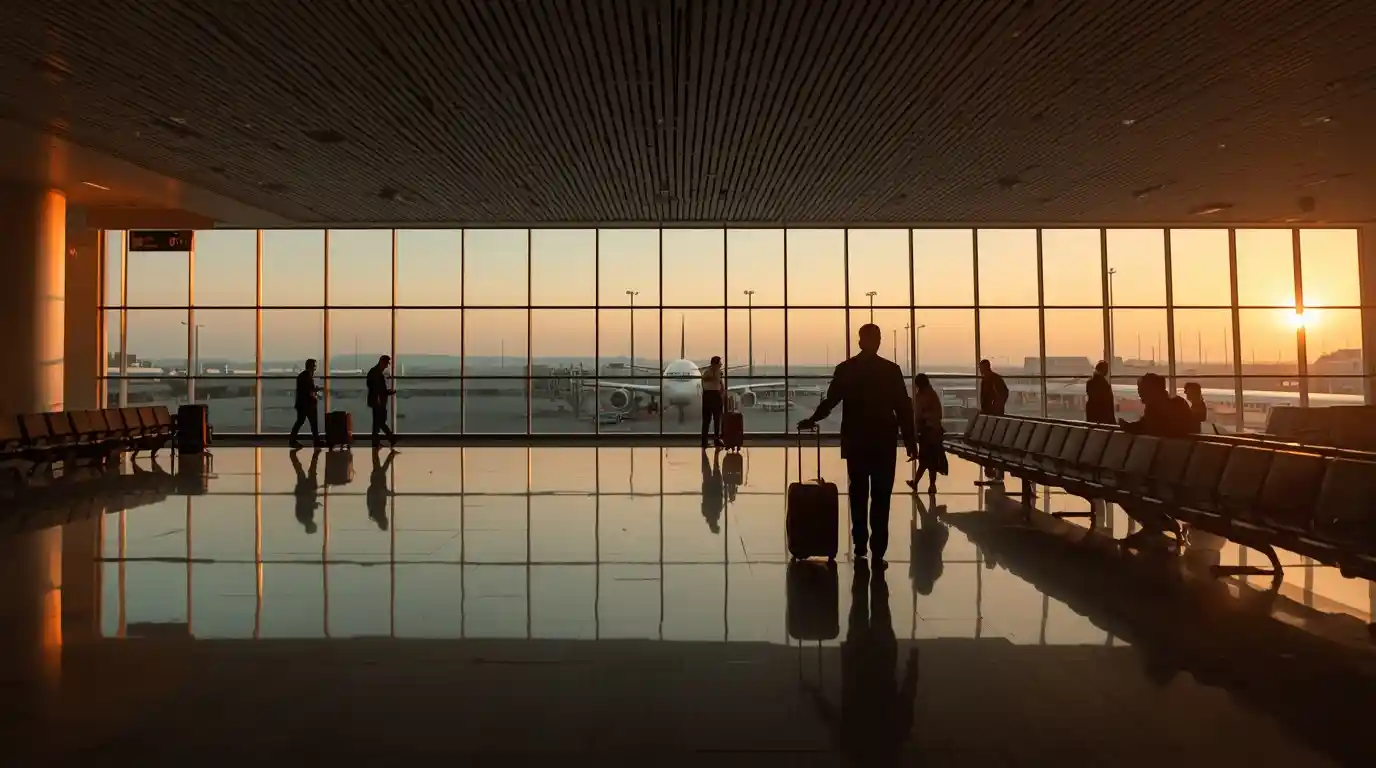
Middle East tourism is heading for its worst year in more than a decade, and almost none of it is about people deciding they don't want to go. The World Travel & Tourism Council, in its Global Trends Report published on 6 August, forecasts the region's travel and tourism GDP will fall 14.5% this year — from US$386 billion in 2025 down to US$330 billion. That's a US$56 billion hole, somewhere near A$86 billion at current exchange rates.
Here's the part that makes the number strange: the Middle East is the only region on the planet the WTTC expects to shrink at all in 2026. Every other region grows. And then, over the following ten years, the same forecast has the region growing faster than anywhere else on Earth — 6.3% a year, hitting US$605 billion by 2036. Measured from this year's low point, that's nearly double.
For Australians this isn't an abstract stat about a faraway market. Roughly 14% of the world's international air passengers move through the region — one in every seven people in the air. If you've flown Sydney or Melbourne to Europe on a single stop in the last decade, you've almost certainly been one of them.
The Only Region Going Backwards This Year
The contraction is a plumbing problem, not a demand problem. Conflict has made airspace over parts of the region unreliable — corridors close and reopen at short notice, which forces reroutes, longer sectors and cancelled sectors rather than cancelled holidays. When a hub built entirely on connecting traffic loses the ability to guarantee the connection, the whole model wobbles at once.
Several long-haul carriers based outside the region — Air Canada, British Airways and Lufthansa among them — have kept Gulf services suspended into the northern autumn, according to travel trade reporting. The three big Gulf airlines, Emirates, Etihad and Qatar Airways, have kept flying, but with schedules reworked far more heavily than a normal season.
What It Means If You Fly Through the Gulf
Most Australians affected by this aren't going to the Middle East. They're going through it. That changes what you should actually be checking before you book, because the risk sits in your connection rather than your destination.
Know which hub your ticket routes through
Dubai, Doha and Abu Dhabi are not interchangeable, and neither are their airspace conditions on any given week. A Perth–Doha–London ticket and a Sydney–Dubai–London ticket carry different exposure. Check the middle leg on your itinerary, not just the airline's logo, and give yourself more connection time than the minimum offered.
Buy travel insurance before the advice moves
Australian government advice for Gulf destinations has moved in both directions through 2026, tightening during the worst of the escalation and easing afterwards. Many policies restrict or void cover once official advice is raised for a destination. Buying early, when advice is calm, is the difference between a covered claim and a shrug.
Have a backup routing in mind
Singapore, Bangkok, Hong Kong and Kuala Lumpur all offer one-stop options to Europe from the east coast. You don't have to book them — but knowing what a switch would cost you means you can decide in an hour rather than a week if your flight gets pulled.
Why Middle East Tourism Is Still the Best Long Bet
Forecasters aren't being sentimental here. The rebound is built on money already committed. Four countries — Saudi Arabia, the UAE, Oman and Qatar — generated US$272 billion in tourism GDP in 2025 and are projected to reach US$435 billion by 2036, adding more than US$163 billion between them. That's infrastructure under construction, not a hopeful line on a chart.
Saudi Arabia now derives 14.1% of its total GDP from travel and tourism, with sector investment up 19.4% in 2025. In the UAE, tourism accounts for 11.9% of GDP and 13.6% of all jobs, with international visitors spending around US$57 billion. Oman expects to lift its tourism economy from US$7.9 billion to US$12 billion over the decade.
The Number That Explains the Nerves
One figure in the report does more work than the headline ones: 94.1% of Qatar's services exports are visitor spending. Nearly everything Qatar sells to the outside world beyond physical goods is, in accounting terms, someone arriving. That's why a bad airspace year lands so hard, and why Gulf governments treat aviation stability as an economic emergency rather than a travel inconvenience.
Gloria Guevara, President and CEO of the WTTC, framed the year as a period of pressure rather than decline, pointing to the region's record of recovering from disruption. That record is real — the Gulf came back from the pandemic faster than most — but a health crisis and a security crisis don't behave the same way. One ends with a border reopening. The other ends when the shooting stops.
What to Watch Between Now and Christmas
Two signals matter for anyone booking. First, whether the non-Gulf carriers restore their Dubai, Doha and Abu Dhabi services — they suspended earliest and will return only when their own risk teams are comfortable, which makes them a useful thermometer. Second, whether fares through Southeast Asian hubs stay soft as travellers reroute.
If you're holding a Gulf-routed ticket for the December school holidays, don't cancel on a headline. Check the Smartraveller advice level for your transit country, confirm your insurance was issued before any upgrade to that advice, and set an alert on your flight number so a schedule change reaches you before the airport does.




Comments 0