

Missed the Cornwall Solar Eclipse? The Next Big One Is 2081
Cornwall saw the deepest eclipse in England since 1999 on Wednesday evening — and nothing close to it returns for 55 years.

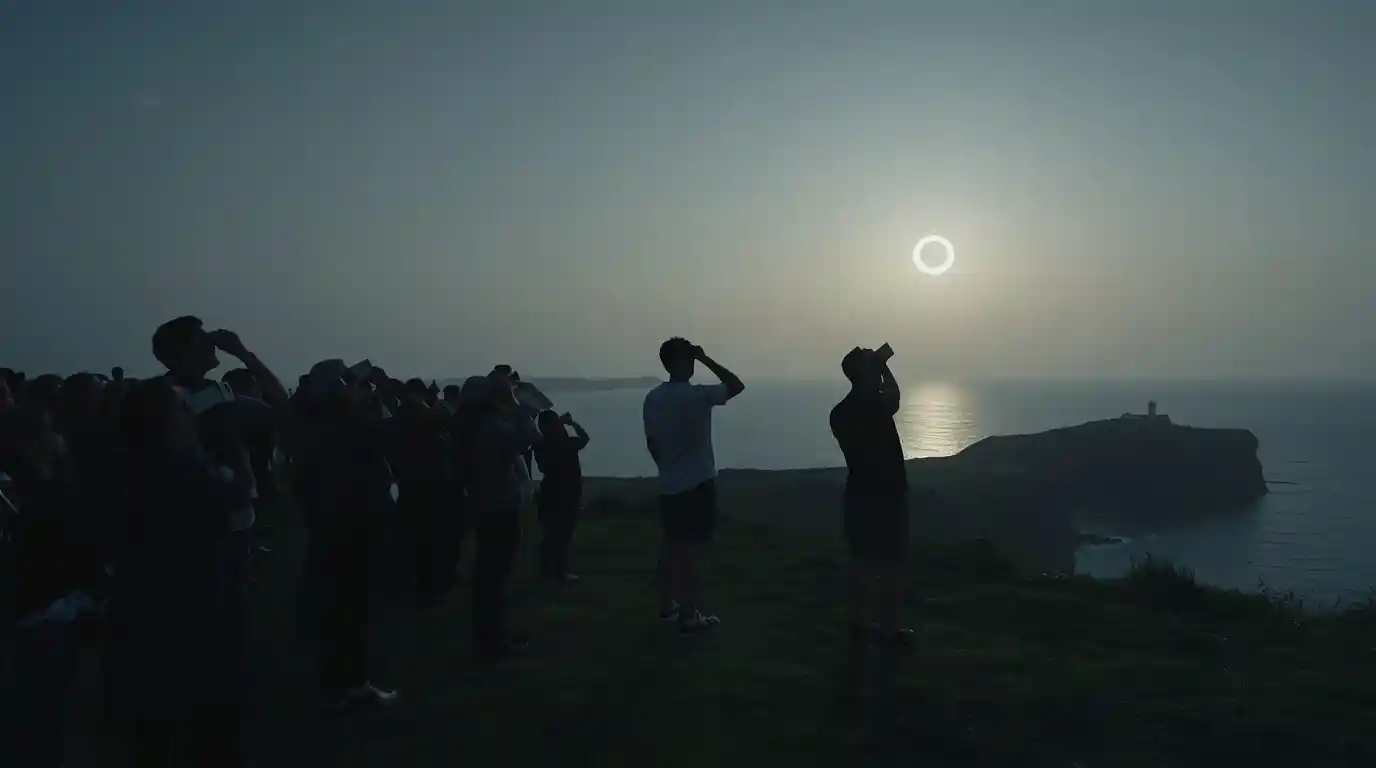
The Cornwall solar eclipse on Wednesday evening turned an ordinary August teatime into a genuine public event, as the Moon slid across all but a sliver of the Sun and the light over the south-west coast drained to a strange, flat grey. At Land's End the Moon covered 95.8% of the solar disc. At Lizard Point, the southernmost tip of mainland Britain, it reached 95.6% — the deepest bite anyone in England has seen taken out of the Sun since August 1999.
Nowhere else in the country came close. London topped out at roughly 90%, Pembrokeshire around 94%, and much of Scotland saw closer to 85%, according to the Royal Observatory Greenwich. On paper those gaps look trivial. In practice they are the difference between a slightly dull evening and the unsettling half-light that people booked accommodation months ahead to stand in.
The Guardian, reporting from the county, quoted one watcher describing "a magical eeriness" — which is about as close as ordinary language gets to what a near-total eclipse does to a familiar stretch of coast. And the reason it drew such crowds is simple arithmetic: the wait for anything comparable over Britain is measured in decades, not years.
The Cornwall solar eclipse by the numbers
The Moon began nibbling at the Sun's edge just after 6.15pm BST, with maximum coverage falling shortly after 7pm and the whole thing finishing a little past 8pm. That timing was unusually kind for a working Wednesday — no dawn alarm, no half-day off school. It also meant the Sun sat low in the western sky throughout, which is why the coast mattered so much. Inland, a single row of trees or a hill could ruin the view entirely.
Why the far south-west got the best seat
The path of totality — where the Sun disappears completely — crossed Greenland, Iceland and northern Spain, missing the UK by a wide margin. Britain simply caught the outer edge of the Moon's shadow, and the closer you stood to Spain, the deeper the bite. Cornwall's position on the very tip of the island is the whole explanation. Land's End, Cape Cornwall, Sennen Cove, Marazion, Perranporth and the Lizard peninsula all offered the same essential ingredient: an unbroken westward horizon over the Atlantic.
How it measured up against 1999
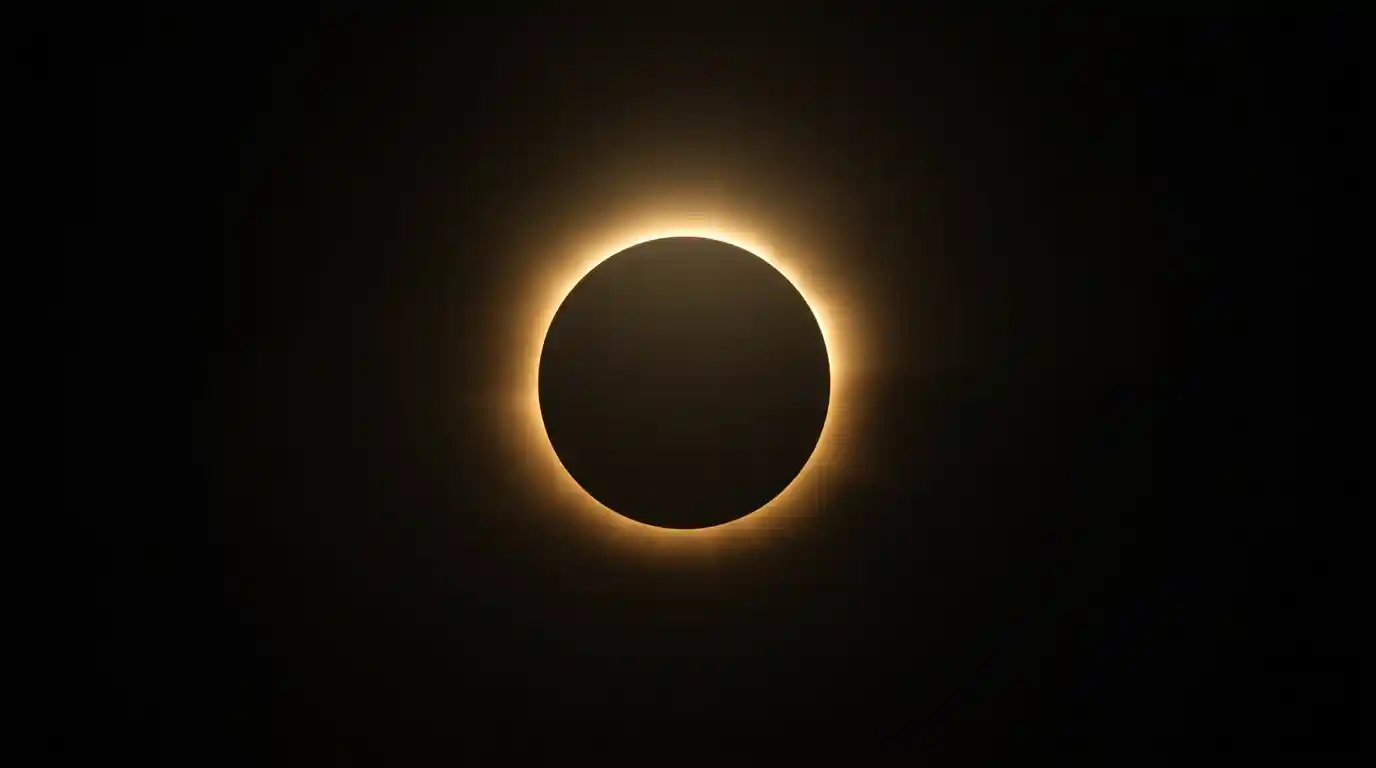
The comparison everyone reached for was 11 August 1999, when the shadow of a genuine total eclipse crossed Cornwall and Devon. Estimates at the time put the influx at close to a million people, roughly doubling the county's population overnight. The A30 seized up, accommodation had been sold out for months, and plenty of visitors ended up sleeping in cars, fields and on beaches. Then cloud rolled in and a great many of them experienced the darkness without ever seeing the Sun.
That is the part worth remembering. A total eclipse is an order of magnitude more dramatic than 96% — the corona appears, stars come out, the temperature drops. But 1999 also proved that Cornish weather owes nobody a favour. This week's Cornwall solar eclipse asked far less of people logistically, and delivered something they could actually plan an evening around.
When you get another shot at this
If you missed it, the honest answer is that patience is now required. Here is the realistic diary.
28 August 2026: a lunar eclipse before breakfast
A partial lunar eclipse reaches about 90% coverage at 5.12am BST on 28 August. It is a gentler spectacle and needs no special equipment — the Moon simply turns a rusty copper colour — but it does demand an early alarm and a clear western sky.
2081: Cornwall's 99% afternoon
The next time the county gets a deep partial eclipse on this scale is 2081, when coverage over Cornwall is projected to hit 99%. That is 55 years away, which puts this week's event firmly in the once-in-a-lifetime bracket for most adults reading this.
2090: the next true totality
A total solar eclipse does not return to UK skies until 2090. Anyone determined to see one sooner will have to travel — future paths cross parts of Europe, North Africa and the Americas well before then.
What to sort out before the next one
The practical lesson from this week was that preparation ran out faster than the weather did. Royal Museums Greenwich had sold out of eclipse glasses ahead of the day, and last-minute buyers were left improvising. A few things are worth doing early next time:
- Buy glasses carrying the ISO 12312-2 marking, and bin any pair that is scratched, creased or more than a few years old.
- Never look through binoculars, a camera or a phone lens at the Sun, even with glasses on — the concentrated light will burn straight through.
- Build a pinhole projector from two sheets of card. It costs nothing and is completely safe for children.
- Book coastal accommodation months ahead; Falmouth, Penryn and Truro were close to full for 11–13 August.
For now, the thing to watch for is the lunar eclipse on 28 August — a free, glasses-free rerun of the same celestial mechanics, just after 5am. Set the alarm, check the forecast the night before, and pick somewhere with a low western horizon. After that, Cornwall's sky goes quiet for a very long time.

Comments 0