

Most Congo Ebola Outbreak Deaths Happen Outside Hospitals
Tracing teams in DR Congo finally crossed a key threshold this month, yet up to seven in ten victims are still dying in villages, unseen by the health system.

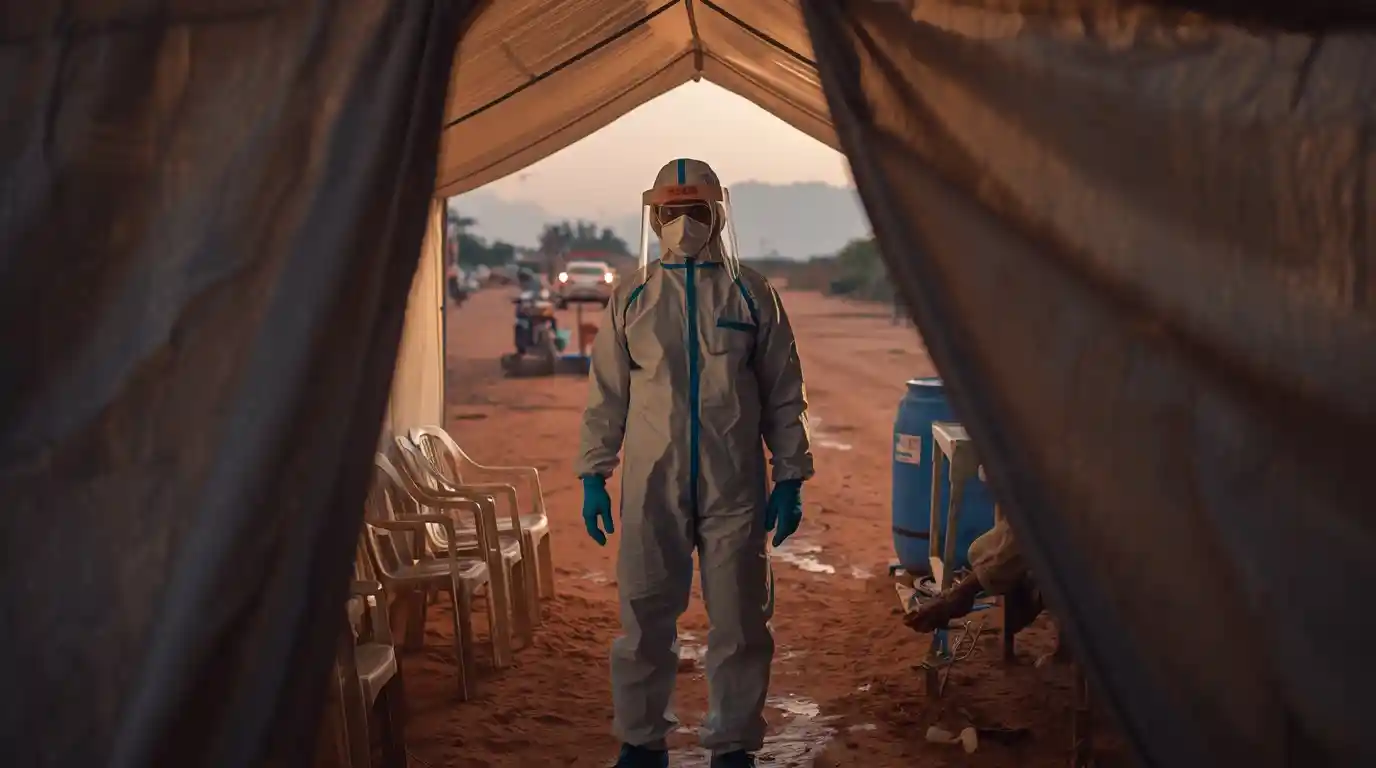
The Congo Ebola outbreak has now killed 2,061 people, but the most alarming figure isn't the death toll — it's where those deaths are happening. Between 60 and 70 per cent of victims are dying in their own communities, outside any treatment centre, according to figures relayed by UN News. Every one of those deaths is a body, a burial, and a room full of relatives who were exposed long before anyone realised what they were dealing with.
That is the contradiction sitting at the heart of the response this week. Congolese authorities and the World Health Organization say contact tracing has crossed 85 per cent nationally for the first time since the epidemic was declared in May. On a dashboard, that looks like progress. On the ground, the virus is still moving faster than the teams chasing it.
The running totals as of 11 August: 4,449 confirmed cases, 2,061 deaths and 886 recoveries — a fatality rate of 46 per cent. That already makes this the largest Ebola epidemic in DR Congo's history and the second largest anywhere, behind only the West Africa outbreak of 2014-16, which killed more than 11,000 people across upwards of 28,000 cases. At the current pace, even that record is not out of reach.
Why Dying at Home Makes This So Much Worse
Ebola doesn't travel through the air. It spreads through blood and other body fluids, and a patient is at their most infectious in the final hours of life and immediately after death. Someone who dies in a village, rather than in an isolation ward, is surrounded at exactly that moment by the people closest to them. Traditional washing and burial rites, performed without protective equipment, have seeded chain after chain in previous outbreaks.
There's a second problem. A death that happens outside the health system is a death the health system never saw. No test, no case notification, no list of contacts to follow. WHO has described exactly this pattern — hidden transmission fed by patients who reach an advanced stage of the disease without ever getting care. Tracing 85 per cent of known contacts means little if a large share of infections never become "known" at all.
The Congo Ebola Outbreak in Numbers
Fifty-three of the country's 140 health zones are affected, across five provinces: Ituri, North Kivu, South Kivu, Haut-Uélé and Tshopo. The concentration is stark — Ituri alone accounts for roughly 90 per cent of cases and 80 per cent of deaths, clustered along the corridor running from Bunia through Rwampara, Mongbwalu and Nizi. The national tracing average also hides a wide gap: in Haut-Uélé, only about 58 per cent of contacts are being followed up.
The cost to health staff has been brutal. By 19 June, 17 health workers had died and 75 had been infected. Médecins Sans Frontières has more than 1,400 people deployed across DR Congo and Uganda and had admitted 1,362 patients to its centres by 24 July, of whom 282 walked out alive.
Why This One Is So Hard to Stop
Three things separate this epidemic from the DRC outbreaks that were brought under control in 2018-20, and none of them are quick fixes.
A Strain No Vaccine Was Built For
This is Bundibugyo ebolavirus, not the Zaire species. Ervebo, the vaccine that helped shut down earlier Congolese outbreaks, targets Zaire, and WHO initially advised against leaning on it here because the cross-protection evidence wasn't there. A Phase 3 trial was authorised on 31 July, and remdesivir plus the monoclonal antibody MBP134 are being tested through the PARTNERS trial. Results will not arrive in time for the current wave.
Treatment Beds That Are Already Full
Several treatment centres in Ituri are described as saturated. MSF runs a 105-bed facility at Mongbwalu with a second 65-bed unit nearby, and a 90-bed centre in Bunia, yet admissions were suspended at its 40-bed site near Goma. When beds run out, sick people stay home — which loops straight back to the burial problem.
Responders Waiting to Be Paid
Delays in paying response personnel have been reported in affected zones. Tracers, burial teams and lab couriers are the cheapest part of an Ebola response and the first to stop working when salaries stall.
In some eastern areas of the DRC, the Ebola outbreak is outpacing our response.
That assessment came from WHO Director-General Tedros Adhanom Ghebreyesus after a high-level mission to the region on 4-5 August.
What India Has Already Put in Place
India has never recorded an Ebola case, and the realistic risk to a reader in Delhi or Kochi remains very low. But the machinery is already switched on. The Union Health Ministry issued a travel advisory on 23 May discouraging non-essential travel to DR Congo, Uganda and South Sudan, and international airports reintroduced thermal screening and self-declaration for arriving passengers. Travel-sector reporting says a revamped Air Suvidha portal, live since late June, now collects a 21-day travel history before immigration clearance.
The practical point matters most for families with someone working in mining, construction or trade in that part of Africa. Early Ebola looks like fever, body ache and weakness — indistinguishable from malaria or dengue, both of which are peaking here right now. Anyone who has been in the affected provinces within the past 21 days should say so, unprompted, at the hospital reception desk before a blood test is even ordered. That single sentence is what separates a contained case from a cluster.
What to Watch Over the Next Few Weeks
- Whether the share of deaths occurring outside treatment centres starts falling below half — the clearest sign the response has caught up.
- Haut-Uélé's tracing rate, currently the weakest link at around 58 per cent.
- Whether the Bunia–Mongbwalu corridor in Ituri slows, since it drives most of the national curve.
- Early safety signals from the remdesivir and MBP134 trials.
There is one genuinely encouraging precedent. Uganda logged 20 confirmed cases and two deaths and declared its own outbreak over on 28 July. Same virus, same border region, very different outcome — the difference was a health system that could find patients before they died at home. If you have relatives travelling to or from that region, check the Health Ministry's advisory page before booking rather than after landing, and keep that 21-day window in mind.




Comments 0