

No Approved Vaccine Exists for This Congo Ebola Outbreak
The WHO says this epidemic is the fastest-moving on record — and the Bundibugyo strain driving it is the one Ebola species medicine was never stocked for.

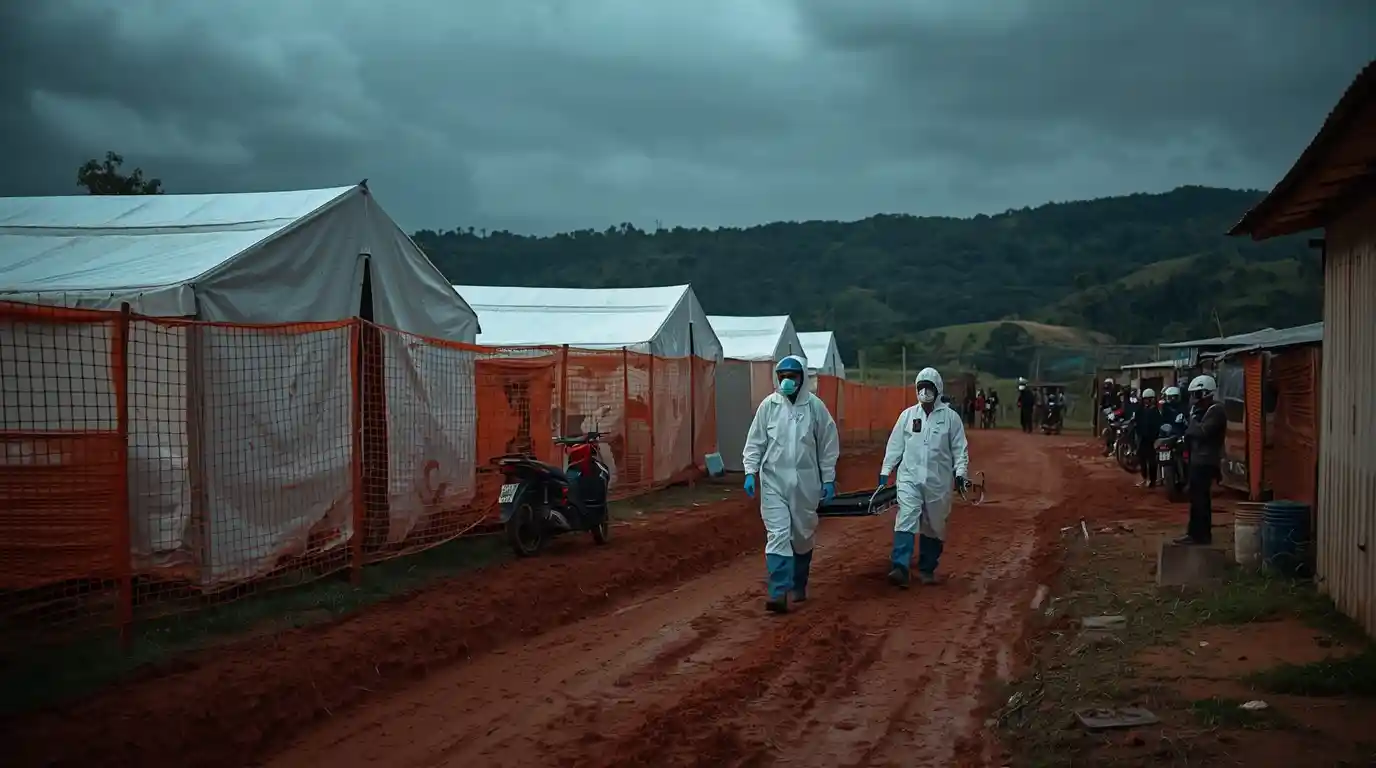
The Congo Ebola outbreak that the World Health Organization now calls the fastest-moving on record carries a problem that money and manpower cannot fix quickly: the strain driving it, Bundibugyo, has no approved vaccine and no approved treatment. The shots stockpiled after the last big epidemic were built for a different species of the virus.
As of August 12, the WHO count stood at more than 4,300 confirmed cases and over 2,000 deaths across five provinces in eastern Democratic Republic of Congo, with roughly 46 of every 100 confirmed patients dying. Director-General Tedros Adhanom Ghebreyesus told reporters the epidemic is on pace to eclipse the 2014-2016 West Africa outbreak, which killed more than 11,000 people out of some 28,000 cases.
That sounds like distant news until you look at the flight rules already in force at three American airports. Since May, US authorities have blocked most foreign nationals who were recently in Congo, Uganda or South Sudan, and routed returning citizens through designated entry points for screening. The State Department has committed $112 million to the response.
A Faster Killer Than the 2014 Epidemic
Raw totals still favor West Africa, and by a wide margin. Speed is the alarming part. The 2014-2016 epidemic took roughly eight months to reach 1,000 deaths; this one passed 2,000 within about three months of being declared. Genetic sequencing suggests the virus was already circulating in February, months before anyone raised an alarm.
The outbreak had a big head start, still way ahead of us, and we're playing catch-up.
That was Tedros describing why containment has been so hard. Ituri province accounts for the overwhelming majority of cases, with smaller clusters in North Kivu, Haut-Uélé, Tshopo and South Kivu. Uganda has reported around 20 cases and two deaths. France recorded a single imported case. Health teams have reached only about 30% of known cases, according to figures reported by the BBC.
The Strain the World Had No Shot For
Ebola is not one virus. Six species are known, and the countermeasures built over the past decade were aimed almost entirely at the one that caused the West Africa disaster and most Congolese outbreaks since.
A Virus Confirmed Only Twice Before
Bundibugyo ebolavirus has surfaced in just two prior outbreaks: Uganda in 2007-2008 and the town of Isiro in Congo in 2012. Both were small and quickly contained, which is precisely why no manufacturer had reason to bring a Bundibugyo-specific product through licensing. Historical fatality rates for the species ran between 25% and 50%.
Two Vaccines Now in First Human Trials
Two vaccines designed specifically for Bundibugyo are being given to people for the first time. Separately, regulators authorized late-stage trials on July 31 to test whether Ervebo — the licensed shot for Zaire ebolavirus — offers any cross-protection. Animal studies were discouraging enough that the WHO initially advised against deploying it.
The Drugs Being Tested in Ituri Right Now
Clinical trials began last month in Ituri covering the antiviral remdesivir and monoclonal antibody therapies including MBP-134 and maftivimab. None is approved for this species. Results will take months, which means the tools deciding this outbreak's trajectory remain the old ones: contact tracing, safe burials and isolation.

What the Congo Ebola Outbreak Means for US Travelers
A CDC order dated May 18 suspended entry for foreign nationals present in Congo, Uganda or South Sudan within the previous 21 days. Citizens, nationals and green card holders may still enter, but only through Washington Dulles, Hartsfield-Jackson Atlanta or George Bush Intercontinental in Houston. Guidance current as of August 7 recommends no interventions for anyone who left an affected country more than 21 days earlier.
- Travelers recently in Congo should expect to be unable to board a US-bound commercial flight for 21 days after departure.
- The CDC has a Level 3 notice — reconsider nonessential travel — covering affected provinces.
- Airline routing rules change with little notice; confirm your entry airport before booking.
Why the Response Keeps Losing Ground
The outbreak landed in one of the hardest places on earth to run a health campaign. Eastern Congo has active armed conflict, thin road networks and clinics short of gloves and power. Health workers have struck over unpaid wages during the emergency. Rumors about the disease and the responders spread faster than the teams can travel.
Funding is the other gap. Africa CDC and the WHO launched a joint continental plan in June seeking $518 million for six months of work through November. UNICEF has warned that only about a quarter of what it needs is in hand, and UNFPA is separately appealing for $17.1 million.
What to Watch Over the Next Six Months
WHO's Dr Abdirahman Mahamud has said moderate scenarios put the peak within six months, with severe ones stretching to nine or 12. Two indicators tell you which way it is going: the share of new cases already known to contact tracers, and whether case counts outside Ituri stay flat.
For readers in the US, the practical move is small. Risk here remains very low, and every prior Ebola importation to America was caught. If you have travel planned to East or Central Africa this fall, check the CDC's travel notices in the week before you fly rather than relying on what an airline told you at booking — and if you develop a fever within 21 days of returning, call ahead before walking into an ER.




Comments 0