

Nuclear Power Stocks Are Booming. The Reactors Aren't.
India's atomic capacity has crept to under 8 GW in 56 years, yet the engineering firms that supply its reactors are trading at valuations that assume the next 92 GW arrives on schedule.

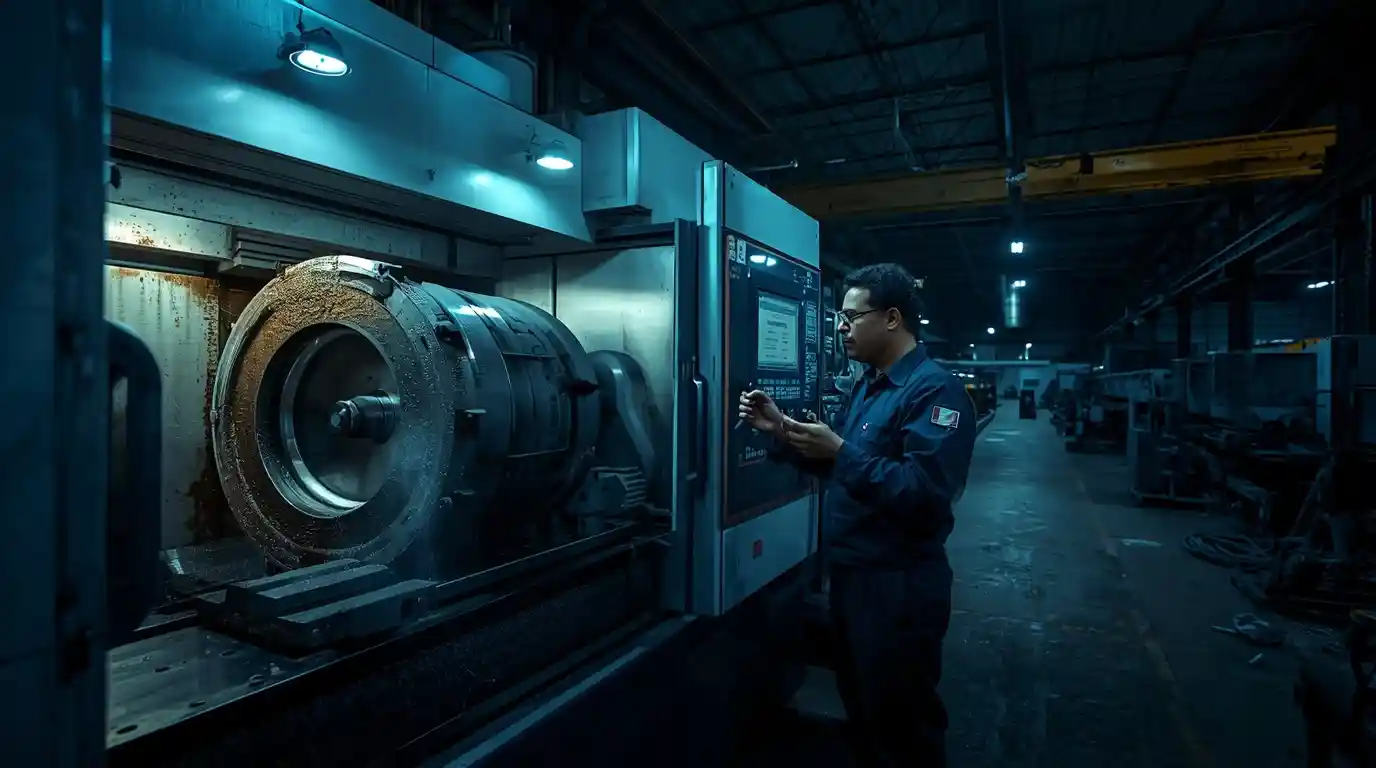
India's 100 GW ambition has turned a small cluster of nuclear power stocks into some of the priciest shares on the exchanges, while the thing they are supposed to be riding — actual reactors — has barely budged. The country runs 24 units totalling 7,943 MW, according to World Nuclear News. That is the output of roughly two large coal plants, built up over 56 years.
The target is 100,000 MW by 2047. Six units of 4,768 MW are under construction and about ten more, worth close to 7 GW, sit in pre-project stages. Add every one of them and India still lands under 20 GW. The remaining 80-odd GW has no shovel in the ground, no supplier picked, and in most cases no site announced.
That gap is exactly what the market is buying. A recent Financial Express piece pointed readers past the reactor operators towards two engineering suppliers — MTAR Technologies and Bharat Forge. MTAR trades near 224 times earnings and about 102 times EV/EBITDA. Bharat Forge sits at roughly 77 times earnings and 32 times EV/EBITDA. Neither multiple leaves much room for a project running late.
Why the parts makers get paid before the power flows
A reactor earns nothing until it is commissioned, which in India has historically meant a decade or more from first concrete. The companies that machine its components get paid during construction — on milestones, against advances, years before a single unit of electricity reaches the grid. That timing difference is the entire investment case, and it is a real one.
MTAR's numbers show the effect. Revenue for the nine months to December 2025 came in at ₹570 crore, with the December quarter alone at ₹278 crore, up 59.3% year on year. Operating profit for that quarter rose 92.5% to ₹64 crore. The stock has compounded at 41% a year over three years. Bharat Forge posted ₹4,343 crore of quarterly revenue, 25% higher, and net profit of ₹309 crore, up 41%.
What India actually has to build
From 7,943 MW to 100,000 MW in 21 years
Do the arithmetic and the scale of it lands hard. Reaching 100 GW by 2047 means commissioning something close to 4.4 GW every single year from here — roughly three full-sized reactors annually, every year, for two decades. India's best historical run is nowhere near that. It has added less than 8 GW in the entire life of its atomic programme since Tarapur started up in 1969.
The 1962 law that was scrapped in December
The bottleneck was never only engineering. The Atomic Energy Act of 1962 kept private firms out of generation entirely. That changed fast: the SHANTI Bill was tabled in the Lok Sabha on 15 December 2025, cleared both Houses within three days, and received presidential assent on 20 December. It repeals the 1962 Act and the Civil Liability for Nuclear Damage Act of 2010, replacing the old single operator-liability cap with a graded framework and giving the Atomic Energy Regulatory Board statutory standing at last.
The bill "marks a transformational moment for our technology landscape," Prime Minister Narendra Modi said, as quoted by World Nuclear News.
Where private and foreign money can and cannot go
Private companies and joint ventures can now build, own, operate and decommission plants under licence, with foreign direct investment permitted up to 49% in certain activities. Enrichment, heavy water production and spent fuel management beyond on-site storage stay with the Department of Atomic Energy. NPCIL is expected to deliver close to half the 100 GW; the rest depends on private players who have not yet signed anything.

What the two nuclear power stocks are really selling
MTAR makes fuel machining heads, drive mechanisms and coolant channel assemblies for pressurised heavy water reactors, and has supplied NPCIL for years. Bharat Forge brings heavy forging and metallurgy — the same capability behind its ₹11,130 crore defence order book as of December 2025. Both are genuine beneficiaries. Neither is a nuclear pure-play, and nuclear does not appear as a separately disclosed order book in either set of results.
What to watch before you pay 224 times earnings
Watch for orders, not announcements. The Union Budget's ₹20,000 crore Nuclear Energy Mission for small modular reactor R&D is spending on research, not procurement, and the first Bharat Small Modular Reactor is still pegged to a DAE site at Tarapur rather than a commercial customer. The licensing rules under SHANTI have not been notified. Until a private developer places a hard order, the supply chain revenue stays theoretical.
India's atomic history is a long list of slipped dates — the Kalpakkam fast breeder took decades, Jaitapur has been stalled since 2010. If you already own these names, treat the nuclear story as optionality, not the base case, and track quarterly order inflow rather than headlines about 2047. If you are thinking of buying in now, wait for the first commercial licence issued under the new law. That document, not the target, is the trigger.




Comments 0