

Oblivion Remastered Switch 2 Runs at Half the Frame Rate
Bethesda's twenty-year-old RPG arrives on Nintendo's new console looking better than anyone expected — and stumbling in all the old places.

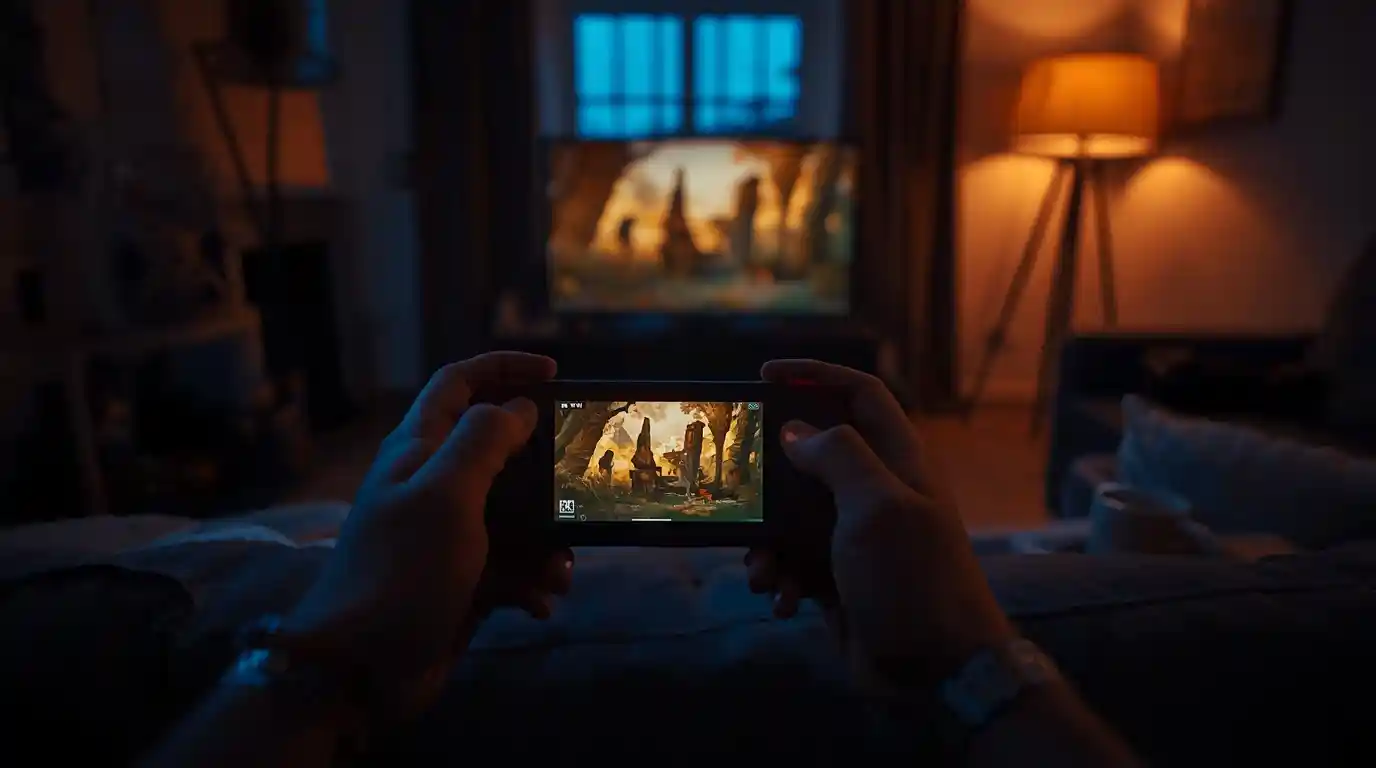
The Oblivion Remastered Switch 2 release arrived on 11 August, and the number everyone fixated on is the frame rate: it targets 30 frames per second and stays there, docked or handheld. On PlayStation 5, Xbox Series consoles and PC, the same remaster offers a 60fps performance mode. Nintendo's machine doesn't get that choice at all — you take 30, or you don't play.
Nintendo World Report's John Rairdin scored it 7.5 out of 10, and his verdict is worth sitting with, because it isn't the usual "good port, shame about the hardware" line. He describes a game that looks genuinely impressive on a handheld — ray-traced lighting and reflections intact — while lurching between hard crashes, loading screens that never resolve, and stutters every time the open world streams in.
For anyone in the UK weighing this up, the price is £49.99 digitally on the eShop, with a physical Deluxe Edition listed around £54.99. That's roughly what a full-price Switch 2 game costs. The question isn't whether Oblivion is still a great RPG twenty years on. It's whether this particular version is worth your money today, or in three months.
What £49.99 Actually Buys You
The standard edition is the base game. The Physical Deluxe bundles both classic expansions — Shivering Isles and Knights of the Nine — plus the Akatosh and Mehrunes Dagon armour and weapon sets, and the famously mocked horse armour. For a fiver more than the digital standard, the physical Deluxe is the better deal on paper, assuming you can find stock at retail.
One detail deserves more attention than it's getting: the physical release ships the whole game on the cartridge. It isn't a Game-Key Card, the download-voucher-in-a-box format that's annoyed Switch 2 owners since launch. You can play straight from the card. Given the download weighs in under 60GB on Switch 2 — against roughly 120GB on Steam, according to RPG Site — that matters if your console's internal storage is already filling up.
What Oblivion Remastered Switch 2 Gets Right
Visually, this shouldn't work. Bethesda and co-developer Virtuos rebuilt the presentation in Unreal Engine 5 while leaving the original Gamebryo systems running underneath for the actual gameplay. That hybrid is heavy. Getting ray-traced lighting onto a portable at all is a real achievement, and reviewers consistently note that handheld mode tracks docked performance far more closely than expected — around 1080p docked with DLSS, roughly 900p undocked.
Nintendo-specific extras are here too, and they're not token. Touchscreen menu navigation, HD rumble, motion controls and mouse mode all made it in. Menu-heavy RPGs are exactly where a touchscreen earns its keep, and Oblivion has plenty of inventory faff to wade through. Interiors — dungeons, shops, town buildings — hold their frame rate cleanly.
Where the Port Comes Apart
The trouble starts the moment you push open a door and Cyrodiil has to load. The problems aren't unique to Nintendo hardware; most of them shipped with the original remaster in April 2025 and were never fully ironed out. They're just louder here.
Stutter Every Time the World Streams In
Riding across the overworld produces regular hitches as new terrain and characters load. RPG Site's testing points to a poorly implemented 30fps cap and shader-related hiccups rather than raw horsepower — which is why the same judder shows up on far beefier machines. Combat with several enemies on screen drags the frame rate down too.
Crashes and Loading Screens That Never End
Nintendo World Report logged one hard crash back to the home menu and several loading screens that simply never finished, forcing a restart. Handheld mode was the less stable of the two. Save often — Oblivion's quicksave is your friend, and always has been.
What the Upscaler Can't Quite Hide
DLSS does heavy lifting, but it struggles with fine detail at distance. Faces on far-off NPCs, hair and some tree foliage break down into shimmer. It's most obvious when you're standing still on a hilltop admiring the view, which is, unfortunately, one of the things Oblivion is for.
An unstable mess constantly careening towards disaster. And it's beautiful. — John Rairdin, Nintendo World Report
How It Compares to a Steam Deck
If you already own a Windows handheld, the gap is narrower than the price difference suggests. RPG Site timed loading from internal storage across three devices:
- Switch 2: 20–22 seconds from dashboard to title, 27–28 seconds to load a save
- Steam Deck: 18–19 seconds to title, 26–27 seconds to load a save
- ROG Ally: 17–18 seconds to title, 19–20 seconds to load a save
So Switch 2 is a few seconds behind a Steam Deck and noticeably behind an Ally on saves — but it's doing it in a smaller, cheaper box, from a cartridge, with ray tracing on. Put next to the original remaster's launch, when the game peaked at over 182,000 concurrent Steam players and immediately drew complaints about stutter on high-end PCs, the Switch 2 version isn't the outlier. It's the family trait.
Buy It Now, or Wait for a Patch?
If you've never played Oblivion, buy it. The strange, chatty, wildly ambitious world Bethesda built in 2006 still does things modern RPGs don't bother with, and 30fps is how most people experienced it originally anyway. If you've already finished it on PC or Xbox, the case is thinner — you're paying £49.99 for portability and a frame rate ceiling.
The sensible move for anyone on the fence: wait for the first post-launch patch and watch whether Virtuos addresses the freezing and the shader stutter specifically, rather than shipping a generic stability note. Keep an eye on UK retail too — physical copies of Bethesda titles historically drop below £40 within a couple of months, and this one has no reason to break that pattern.
Comments 0