

ONGC Venezuela Oil Field Pumps a Tenth of What It Can
A US Treasury licence has freed ONGC to work normally in Venezuela again — and revealed how little its 18-year-old oilfield actually produces.

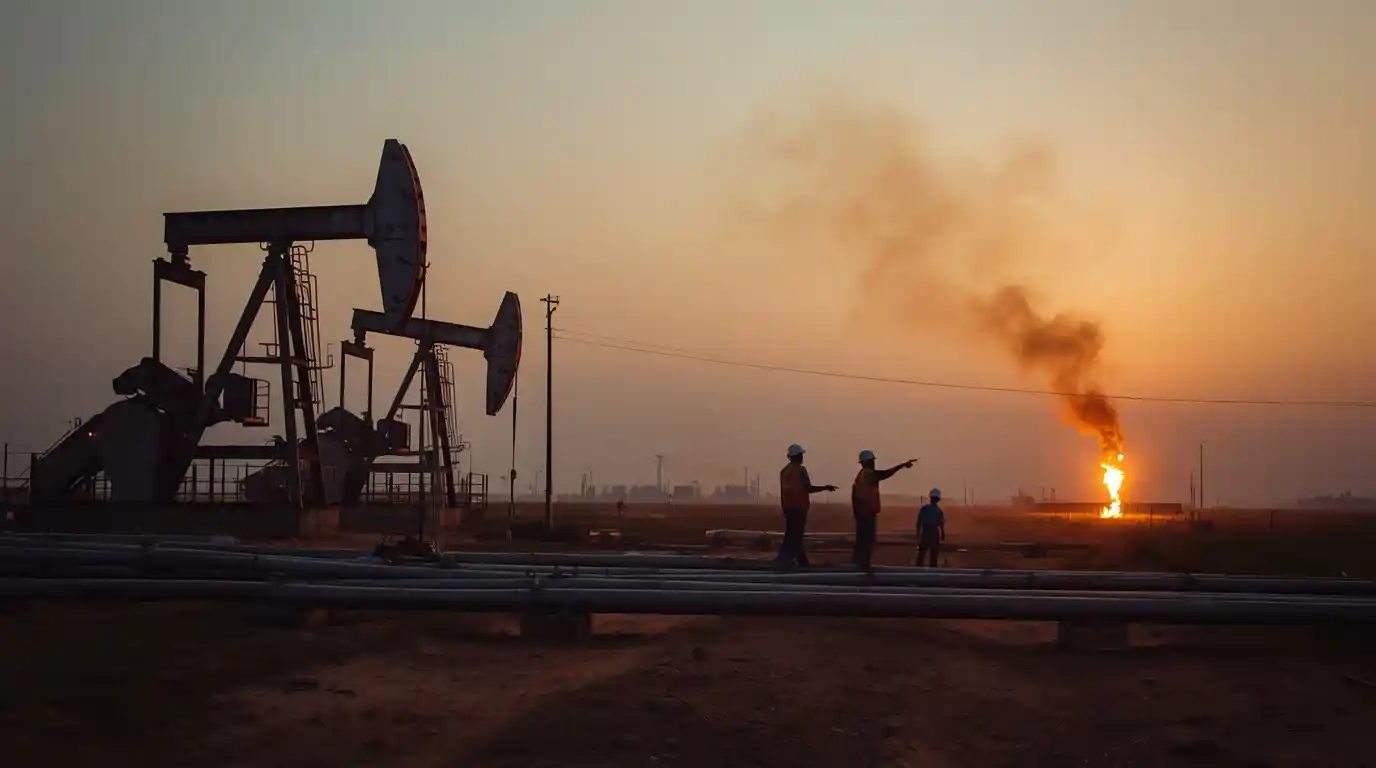
A single piece of paper from Washington has unlocked the ONGC Venezuela oil business after years of sanctions-forced caution. India's largest oil producer told analysts on 5 August that it has secured a licence from the US Treasury's Office of Foreign Assets Control, clearing it to work normally again on the two upstream projects it holds in the South American country.
Here's the detail that turns a compliance footnote into a story. San Cristóbal, the field ONGC Videsh bought into in 2008, produced roughly 0.265 million tonnes of oil equivalent in FY26 — by the company's own reckoning, about a tenth of what the field is capable of. Across its Venezuelan assets, output runs at 12,000 to 15,000 barrels a day. Management now wants to double that within twelve months.
Money has been sitting still too. Around $600 million in dividends and dues — close to ₹5,200 crore — is stuck in Venezuela, with no dividend received since 2010-11. Put that against ONGC's June-quarter standalone net profit of ₹17,034 crore, which itself jumped 112% year on year, and the trapped cash is worth about a third of a very good quarter.
What the ONGC Venezuela Oil Licence Actually Allows
An OFAC licence is permission, not a partnership. It lets a company deal with a sanctioned counterparty — in this case state producer PDVSA — without exposing itself to American secondary sanctions. That covers the dull but decisive things: paying contractors, importing spare parts, hiring drilling crews, moving dividends through a bank that will actually accept the transfer.
"Now we have full freedom to work on the Venezuela project because earlier we were restricting our operations there because of the sanction-related risks." — Anupam Agarwal, Director (Finance), ONGC
Agarwal also told the earnings call the company is "very bullish" on Venezuela and expects fresh agreements shortly, including a possible handover of operatorship from PDVSA.
Why a Field Bought in 2008 Barely Produces
The gap between potential and output isn't geology. San Cristóbal sits in the Orinoco heavy-oil belt, and Venezuela holds roughly 303 billion barrels of proven reserves — the largest in the world, ahead of Saudi Arabia, on OPEC's numbers. The problem has always been that the operator ran out of cash and the partner ran out of legal room.
The dividends that stopped flowing in 2011
ONGC Videsh took a 40% stake in April 2008, with PDVSA holding the rest and running the field. It invested about $190 million in 2009-10 and later committed a further $400 million — half in cash, half by ploughing back dividends it was owed. Those dividends never arrived, so half the funding plan died before it started.
Sanctions turned every decision into a legal question
Once US measures tightened, banks, insurers, shippers and equipment vendors all became nervous about anything touching PDVSA. India's combined exposure across San Cristóbal and Petrocarabobo runs to roughly $1 billion. Rather than risk it, ONGC Videsh throttled activity down to a caretaker level — which is precisely how a producing asset ends up at 10% of capacity.

What Changes If ONGC Runs the Fields Itself
Operatorship is the real ask here, and it's a bigger shift than the licence. The operator sets the drilling schedule, controls the budget and picks the contractors; a minority partner mostly writes cheques and waits. ONGC's pitch is that it already handles viscous, heavy crude in western India and can apply the same well-intervention playbook. It holds 11% in Carabobo-1, with Indian Oil and Oil India taking the combined Indian share to about 18%.
How Much Venezuelan Crude India Already Buys
India never really left. Venezuelan cargoes restarted in April 2026 after roughly a year's gap, reaching about 283,000 barrels a day — the highest since 2020 — with shipping estimates pointing to nearly 380,000 bpd. Reliance Industries bought its first Venezuelan cargo since mid-2025 in February and was purchasing directly from PDVSA by April; Jamnagar is one of the few refineries built for exactly this grade.
Which puts ONGC's equity barrels in perspective. Even at the 30,000 bpd target, its Venezuelan output would be under 1% of what India imports every day. The strategic value is elsewhere: discounted heavy crude, a supply line that isn't Russian or Gulf, and a foothold in the world's biggest reserve base.
What to Watch Over the Next Six Months
Three things will tell you whether this is real. First, whether the promised agreements are actually signed and operatorship formally transfers. Second, whether any of that $600 million physically leaves Venezuela — a receipt in a quarterly disclosure beats a dozen optimistic calls. Third, the licence itself: OFAC permissions are time-bound and revocable, and US policy on Caracas has swung sharply before.
If you hold ONGC stock, don't reprice it on this. The company's Venezuelan barrels are a rounding error in a business earning ₹17,000 crore a quarter, and the upside arrives over years, not quarters. Watch instead for the first line in an ONGC filing confirming that trapped dividend money has finally moved. That single number will say more about the ONGC Venezuela oil bet than any announcement made on an earnings call.




Comments 0