

ONGC Venezuela Oil Restarts With $600 Million Still Unpaid
Washington has cleared ONGC Videsh to work freely in Venezuela again, but the fields are tiny and the money owed is older than most of the people chasing it.

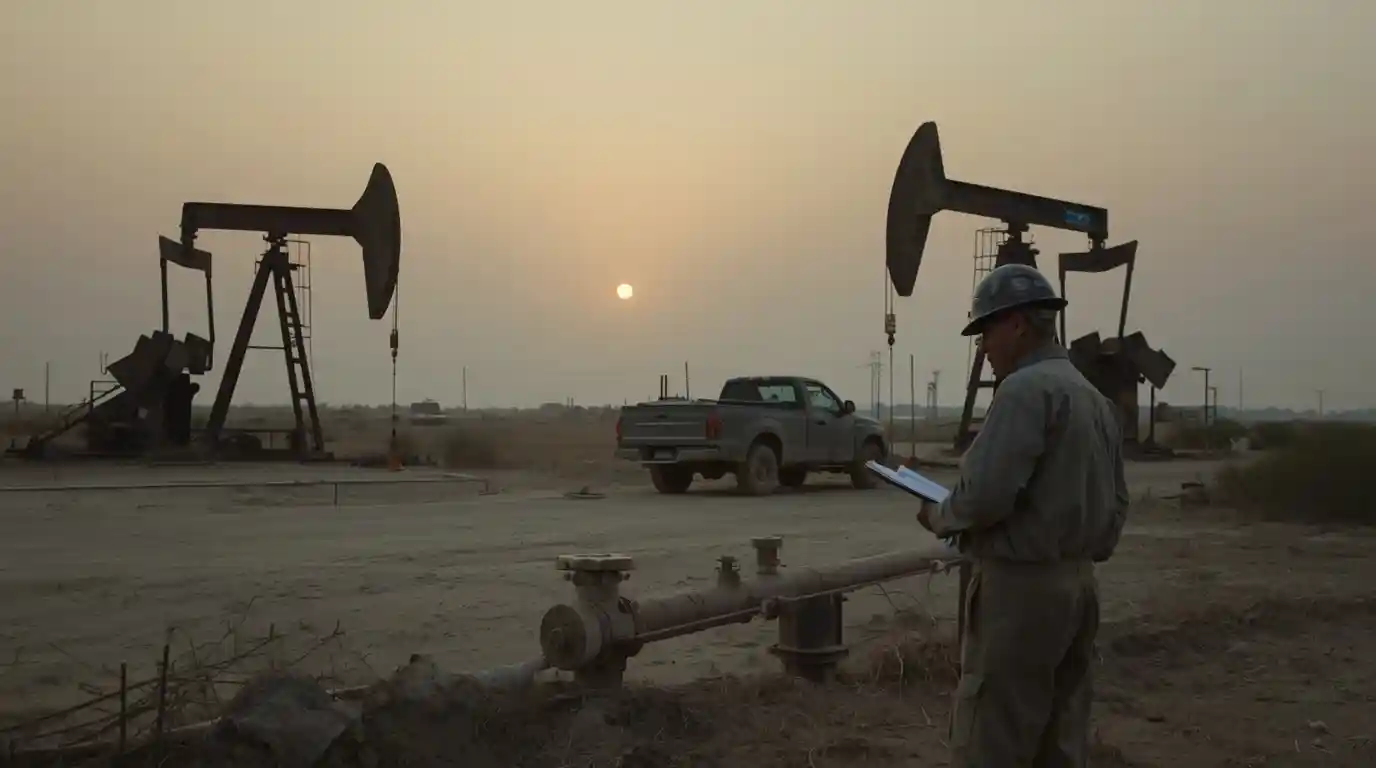
ONGC Venezuela oil assets are back in play. The US Office of Foreign Assets Control has granted ONGC Videsh, the overseas arm of India's largest oil and gas producer, a licence to resume full operations in Venezuela. ONGC's chief financial officer Anupam Agarwal confirmed the approval on the company's first-quarter earnings call in early August, and said the company is in talks with Venezuelan authorities and its partners about taking over as operator of the fields.
Here's the number that gives the story its edge. Roughly $600 million in dividends owed to ONGC Videsh has been sitting frozen inside Venezuela, and the company hasn't collected a paisa of it since 2010-11. That's about fifteen years of an Indian state-owned firm earning money on paper in a country it could barely do business with.
It also fits a pattern. Reliance Industries has separately secured US approval to resume buying Venezuelan crude — it accounted for close to 90% of India's imports from the country before the taps closed — and ONGC Videsh got its Sakhalin-1 stake in Russia restored in December 2025. Stranded assets are being unstranded by diplomacy, not by drilling.
What the ONGC Venezuela Oil Licence Actually Allows
A licence from OFAC is permission, not a partnership. It lets a company do things sanctions otherwise block: sign agreements, move money through banks, hold formal meetings with a sanctioned counterparty. Crucially, it clears ONGC Videsh to manage the finances of its Venezuelan ventures — the door through which any dividend recovery has to walk before a single dollar moves.
What it doesn't do is hand over the fields. Operatorship still has to be negotiated with PDVSA and signed, and ONGC has said only that it expects progress soon. Licences like this are policy instruments, too. They come with conditions, they expire, and Washington has narrowed or withdrawn them before when its stance on Caracas shifted.
Two Blocks, Two Very Different Sizes
The ONGC Venezuela oil footprint is a lot smaller than the headlines suggest. The company sits in exactly two projects, both operated by PDVSA, and neither comes close to the scale of its holdings in Russia, Mozambique or Brazil. The distinction between the two matters, because only one of them is carrying the unpaid money.
San Cristóbal and the 40% Stake From 2008
This is the anchor position. ONGC Videsh picked up 40% of the San Cristóbal joint venture in 2008, with PDVSA holding the balance; the venture was incorporated that April, following a memorandum signed three years earlier. It's also where the frozen dividend sits. S&P Global Commodity Insights put ONGC's booked share of San Cristóbal output at 1,870 barrels a day in 2024-25.
Carabobo-1 and the Smaller 11% Slice
The second holding is an 11% interest in Carabobo-1, in the Orinoco heavy oil belt. Its contribution in 2024-25 worked out to 970 barrels a day. Put the two together and Venezuela made up well under 1% of ONGC's international production last year — a line item on a spreadsheet, not a pillar of the portfolio.

The $600 Million That Never Came Home
Chasing that money is not a new project. PDVSA at one point agreed to settle a pending dividend of about $540 million on the San Cristóbal investment, and ONGC has previously explored taking payment in crude cargoes instead of cash — a workaround Venezuela has used with other creditors. Neither route went anywhere while sanctions made the banking leg impossible.
The licence changes the arithmetic without settling it. Getting paid still depends on PDVSA having barrels or cash to spare, and on ONGC finding a payment route the US will bless. Being allowed to accept the money and actually receiving it are two separate milestones, and only the first one has been cleared.
Does This Change Anything at the Petrol Pump?
Not directly, and not soon. Combined output from the two ventures is put at 12,000 to 15,000 barrels a day, and ONGC wants to roughly double that to 30,000 within a year. Measure that against India's daily crude appetite, which runs into millions of barrels, and the effect on what you pay for petrol or diesel is statistically invisible.
The real prize is optionality. India once leaned hard on Venezuela, importing 23.6 million tonnes of crude in 2015-16 — around 12% of the total — before sanctions cut that to almost nothing. Venezuelan exports have been recovering, touching about 1.25 million barrels a day in May 2026. Heavy, sour, discounted crude suits Indian refineries, and a working relationship in Caracas is useful the next time West Asian supply gets shaky.
What to Watch Over the Next Year
Announcements are cheap in this business, so it's worth being specific about what would count as genuine progress. Four markers will tell you whether the licence turned into anything, and all four should be visible within roughly twelve months if the plan is working.
- A signed operatorship agreement with PDVSA, not just continuing talks
- The first dividend payment or crude cargo actually delivered against the $600 million
- Production climbing past 15,000 barrels a day on the way to the 30,000 target
- The licence surviving renewal, given how often US policy on Venezuela has swung
If you hold ONGC stock, keep the scale honest. The company reported net profit of roughly ₹17,034 crore for the June 2026 quarter; even a doubled Venezuelan output would barely show up against a number that size. Treat this as a long-dated option that has just stopped being worthless rather than a reason to re-rate the stock. Watch for a signed PDVSA agreement and the first payment landing — until one of those happens, the ONGC Venezuela oil revival is still just a permission slip.




Comments 0