

£4.4bn Gone Since May: Britain's Cost of Heatwaves
Europe's hottest months have quietly cost the bloc around €180bn and Britain at least £4.4bn — mostly in work that simply didn't get done.

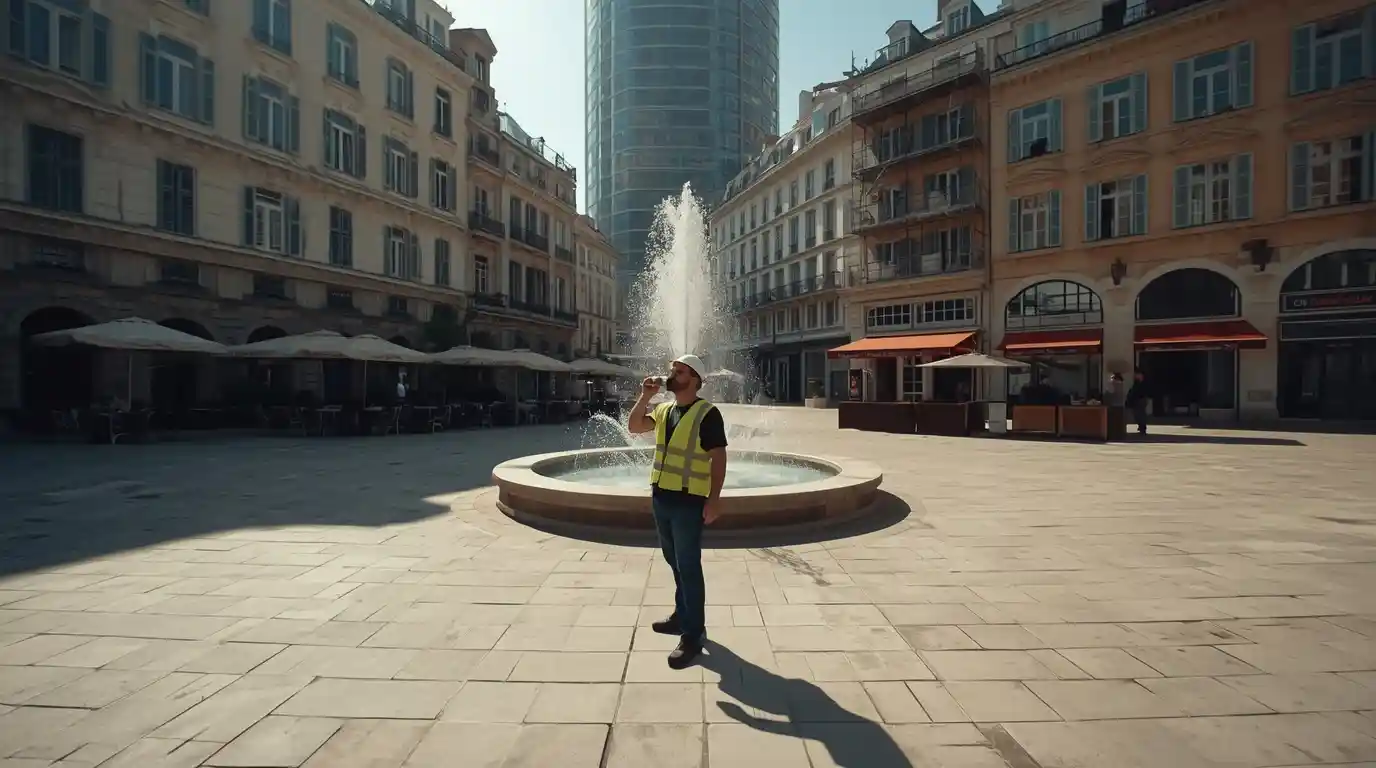
The cost of heatwaves has reached at least £4.4bn in lost UK output since May, according to the green thinktank Verdant — and that only counts what Britain has already spent. Across the Channel, economists at Triodos Bank put this summer's damage from extreme heat and wildfires at roughly €180bn, or about 1% of everything the EU produces in a year.
That second number deserves a hard look. The European Commission expects EU growth of around 1.1% in 2026. If heat and fire really have taken close to a full percentage point off the top, the continent has spent three months running to stand still. No one voted for it, no chancellor announced it, and it appears in no budget line.
This is not just melted tarmac and delayed trains. It shows up as nuclear reactors dialled down, barges sailing half-loaded, dairy herds giving less milk, and millions of people working slower because the office or the building site sits at 32C. Britain, despite its reputation for drizzle, is squarely in the frame.
Where the Cost of Heatwaves Actually Lands
Triodos splits the damage into rough shares of EU output: agriculture about 0.15%, transport another 0.15%, and energy somewhere between 0.12% and 0.15%. Those are the visible parts. The biggest single chunk is the one nobody photographs — labour productivity, the simple fact that people get less done when they are too hot to think straight.
Workers slow down long before they stop
Output per worker starts sliding once temperatures push past roughly 25C to 30C. Beyond 30C, sustained over several days, researchers estimate around 3% of output lost per hour worked for every extra degree. Outdoor and physical trades take the worst of it: roofers, warehouse pickers, delivery riders, groundworkers. Nobody clocks off, but the day yields less.
Power stations that need cool water
France draws more than two-thirds of its electricity from nuclear plants, and those plants need river water cool enough to use. Up to 15% of the French fleet was expected offline this summer for that reason alone. Solar panels lose efficiency in extreme heat too, so supply tightens exactly when air conditioning drives demand up — and wholesale prices follow.
Rivers too shallow to carry freight
Germany's Rhine fell to severely low levels near Kaub, west of Frankfurt, forcing barges to sail part-full. Wolfgang Grosse Entrup, who heads the German chemical industry body VCI, warned that low water was pushing logistics and supply chains towards their limits. Chemicals, fuel and steel move that way; when the river drops, costs rise across a supply chain that reaches British factories.
France Took the Worst Hit, Poland Barely Noticed
Triodos estimates the heat knocked about 1.4 percentage points off French growth, enough to tip the economy into a contraction of roughly 0.6%. Italy loses around 1.1 points, the Netherlands 0.8, Spain close to a full point off a forecast of 2.8%. Poland, with far fewer extreme days, still expects 2.9% growth — though it did invoke emergency grid powers in mid-August.
The human ledger is grimmer than the financial one. Around 20,400 heat-related deaths were recorded in France, Germany, Spain and Italy during June's heatwave alone, with roughly 25,000 across the summer. More than 490,000 hectares have burned in the EU, against a 20-year average of about 197,000 — two and a half times the norm.
This summer shows that climate change is not a distant economic risk. — Hans Stegeman, chief economist, Triodos Bank

Your Holiday Map Is Quietly Being Redrawn
Southern Europe is not being abandoned — Spain still reports strong demand for Ibiza, Mallorca and the Costa del Sol — but the shape of the season is changing. Trip.com data showed searches for cooler "coolcation" destinations up 74% year on year in the first half of 2026, and airlines have added seasonal capacity into Nordic and Baltic airports to meet it.
For British holidaymakers the practical shift is towards May, June and September rather than the August furnace, and towards Iceland, Scandinavia and the Alps for those who want guaranteed comfort. Expect Mediterranean operators to lean harder on shoulder-season pricing, which is good news if your school-holiday dates are flexible.
What It Means for Your Wages and Your Bills
Verdant's UK total breaks down as roughly £500m in May, £2.36bn in June and £1.5bn in July across two separate peaks. It projects £25.6bn in cumulative losses by 2030 if heatwaves intensify. London and the south-east absorbed the largest share, which matters because that is where the hottest indoor workplaces and the most crowded commutes are.
Worth noting: the London School of Economics put June's losses from reduced working hours at £1.1bn, well under Verdant's £2.36bn. The gap is method, not disagreement — LSE counted hours, Verdant added food and energy prices and transport disruption. Treat all these figures as estimates with wide error bars, not audited accounts.
Britain still has no legal maximum workplace temperature. Employers must keep conditions "reasonable", which in practice means the argument happens after the fact. Dr James Meaday of Verdant has called for government action to protect workers and businesses; the thinktank floats a national heat insurance scheme for people who cannot safely work in extreme heat, funded by a levy on fossil fuel firms.
What to Watch Before Next Summer
Two things are worth your attention. First, whether the Health and Safety Executive moves on formal upper temperature limits — a change that would land on employers, not just weather forecasters. Second, your energy tariff: heat-driven supply squeezes on the continent feed into interconnector prices Britain pays. If your fixed deal ends before next June, compare early rather than rolling over in a hot week when everyone else is panicking.




Comments 0