

The 73% Higher Secondary Dropout Figure Isn't What It Looks Like
A Lok Sabha panel says nearly three in four students never finish Class 12 — but the panel's own table tells a more specific, and more fixable, story.

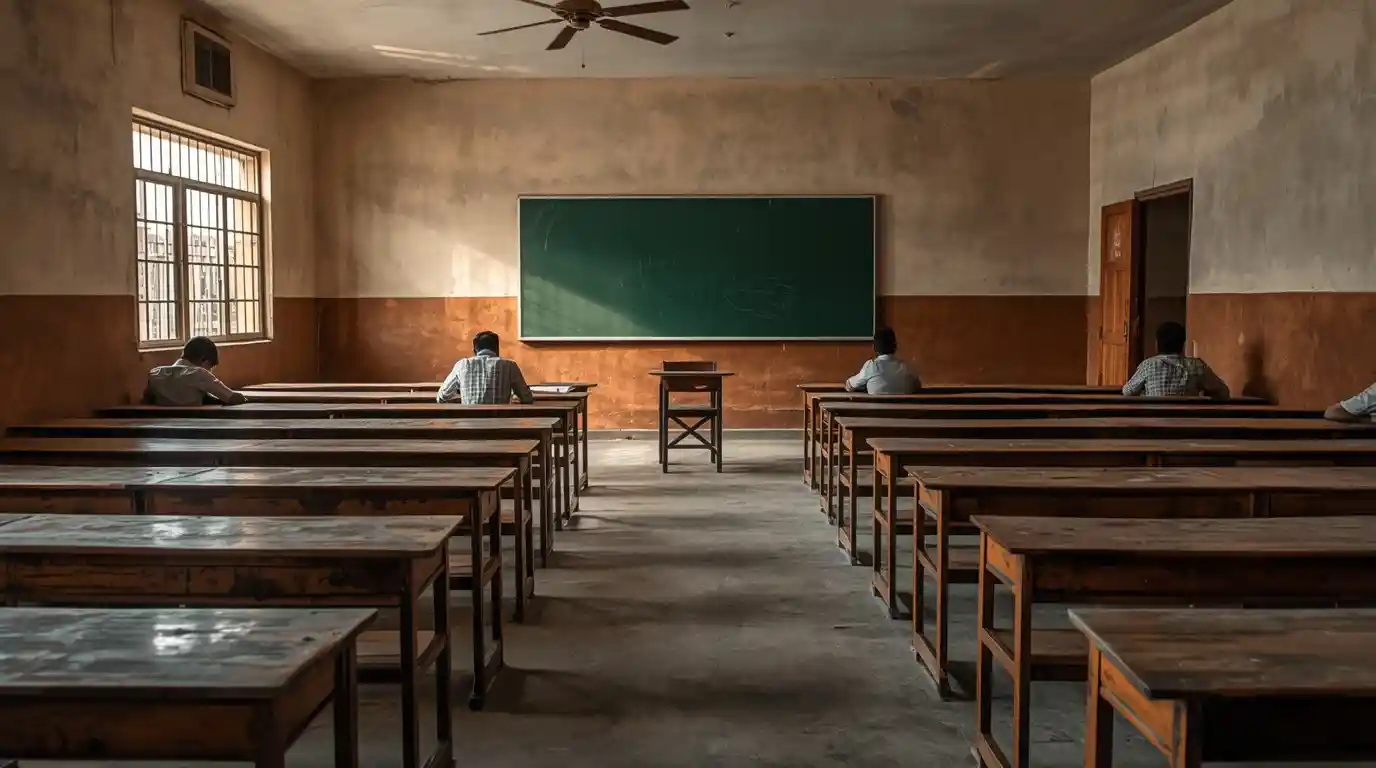
A parliamentary panel's finding that nearly 73% of students never reach the end of Class 12 has pushed the higher secondary dropout question back into national debate. The number appears in the Tenth Report of the Lok Sabha's Committee on Estimates, tabled this week, which examined budget and policy for affordable, quality education in India, including a review of the CBSE.
The panel's own table is where the story sits. Citing UDISE 2024-25, it records 6,18,45,033 students in primary classes, 4,08,93,978 in upper primary, 2,36,68,220 in secondary and 1,64,17,949 in higher secondary. Put the first and last figures side by side and you get a fall of about 73%. The catch is that those two buckets are not the same size to begin with.
Why should a parent in Nagpur or Nalgonda care about the difference? Because the two readings demand different fixes. A pure dropout crisis calls for scholarships, counselling and incentives to keep children in class. A seat shortage calls for buildings, teachers and new Class 11 sections. Read closely, the panel's data points hard at the second problem.
What the Panel Told Parliament
The committee flagged a "drastic decline" in both schools and students as the level of education rises. Against 9,11,032 schools teaching primary classes, only 90,866 offer higher secondary — roughly one for every ten. Secondary schools number 1,61,808. The panel's central recommendation follows directly from that ratio: upgrade existing primary and secondary schools into full higher secondary institutions rather than leaving Class 11 to a thin, scattered network. The Estimates Committee is chaired by BJP MP Sanjay Jaiswal.
Why the Higher Secondary Dropout Maths Needs a Check
Stage totals are a blunt instrument, and this is where most coverage of the report stops short. The four stages of Indian schooling do not run for the same number of years, so comparing their headcounts compares unlike things.
Five Classes Against Two
Primary covers Classes 1 to 5. Upper primary covers 6 to 8. Secondary is just Classes 9 and 10, and higher secondary is only 11 and 12. So the primary figure pools five cohorts of children, while the higher secondary figure pools two. Some shrinkage between them is arithmetic, not abandonment — which is exactly why the raw 73% overstates how many children walk away.
What the Per-Class Numbers Show
Divide each stage by its number of classes and the picture sharpens. Primary works out to roughly 1.24 crore students per class. Upper primary is actually higher, at about 1.36 crore. Secondary sits near 1.18 crore. Higher secondary drops to around 82 lakh per class. That is a fall of about a third, not three-quarters — serious, but a different order of problem.
The Missing Seats in Class 11
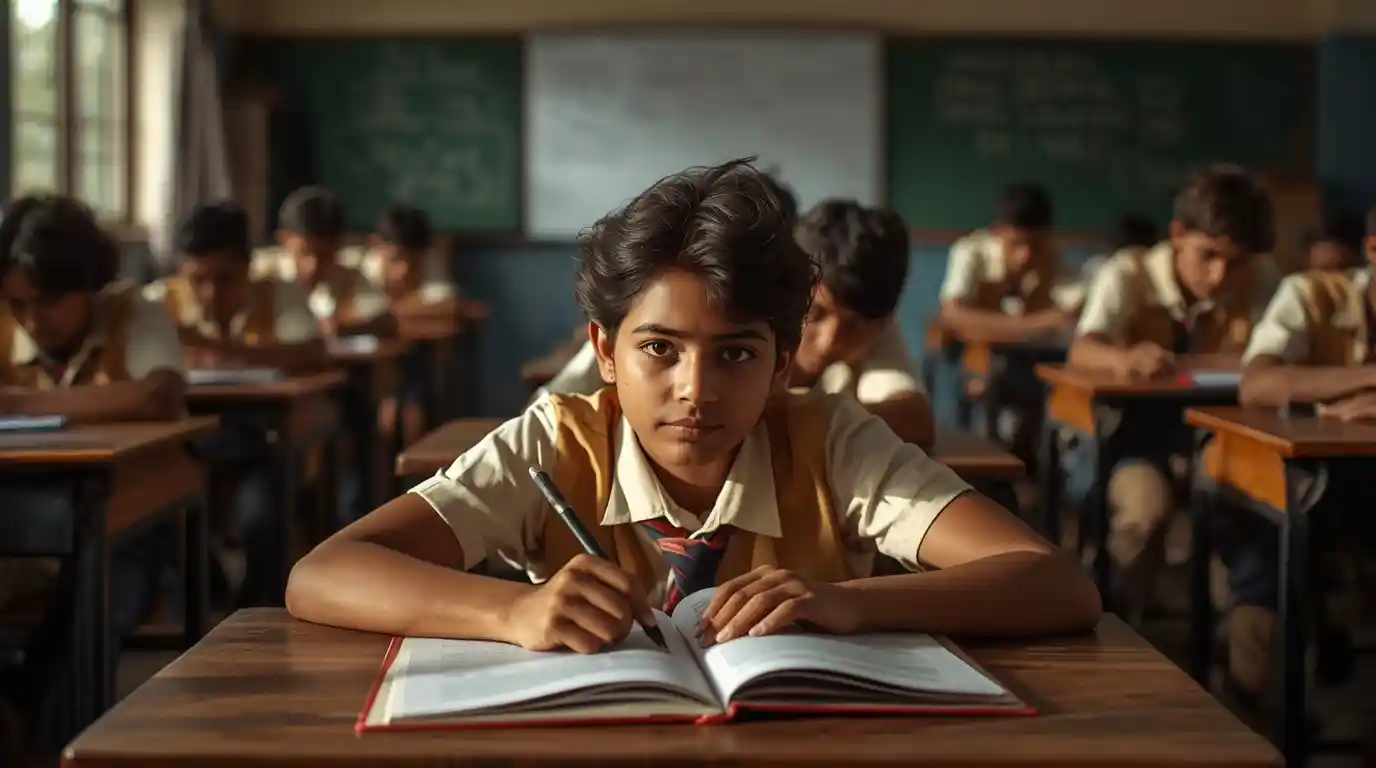
Where the panel is on firm ground is supply. A child in a village with a primary school, an upper primary school and no Class 11 anywhere within a bus ride is not choosing to leave. Distance, hostel costs and safety concerns for girls do the choosing. That structural gap is the strongest single driver behind India's higher secondary dropout numbers, and it cannot be scholarshipped away.
What the Ministry's Own Data Shows
The Education Ministry's UDISE+ 2024-25 release, published in August 2025, puts hard figures on the same gap. Gross enrolment ratio stands at 90.6% at elementary level, 78.7% at secondary and just 58.4% at higher secondary — up from 56.2% a year earlier, but still leaving roughly four in ten teenagers of that age outside school. Measured properly, the secondary dropout rate improved to 8.2% from 10.9%, and the middle-school rate to 3.5% from 5.2%. Total school enrolment, meanwhile, slipped by more than 11 lakh, from 24.80 crore to 24.69 crore.
Money Cleared, Money Left Unspent
The panel also went after utilisation, which is where the practical failure often lives. Under NIPUN Bharat, against an approved outlay of about ₹3,029 crore, spending came to roughly ₹1,847 crore — some 39% unused. On accessibility, 5,23,143 of 14,71,437 schools have toilets usable by children with special needs, and 8,08,466 have ramps with handrails.
More than half of the schools across the country are devoid of CwSN friendly infrastructure.
Funds set aside for accessible toilets and special educators went largely unspent in 2024-25, the panel found. Reports on the same document also record 1,596 vacancies at NCERT and 44% of sanctioned CBSE posts lying unfilled.
What to Watch Over the Next Year
India spends about 4.1% of GDP on education across Centre and states, against the 6% target written into NEP 2020. The Union Budget for 2026-27 allocates ₹1,39,286 crore to education, an 8.27% rise. The number worth tracking is not the allocation but the count of upgraded higher secondary schools, state by state.
If you have a child heading into Class 9, check now whether the nearest school actually runs Classes 11 and 12, and in which streams — many state schools offer only arts. Ask the school management committee about upgrade proposals filed with the district education office. State budget sessions from February onward are where those upgrades are funded or quietly dropped, and that is where the higher secondary dropout figure will finally move.
Comments 0