

The Congo Ebola Outbreak Began in an Animal No One Has Found
A genetic study says the virus jumped fresh from wildlife in February — and the licensed Ebola vaccine doesn't work against it.

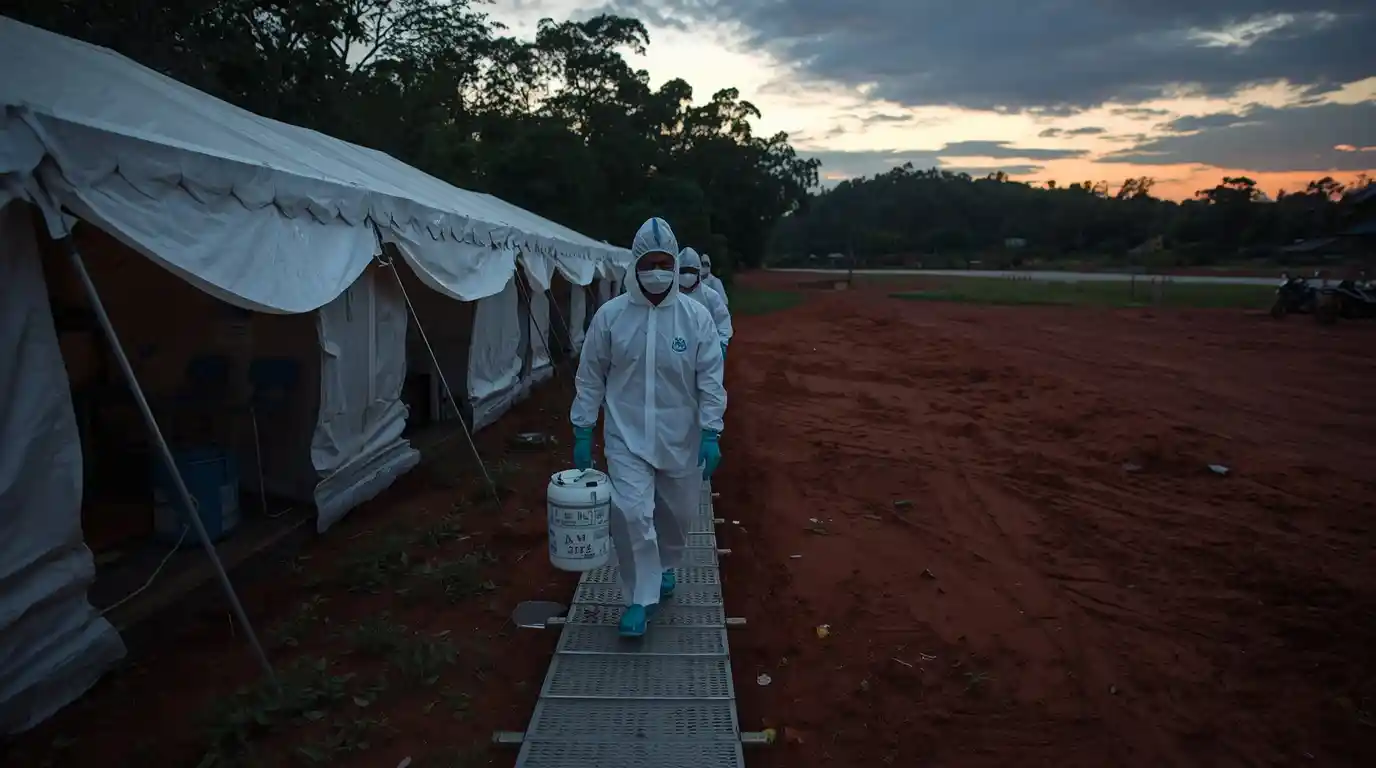
The Congo Ebola outbreak that has killed more than 2,000 people since spring did not leak out of an older epidemic. It jumped fresh from an animal into a person, most likely in February — and nearly six months later, nobody can say which animal. That is the conclusion of a genetic study published in Nature Medicine and reported this week by Al Jazeera.
The scale is hard to overstate. Authorities in the Democratic Republic of the Congo have recorded 4,449 cases and 2,061 deaths, a fatality rate of 46.3 percent. The World Health Organization calls it the largest Ebola epidemic the country has ever recorded, bigger than the 2018–2020 emergency, and the fastest-moving anywhere on record. Cases have now reached 53 health zones across five provinces, with Ituri still at the centre.
For readers in Canada the practical risk stays low, and the Public Health Agency of Canada says so directly. The story still lands here, though, because a federal lab in Winnipeg and a Health Canada decision made in late July are both part of the international response. And because "we don't know which animal" is a sentence with a long tail.
What the Genome Study Actually Found
Researchers sequenced 22 virus genomes from patients in the DRC and Uganda and built a family tree. If this were a flare-up of the 2007 or 2012 Bundibugyo epidemics — virus lingering in a survivor and re-emerging years later — those genomes would sit close to the older ones. They don't. The 2026 virus is a distinct variant, which points to a fresh crossover from wildlife around mid-to-late February.
The current outbreak began with a new "zoonotic spillover" event, rather than from continued circulation of virus from a previous human outbreak.
That was infectious diseases physician Krutika Kuppalli's summary. The distinction sounds academic and isn't. A resurgence traced to a survivor is a bounded problem you manage with follow-up care. A new spillover means the virus is sitting in an animal population somewhere in eastern Congo, undisturbed and unidentified, and it can happen again next year or the year after.
Why the Congo Ebola Outbreak Has No Vaccine
Most people filed Ebola away as a solved problem after 2019, when a vaccine was finally licensed. It is partly solved. This outbreak landed on the wrong half of the problem, and the gap between the two halves is the single most important thing to understand about the current response.
The Shot That Works Is for a Different Virus
Ervebo, Merck's licensed vaccine, was built against Zaire ebolavirus — the type behind West Africa in 2014 and most Congolese outbreaks since. Bundibugyo is a separate species. Ervebo isn't licensed for it and isn't expected to offer meaningful protection, and in May a WHO advisory group recommended against routine use outside a research setting. Same disease name, wrong key for the lock.
Two Vaccines and Two Drugs, All Experimental
Oxford's Vaccine Group launched the world's first Phase I trial of a Bundibugyo-specific vaccine in July, testing ChAdOx1 BDBV in 50 healthy adults aged 18 to 55. Moderna's mRNA candidate, backed by CEPI, cleared Health Canada on July 30 for its own Phase I. On treatment, the WHO's PARTNERS trial began enrolling patients on July 2 at three sites in Ituri, comparing remdesivir and the monoclonal antibody MBP134.

How This Compares With West Africa in 2014
The 2014–2016 West African epidemic infected more than 28,600 people and killed over 11,300. The current Congo Ebola outbreak is smaller in absolute terms, but it reached this point far faster, and its fatality rate is in the same brutal range — while running without a licensed vaccine or a proven drug. In 2014 there was no vaccine either. The difference now is that one exists and doesn't fit.
More than 100 health workers have been infected and 35 have died. Watch that number. In every large Ebola epidemic, staff losses are what tip a strained system over: treatment centres close, contacts stop being traced, and the curve turns back up.
What This Means for Canada
PHAC's rapid risk assessment rates the risk to the general population in Canada as low, and has been tracking the Congo Ebola outbreak alongside the WHO and provincial authorities since May. Ebola doesn't travel through the air; it needs direct contact with the body fluids or tissues of someone who is already sick. An imported case would be expected to stay contained given border screening and hospital protocols.
Canada isn't only observing. The National Microbiology Laboratory in Winnipeg continues to assess drugs and other therapies against orthoebolaviruses — the family Bundibugyo belongs to. If you're travelling to the DRC or Uganda, or you have family there, check federal travel advice when you book and again before you fly. Health workers and aid staff have separate PHAC guidance.
What to Watch in the Next Few Months
Three signals will tell you whether this turns a corner or grinds on. None of them is a border measure, and none will show up as a Canadian headline until it's already settled.
- Whether investigators name the reservoir species — fruit bats have long been the leading suspect for Ebola, but this study did not identify a source.
- Whether the Phase I results arrive in time to matter here, which is unlikely; they're really insurance against the next spillover.
- Whether new cases in Ituri actually fall, rather than shifting into a sixth province.
For most people in Canada, today's to-do list is empty. Bookmark PHAC's risk assessments, which get reissued as conditions change, and read the travel advisory before any trip to Central Africa. The thread worth following isn't at the airport — it's whether anyone finds that animal before it hands the virus over a second time.




Comments 0