

The Congo Ebola Outbreak Has No Vaccine That Works Yet
A rare strain called Bundibugyo has pushed Congo's epidemic into a sixth province, and the licensed Ebola shot that ended past outbreaks was designed for a different virus.

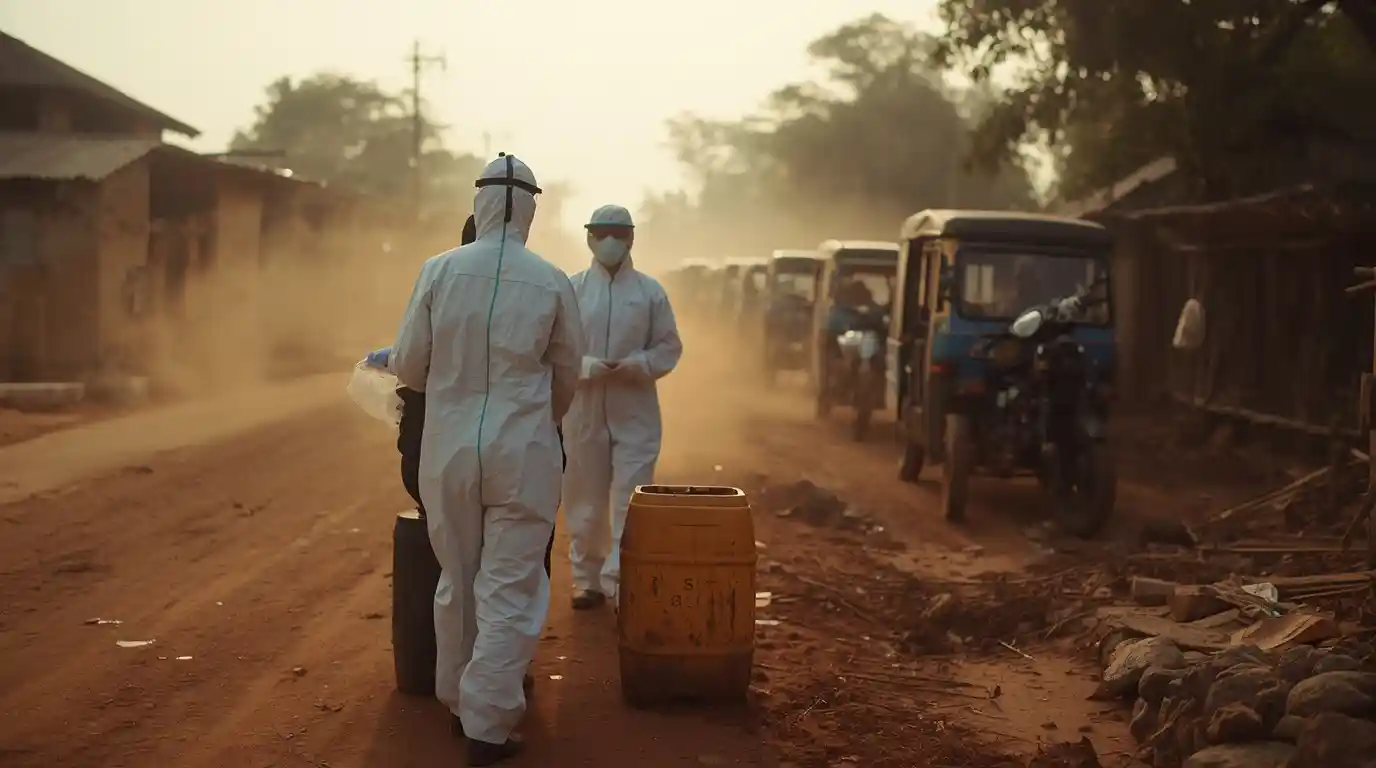
The Congo Ebola outbreak has reached a sixth province, and the way it got there explains a lot about why responders keep arriving too late. A motorcycle-taxi driver traveled from Isiro, in Haut-Uele, to the town of Buta and died there, the Associated Press reported. Buta is the capital of Bas-Uele, a province that had recorded no cases at all until now.
Here's the part most Americans don't expect. A licensed Ebola vaccine exists, and it helped shut down earlier epidemics. But it was built for the Zaire strain, and this epidemic is driven by Bundibugyo virus, a rarer relative. No vaccine and no drug has been approved specifically for it. Three months after the outbreak was declared on May 15, more than 2,100 people are dead out of over 4,500 cases.
That's a fatality rate near one in two. It is already the fastest-growing Ebola epidemic on record and the second largest ever, and the World Health Organization said this week it's on pace to pass the 2014-16 West Africa disaster that killed more than 11,000 people. For US readers, the story isn't purely distant: the CDC has been routing travelers from the region through designated airports since late May.
How One Man's Trip Opened a New Province
Before he died, the driver had sought care at several hospitals — each stop a possible exposure point for staff and other patients. Afterward, his colleagues tried to take his body by force, and police had to intervene, according to Jean Kaseya, director general of the Africa Centres for Disease Control and Prevention. That matters medically, not just legally. An Ebola patient's body is at its most infectious right after death.
Why the Congo Ebola Outbreak Is Moving So Fast
The tracing system that normally boxes Ebola in has broken down. Between 60% and 70% of new cases are showing up outside the lists of monitored contacts, meaning teams learn about a chain of transmission only after it has already branched. Kaseya put it bluntly, saying the concept of contact tracing in the DRC has become useless. Ituri province still accounts for roughly 90% of cases.
We are chasing the virus; the virus is ahead of us.
That was Dr. Mohamed Yakub Janabi, WHO's regional director for Africa. Money is a big piece of why. Staff at the Nizi treatment center walked out after three months without pay, and Kaseya has said paying health workers is the government's job. Tallies through mid-June counted 75 infections among medical staff and 17 deaths — the people you can least afford to lose.
The Vaccine Gap, Explained
Ebola isn't one virus. It's a family, and immunity against one member doesn't reliably carry over to another. That distinction was academic for most of the past decade, because almost every major outbreak came from the Zaire strain. This one didn't.
Why the Existing Shot Isn't a Sure Thing
Ervebo, the approved vaccine, targets Zaire ebolavirus. WHO initially advised against deploying it here because the evidence for cross-protection against Bundibugyo was too thin, then cleared Phase 3 trials in July to find out whether it helps anyway. Using a vaccine on faith, at scale, in a collapsing response is a genuinely hard call — get it wrong and you burn trust you can't rebuild.
What's Being Tested Right Now
Two vaccine candidates aimed at Bundibugyo have entered human testing, and clinical trials of two possible treatments have begun in Ituri. That's fast by any historical standard. It is also slower than the epidemic. Trial results that arrive in the fall won't change what happens in Bas-Uele in August.
How This Compares With West Africa in 2014
The 2014-16 epidemic across Guinea, Liberia and Sierra Leone killed more than 11,000 people over roughly two years. This outbreak reached 2,100 deaths in about three months — the AP reports the toll piled up nearly three times faster. One difference cuts both ways: in 2014 there was no Ebola vaccine for anything, and the world built one. Today there's a vaccine, just not for this strain.
What US Travelers Need to Know
Since late May, anyone who has been in the DRC, Uganda or South Sudan within the previous 21 days must fly into one of a handful of designated US airports for enhanced entry screening. The rule applies to US citizens too. Screening began at:
- Washington Dulles International, on May 21
- Hartsfield-Jackson Atlanta International, on May 22
- George Bush Intercontinental in Houston, from May 26
No suspected or confirmed case has been reported in the United States, and the CDC still describes domestic risk as low. Ebola doesn't spread through the air; it moves through direct contact with bodily fluids, which is why hospitals and funerals drive transmission. But a French health worker who caught it in the DRC tested positive in June — the first case confirmed outside Africa — so exportation is possible, not theoretical.
What to Watch in the Coming Weeks
Cases have been confirmed within about 35 kilometers, roughly 22 miles, of the South Sudan border, with none reported on the other side yet. Funding is the other tripwire: the UN launched a $518 million emergency appeal on June 5, and more than $400 million of it remains unfilled. UNICEF has warned its share of the response is about a quarter funded, and Uganda has asked Washington to reverse health funding cuts.
If you have travel to East or Central Africa on the calendar, check the CDC's current notice before you book and make sure your return routes through a designated airport — rebooking later costs more. Otherwise, watch three things: whether Bas-Uele produces a second case, whether South Sudan reports its first, and whether the vaccine trials read out before the rainy season complicates access.




Comments 0