

The Council Insider Turning Policy Into Rap in Croydon
A Croydon poet who once worked inside local government is testing whether rhyme can do what committee reports never have — get young people to actually read council policy.
A poet from Croydon is turning policy into rap, and the point is far less about music than about a gap councils have never managed to close. Jenniah Brown grew up in the borough and has worked inside local government, which means Brown has seen the problem from both ends: the papers a council publishes, and the near-total silence that greets them.
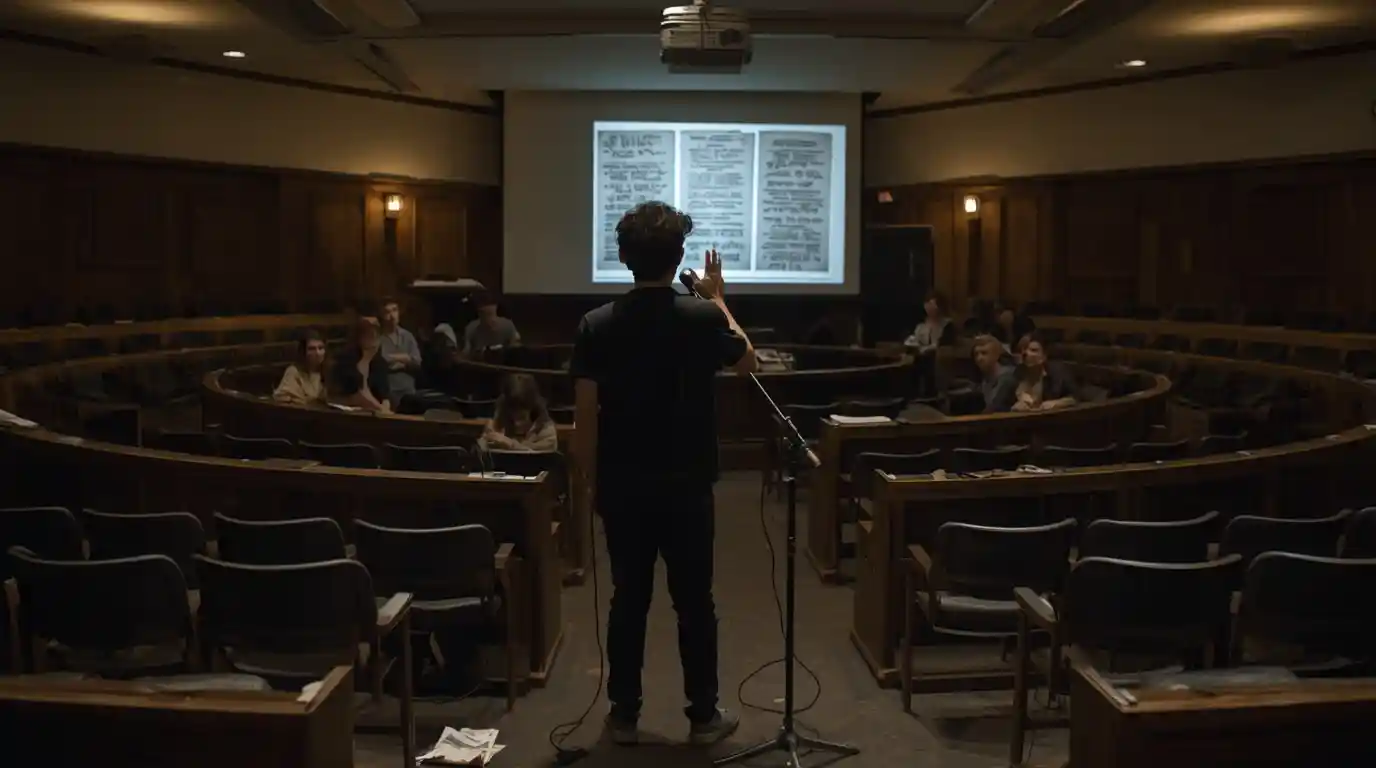
The vehicle is Connecting Dots, a project backed by Arts Council England that uses poetry, spoken word and rap to break down subjects most people never get past the first page of — devolution, creative health, the creative industries, levelling up. Its first Cultural Research Exchange is being staged in Croydon, bringing artists, residents and the people who write the policies into the same room.
It sounds small. It arrives at a moment when it isn't. Turnout at English local elections routinely hovers around a third of those eligible, and it drops further among under-25s — the group whose housing, transport and youth services are decided in exactly those unread documents. Meanwhile, the government has committed to lowering the voting age to 16, which will hand the ballot to a cohort that has had almost nothing explained to it in a language it uses.
What Connecting Dots Is Trying to Prove
Brown has framed the project around two blunt questions. Can poetry genuinely help people understand policy? And can the arts pull a local area together around community wealth building — the idea that councils, hospitals and schools should spend their budgets with local firms and local people rather than distant contractors? Neither question has an obvious answer, which is rather the point of running it as an experiment instead of a campaign.
What separates this from the usual council outreach is the direction of travel. Most engagement work takes a finished decision and tries to explain it afterwards. Connecting Dots puts artists, communities and policymakers in one exchange and treats the confusion itself as the subject — including who the jargon quietly shuts out.
Why Turning Policy Into Rap Is More Than a Gimmick
Local government has a comprehension problem it has never taken seriously. Cabinet reports run to hundreds of pages, consultations close after six weeks, and the summary is written by the same team that wrote the policy. Rap is not a soft alternative to that — it is a compression format. A verse forces you to say what a scheme actually does to someone's week, because there is no room for "strategic enabling framework".
London's councils shape our lives but nobody understands the jargon so I'm turning policy into rap.
Brown put it that way to MyLondon, and the phrasing matters. The complaint is not that residents are apathetic. It is that the information exists, is technically public, and is delivered in a register almost nobody outside the building speaks.

Why Croydon Is the Obvious Place to Try It
Of all the London boroughs, Croydon is the one where the cost of not understanding your council has been most visible.
A Council That Ran Out of Money
Croydon issued a section 114 notice in 2020 — the local-government equivalent of admitting it cannot balance its books — and has operated under Whitehall-appointed oversight since, with debt running into the billions. Residents felt the consequences in closed libraries, thinner services and higher council tax. Very few of them could have told you, beforehand, which decisions got the borough there.
A Borough That Already Backs Its Poets
Croydon also has form here. It appointed Shaniqua Benjamin as its first poet laureate, a post created precisely to give the borough a voice that wasn't a press release. Benjamin is among the artists involved in Connecting Dots, alongside Dujon Thompson and Selorm Adonu. That existing infrastructure is why the pilot landed here rather than somewhere with a bigger arts budget.
The Bit That Could Actually Change Something
The honest test isn't whether a room enjoys the performance. It's whether anything moves afterwards. Watch for three things: whether policymakers who attend commit to rewriting a consultation document in plain English, whether the exchange is repeated outside Croydon, and whether any council starts publishing a short spoken version of its major decisions as standard.
There is a live reason to care. England's devolution shake-up is redrawing who decides what, pushing power towards larger strategic authorities. Bigger units mean fewer, more distant decision-makers — and a longer walk between a resident and the person responsible.
What to Watch For Next
If you live in Croydon, the practical move is unglamorous: your council publishes its cabinet agendas online before meetings, and the first page of any report is the recommendation — the bit that says what will happen. Read that, skip the rest, and you'll know more than most. If Connecting Dots works, that shouldn't be a skill anyone needs. Keep an eye on whether the next Cultural Research Exchange is announced for another London borough — that's the signal this became a method rather than a one-off gig.


Comments 0