

The End of Oak Street Uses One Jaws Trick 20 Times
David Robert Mitchell's dinosaur thriller has critics arguing over where tribute stops and copying starts — and one lens trick sits at the centre of the row.

The End of Oak Street reaches UK screens this weekend carrying a critical scorecard that refuses to settle. Metacritic has it at 68 from 41 reviews, which the site files under "generally favourable". That average hides a proper row. Some critics have called it the best Spielberg film of the year. Others say it isn't a tribute at all — just theft with a bigger budget.
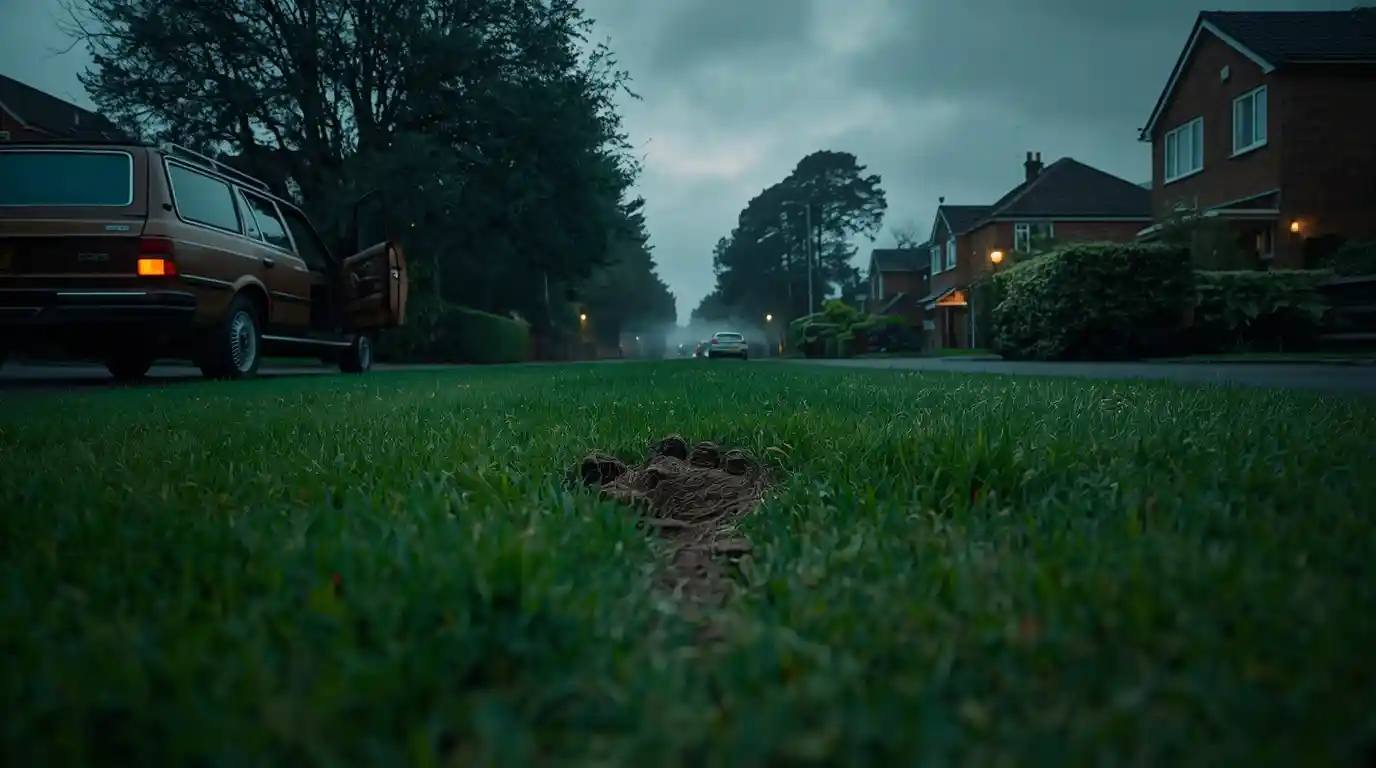
The film was written and directed by David Robert Mitchell. The setup is pure early-Eighties Amblin: a comfortable suburban street in an unnamed city, and an event that drops the whole neighbourhood into the age of dinosaurs. Anne Hathaway and Ewan McGregor play Denise and Greg Platt, with Maisy Stella and Christian Convery as their teenage children. Warner Bros. is distributing, and JJ Abrams' Bad Robot produced.
Buried in the reviews is the detail that explains everything else. Mitchell uses the split diopter — the lens trick Steven Spielberg leaned on in Jaws — more than 20 times across a film that runs just 99 minutes. Four of those shots arrive in a single scene. That isn't a nod to an influence. That's a director rebuilding someone else's visual grammar, shot by shot, and it's why the notices divide so cleanly.
A 68, and no consensus at all
Averages flatten arguments, and this one flattens a good scrap. Rolling Stone's verdict was that it's the finest vintage-Spielberg rip-off in a decade. Slate went further and called it the best Spielberg movie of the year, which stings a little given Spielberg is still making films. Variety framed it as a loopier and, in its own way, better Jurassic Park. Inverse called it a homage with bite.
"The Best Vintage-Spielberg Rip-Off of the Past Decade" — Rolling Stone
The dissent was just as loud, and largely came from the same set of observations. A CultureMap reviewer wrote that the film mistakes imitation for inspiration; a companion piece from the same group wrote it off as a dino-snore. Both camps agree on what's on screen. They disagree entirely on whether copying a masterpiece with this much care counts as craft or as a con.
The Jaws trick, run 20 times
Most viewers will never name the technique, but they'll feel it working. The split diopter is the reason certain shots in this film look uncanny — two things at wildly different distances, both razor sharp, with no cut between them. Once you know it's there, you can count them, and reviewers clearly did.
What a split diopter actually does
It's a half-lens clipped over part of the camera's main lens. One side focuses on something inches away, the other on something far off, so a face in close-up and a threat 30 feet behind it are both crisp in the same frame. It's done in camera, not in post. Spielberg used it in Jaws to hold a character's reaction and the danger behind them at once.
Why an indie horror director reached for it
Mitchell made his name with It Follows in 2014, a low-budget horror built almost entirely on slow pans and figures walking calmly toward the camera from the far background. The whole film trained audiences to distrust deep space in the frame. The split diopter does that mechanically — it keeps the background legible and threatening while the foreground carries on talking. So this is less a costume change than a continuation.
Is The End of Oak Street homage or theft?
The distinction matters commercially, not just critically. Nostalgia for early-Eighties Amblin has been a reliable earner for over a decade — Stranger Things built an empire on it. Abrams has been here before, too: he directed Super 8 in 2011 as an open love letter to that era. The difference is that Spielberg's name sat in Super 8's credits as producer. Here, it doesn't.
That's the line critics are really policing. Borrowing with the original artist's blessing reads as lineage; borrowing without it reads as lifting. Neither is illegal, and audiences historically don't care much either way — but it shapes whether a film gets treated as a new classic or a well-made photocopy when awards season comes round.
The $80m question nobody is asking
Bad Robot made the film for a reported $80m, with some estimates pushing towards $92m once visual effects are counted — north of £50m on any conversion. Deadline projected a global opening of $38m to $48m, with US previews above $2m and a domestic weekend of $20m to $25m. For a dinosaur picture with two A-list leads, that's soft. Studio films generally need to clear double their budget before they see profit.
What to watch at the UK box office
The rollout put it on roughly 24,000 screens worldwide, with the UK opening alongside France, Germany, Spain, Australia, Brazil, Mexico, China and Japan. Spider-Man is expected to hold the top spot regardless. British audiences matter here more than usual: it's mid-August, the schools are off, and family-adjacent genre films live or die on that fortnight. The US certificate is PG-13, so check the BBFC rating in your local listings before booking for younger children.
The number to watch is next weekend's drop. A fall of under 50% means word of mouth is doing the work and the good reviews won. Anything past 60% suggests the sceptics were closer to what audiences actually felt. If you liked the patience of It Follows, book a ticket now — this is that sensibility at scale. If you'd rather have one new idea than a beautifully restored old one, it'll be on streaming by autumn.
Comments 0