

The Family Games Night That Was Really a Goodbye
Dominik Diamond, the original face of Channel 4's GamesMaster, wrote up his final family games night as the most emotional column of his five years at the Guardian.

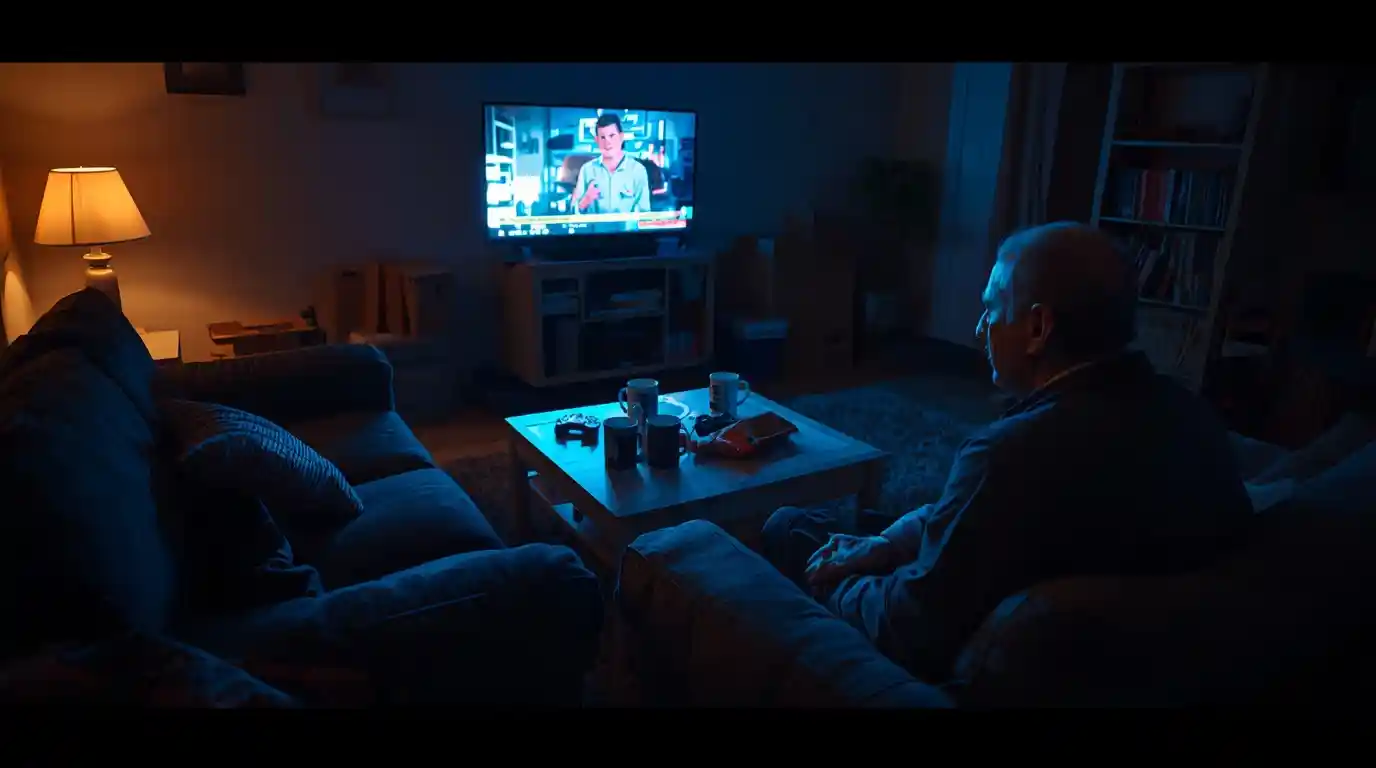
Dominik Diamond wanted his last family games night to be the best fun his household had ever had, and by his own account it didn't quite work out that way. The broadcaster wrote the evening up for the Guardian on 31 July 2026, in a column about his family coming apart. The standfirst carries the sting: in hindsight, he reckons they should have stuck with Mario Kart.
That detail is the whole story in miniature. Diamond has been writing the Guardian's games column for five years, and he says this was the most emotional piece he has produced in that time. He is 56, born in Arbroath on the last day of 1969, and he spent the 1990s as the original presenter of Channel 4's GamesMaster, which ran from 1992 to 1998. Few people in Britain have a longer paper trail on what video games do to a room full of people.
It matters because the ritual he's describing is one most British households recognise. The controllers come out at Christmas, during a wet half-term, or on the night before someone moves out. Nobody schedules the last one. You only find out afterwards which night it was, and that's the part Diamond captured before the memory had time to soften.
The column he says was the hardest to write
Diamond flagged the piece on his own Facebook page after publication, which is unusual for a weekly columnist who has filed hundreds of these. His note was short and unguarded rather than promotional, and it framed the column as a personal marker rather than another instalment about controllers and frame rates.
Not gonna lie… in the 5 years I have been a Guardian columnist this was the most emotional one to write yet…
Readers responded in kind. The comments under that post filled with the games people associate with their own households — Mario Kart, Overcooked, Bomberman, Worms — which says something about how narrow the canon of genuinely shared, same-room gaming has become. Four titles, and most families would name at least two of them.
From Channel 4 to a house in Nova Scotia
There's a symmetry worth pointing out. In 2008 Diamond announced he was leaving Scotland for Nova Scotia, citing exhaustion with the British media grind, and by early 2009 he had emigrated with his wife and three children. He went on to host a morning show on Radio 96.5 in Halifax. That was the family moving as a single unit, thousands of miles, in one direction.
Seventeen years on, the movement is outward instead. Children who were small enough to be packed onto a plane are old enough to leave the sofa. Anyone who emigrated with young kids in the late 2000s is hitting the same wall now, and it arrives quietly — not as a crisis, but as a night when the fourth controller doesn't get picked up again.

How to plan a family games night that lands
Diamond's regret about Mario Kart is practical advice dressed as a joke. Ambitious plans for a farewell evening tend to backfire, because the thing that made those nights work was never novelty. It was low stakes and a game everyone already knew. If you're organising one that actually matters, three rules do most of the work.
Pick a game that forgives the worst player
Mario Kart's rubber-banding exists so the person in last place still has a shot. That's not a design flaw, it's the entire point of a party game. Anything that rewards hundreds of hours of practice will hand the evening to whoever plays most, and the person who doesn't play will quietly stop turning up.
Keep everyone on one screen
Split-screen looks dated next to online lobbies, but it's the only setup where people talk to each other. Online play with headsets puts everyone in a separate room in the same house. If the point is the company rather than the score, local multiplayer is the format, and Nintendo consoles remain the most reliable place to find it.
Agree when to stop before you start
Most family gaming rows happen at the end, not the beginning — one more round, a sulk, someone walking off. Set a finish point out loud, and let the last race be the last race. It's a small thing that decides whether the night is remembered as warm or as the one that went wrong.
Why the shared sofa keeps getting rarer
The industry has moved against this kind of evening for a decade. Big multiplayer titles are online-first, built around subscriptions, battle passes and separate accounts, all of which assume players are in different buildings. Couch co-op survives mostly on Nintendo hardware and among smaller studios, which is why the same handful of games keeps coming up whenever people talk about playing together.
Put it in British terms: a household kitting out four people to play the same online shooter is looking at hardware, copies and ongoing subscriptions for each of them. One console and one party game, passed between four hands, still costs a fraction of that. The cheaper option is also the more sociable one, which almost never happens.
What to take from it
Diamond's column isn't a review and it isn't nostalgia for the 1990s, despite his history with GamesMaster. It's a reminder that the thing you think is a hobby is often just the excuse that gets everyone in one room. If your own household still has a games night in it, don't save the good one for a milestone. Put a date in the calendar this month, pick something forgiving, and let the youngest choose the track.


Comments 0