

The Fiji HIV Outbreak Now Reaches a Newborn Every Week
Fiji has the world's fastest growing HIV epidemic, and Australia has just put FJ$23.5 million behind the response — but only about one in five people living with the virus is on treatment.
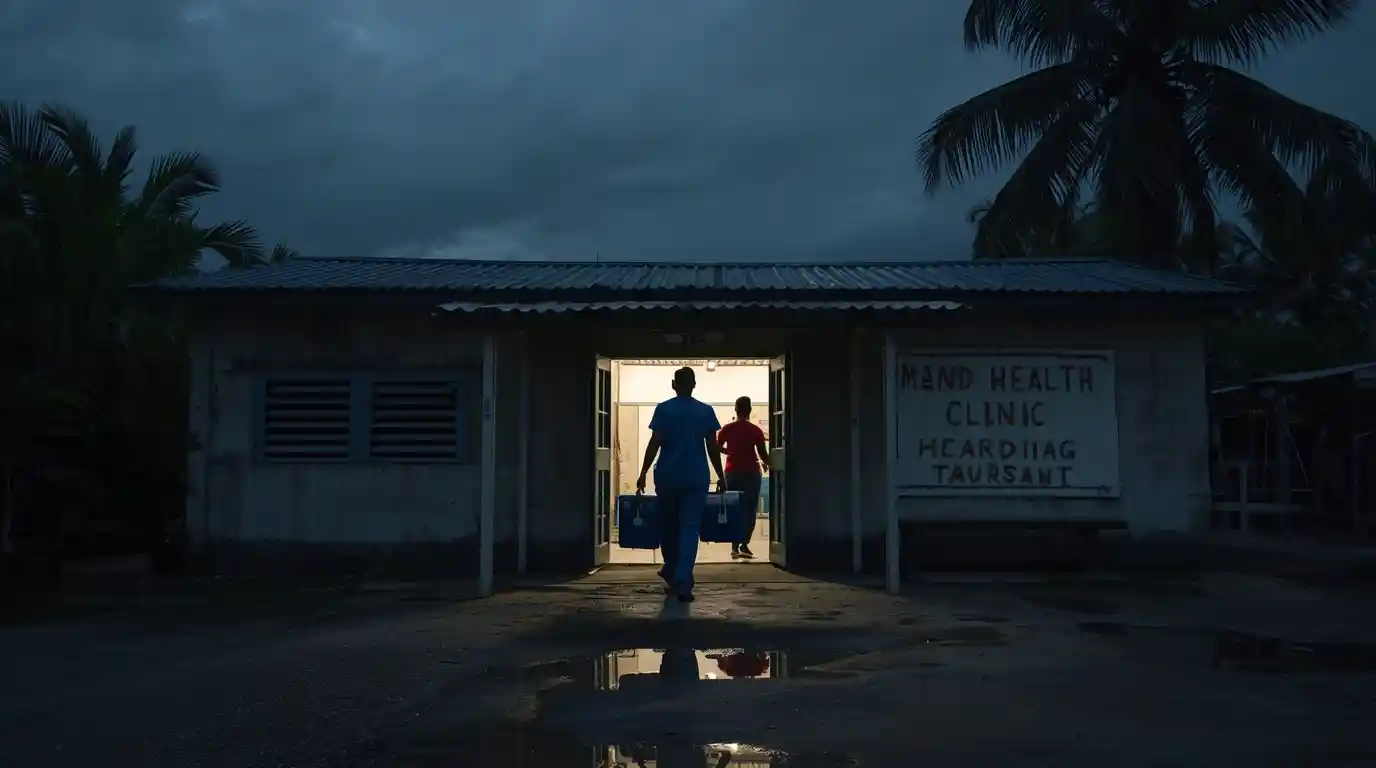
The Fiji HIV outbreak has stopped being a problem for one group of people and become a problem for a whole country. Fiji's health ministry declared the outbreak in January 2025, after logging 1,093 new diagnoses between January and September 2024 — three times the same stretch of 2023. Last year the tally pushed past 2,000 new cases, another 26% jump. Fiji has fewer than a million residents.
The figure that lands hardest is much smaller than any of those. Through 2025, roughly one baby a week was born with HIV in Fiji, and about once a month a child died of an HIV-related illness. Mother-to-child transmission is the part of this epidemic medicine had all but closed off — antiretrovirals during pregnancy cut the risk to near zero. Fiji is losing ground that was already won.
Australians have a direct stake in what happens next. On 7 August, Foreign Minister Penny Wong stood in Suva and committed FJ$23.5 million — upwards of US$10 million, or somewhere near A$16 million — to Fiji's HIV response, describing it as a health challenge and a security challenge at once. Nadi is about four hours' flying from Brisbane, and Fiji is one of the most popular short-haul holidays Australians take.
How Fiji Got Here in Just Five Years
Infections have risen roughly 14-fold in five years, and UNAIDS reports a ten-fold rise in new infections since 2014. Researchers writing in The Conversation put adult prevalence at about 1.6% — one in every 60 adults. That is a rate you would expect to read about in a very different part of the world, not in a country most Australians associate with resort pools.
Methamphetamine and shared needles
Fiji sits on a trafficking route, and meth use has climbed fast. Dr Jason Mitchell, who chairs Fiji's national HIV outbreak cluster response task force, told the AIDS 2026 conference in Rio de Janeiro that risky injecting among people using methamphetamine is what drives the epidemic now. Crucially, Mitchell said the virus has since spilled out of that group into every other population in the country.
A testing net that catches too few
Fiji's treatment cascade is where the emergency really shows. Recent figures put it at 40-22-3.2: about 40% of people living with HIV know it, only 22% are on treatment, and 3.2% have an undetectable viral load. Undetectable means untransmittable. With a number that low, almost everyone carrying the virus can still pass it on, which is why the curve keeps bending upward.
Silence that keeps people out of clinics
Stigma is doing quiet damage. Health workers describe a culture where an HIV diagnosis is not discussed, so people avoid testing, delay treatment and drop out of care. Funding disruptions to prevention services and a stretched hospital system have made it worse. On current trends, annual new infections are projected to triple again by 2030.
What Australia's FJ$23.5 Million Is Meant to Buy
The money is tied to Fiji's national HIV outbreak response plan and covers prevention work, training, workplace support, community outreach and essential medical supplies. It landed alongside the launch of a dedicated HIV response hub in Fiji, and it sits inside the broader Vuvale partnership between Canberra and Suva — the same package that produced the Vuvale Union and Ocean of Peace treaties signed by Sitiveni Rabuka and Anthony Albanese.

Why the Fiji HIV Outbreak Matters in Australia
Australia has been here, and it worked. Needle and syringe programs rolled out from the late 1980s are the main reason HIV never took hold among people who inject drugs here, while comparable countries that hesitated paid for it for decades. That is the exact intervention Fiji is now trying to scale under time pressure, with far less health infrastructure and far more stigma to push through.
It's important to talk about what's happening in Fiji, as it can happen anywhere.
Mitchell's point is the one Australian readers should sit with. Epidemics follow drug routes and travel routes, not borders, and the Pacific shares both with Australia. Regional health funding is not charity in this case — it is the cheapest available form of self-interest, and considerably cheaper than treating a wider outbreak later.
What to Watch Over the Next Year
A few things will show whether the response is working, and none of them is the headline case count, which will keep rising as testing expands. Look instead for:
- Treatment coverage moving off 22% — that single number decides everything downstream.
- Access to lenacapavir, the twice-yearly injectable prevention drug, which Fiji is pursuing through the Global Fund.
- Uptake of PrEP, now available in Fiji, especially among people who inject drugs.
- Whether new babies born with HIV drop toward zero, the clearest measure of a working system.
If you're travelling to Fiji, ordinary tourism carries no meaningful risk — HIV does not spread through food, water, pools or casual contact. The useful response is elsewhere: Australian aid to the Pacific is decided in Canberra, and this is a rare case where a modest sum, spent early, stops a much larger bill. Watch the federal budget and the treaty debate in parliament for whether the FJ$23.5 million turns out to be a start or a one-off.




Comments 0