

The High School Literacy Gap Behind an A-Rated School
A Houston teacher's tearful video collided this week with an inconvenient fact: his campus just earned an A from the state.

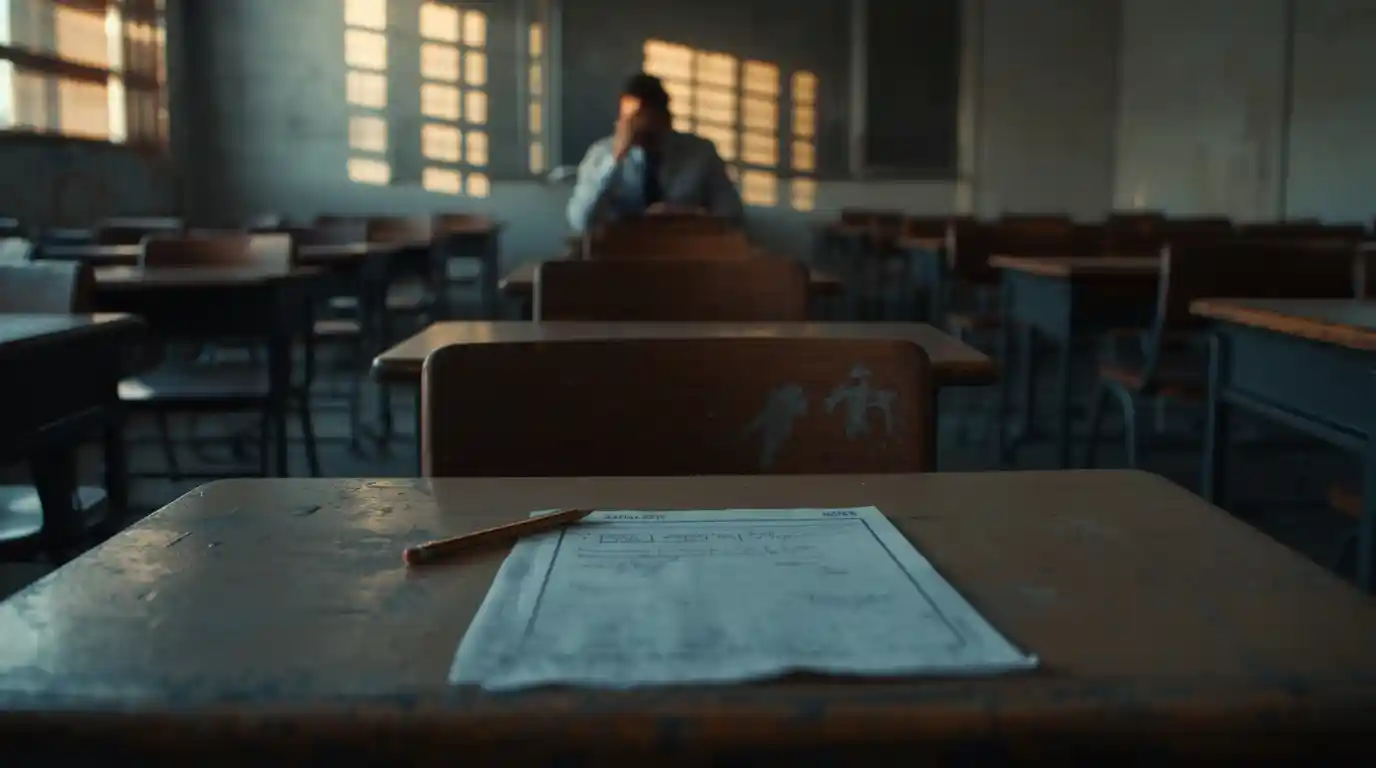
A Houston teacher put the high school literacy problem on camera this week, and it didn't arrive as a statistic. It arrived as a grown man crying at his desk. Darius Williams, who teaches at Phillis Wheatley High School in the Houston Independent School District, filmed himself during lunch on August 12 — the second day of the school year — and said he had broken down in the middle of class.
The assignment was deliberately small. Read two paragraphs. Write one sentence. FOX 26 Houston reported that Williams had already walked the class through the scenario and handed them the answers before they started. "I have seniors who simply cannot read, and seniors who cannot write," he says in the clip. By his account, the students couldn't fill in four words.
Here's the part most reposts left out. Wheatley earned an A in the 2026 Texas Education Agency accountability ratings. This is the same campus that collected its seventh consecutive failing rating in 2019 — the streak that triggered the state's takeover of Houston ISD in 2023. The school at the center of this video is, on paper, one of the district's proudest comebacks.
What Actually Happened in That Room
Williams isn't an English teacher. Wheatley's staff directory lists him as an NES CTE teacher in a non-foundational program of study, which in state terms means electives, specialized or enrichment courses rather than core academics. That cuts both ways. He wasn't administering a reading assessment, so the clip isn't evidence in any formal sense. It's also why it landed so hard: an elective class isn't where you expect to discover a senior can't produce a sentence.
FOX 26 also noted that Williams has a following as a cooking personality and has faced past business complaints reported by FOX 5 Atlanta, which critics online seized on. That's fair context and a weak reason to wave the video away. His side ventures don't touch the thing that made the clip travel — teachers in the replies saying they've watched the same silence in their own rooms.
Where the High School Literacy Numbers Actually Sit
National testing doesn't contradict him. On the 2024 National Assessment of Educational Progress, 32 percent of 12th graders scored below NAEP Basic in reading — the floor where a student can find and identify details in a passage well enough to follow its meaning. That's close to one in three American seniors. It's two points worse than 2019 and twelve points worse than 1992, and the average 12th-grade reading score now sits ten points below its 1992 mark.

How a Failing Campus Became an A
Both things can be true at once. Houston ISD's measured results have genuinely moved, and a senior in a Houston classroom can still stall on four words. The gap between those facts is mostly about what a letter grade counts and who it counts.
What the A Grade Measures
Texas accountability ratings lean heavily on test performance, year-over-year growth and college-and-career readiness indicators. A campus can climb sharply by improving its lowest performers and its graduation pipeline while a slice of students remains years behind in reading. The rating describes a school's trajectory. It was never designed to certify that every senior walking the halls can write a paragraph.
The English Scores, Up Close
Houston Public Media reported that in the 2026 STAAR results, the district's English I passing rate rose eight points to 69 percent and English II rose three points to 71 percent. Algebra I climbed five points to 82 percent, biology three points to 94 percent. Read those English figures again: after real gains, roughly three in ten Houston ISD students still didn't pass.
Who's Still Sitting in the Seat
Texas Monthly has reported that part of the district's STAAR rise traces to holding more students back a grade, which changes who takes which test and when. Retention isn't automatically bad — a student who genuinely isn't ready can benefit. But it means an improving average and a struggling senior aren't in conflict. They can be the same policy, seen from two ends.
The District's Answer
Superintendent Mike Miles didn't dispute the underlying picture. He told reporters the sentiment wasn't new information, and pointed to the district more than doubling its count of schools rated A or B since 2023.
Yes, we are raising expectations and, guess what? The kids have risen to the level of expectation.
Houston ISD separately acknowledged that some students arrive at high school below grade level and said it provides targeted academic support, while noting Wheatley students have made significant gains. Both statements are defensible. Neither one gets a senior to a sentence by June.
What to Ask Your Kid's School This Month
If the video rattled you, the useful move isn't arguing online — it's asking four questions before the first grading period closes. Every one of them has an answer the campus already has on file.
- What was my child's most recent STAAR English I or English II score, and did they pass?
- Is this campus part of the NES model, and what changed in the English block because of it?
- What reading intervention exists for students below grade level, and is my child in it?
- Has my child been retained or scheduled for a credit-recovery course, and why?
Watch what happens to Wheatley's numbers next spring, and whether Houston ISD publishes reading data by grade rather than by campus average. That's the disclosure that would settle this. Until then, treat a school's letter grade as a headline, not a report — and ask to see your own child's reading level in writing.



Comments 0