

The HP Keyboard PC Starts at US$1,500 and Has No Screen
HP's EliteBoard G1a squeezes a full Windows desktop into a 93-key slab — but the buyer it was built for isn't sitting at home.

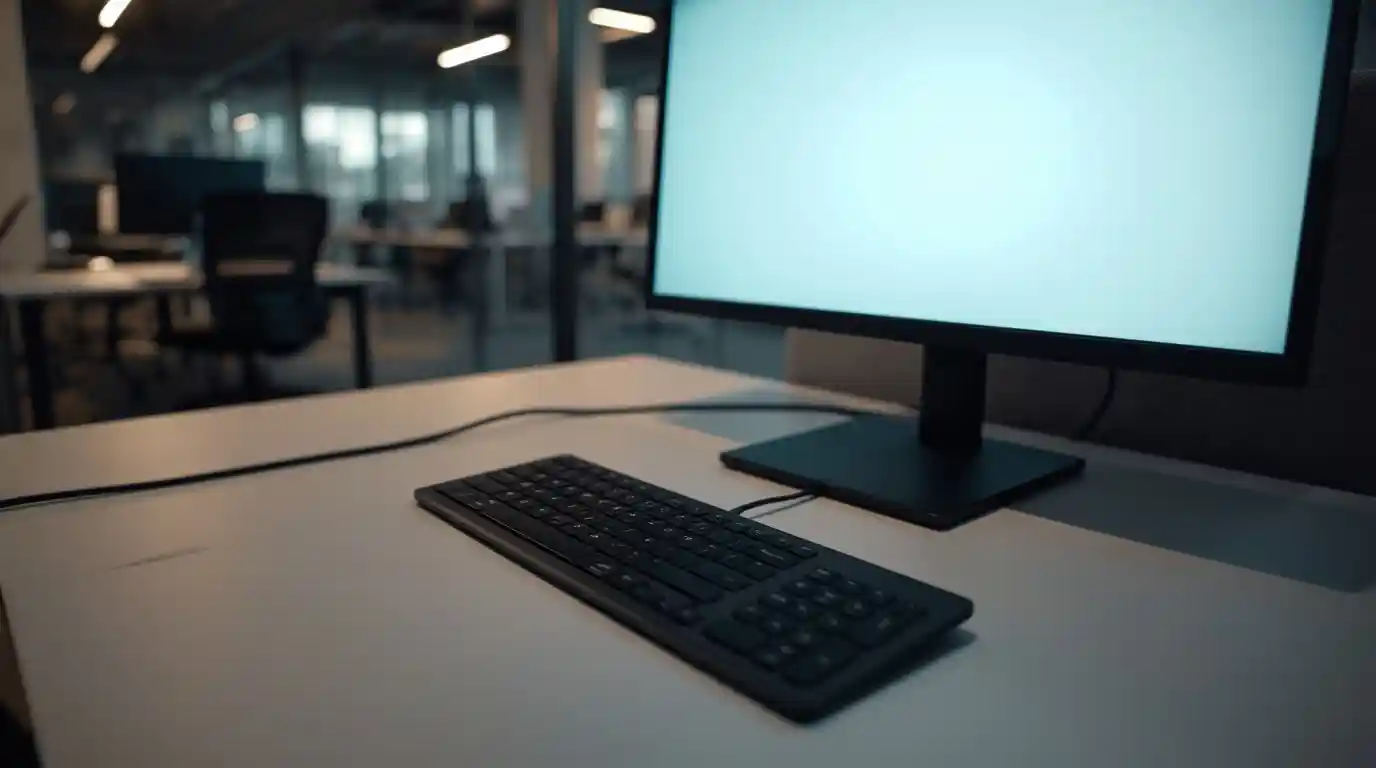
The HP keyboard PC that pulled crowds at CES in January has finally shipped, been reviewed, and quietly confirmed what a lot of people suspected: it was never really meant for you. HP's EliteBoard G1a packs an entire Windows desktop into a 93-key slab about 12mm thick, and it starts at roughly US$1,500. No monitor. No mouse. Just the keyboard, and everything that normally sits under a desk hiding inside it.
Inside are an AMD Ryzen AI 300-series chip, integrated Radeon graphics, up to 64GB of DDR5 memory and up to 2TB of storage. The neural processor clears 50 TOPS, which is enough to earn Copilot+ PC status. HP says the whole thing weighs 750g. Plug one USB-C cable into a compatible monitor and it wakes up as a full desktop.
It's a genuinely clever answer to a problem Australian offices know well. Hot-desking and activity-based working are now normal in banks, insurers, universities and government departments here, and the daily ritual of hunting for a free monitor with a working dock is a familiar irritation. HP's pitch is that you carry your computer in one hand, drop it on any desk, and plug in once.
What HP Actually Crammed Into the Keys
This is not a dongle or a thin client. The EliteBoard has speakers, dual microphones, Wi-Fi 6E or 7 and its own cooling, all under keys with 2mm of travel and a number pad. An optional 32Wh battery gives about three and a half hours away from power, or roughly two days asleep, and it charges over a 65W USB-C adapter. HP won a CES 2026 Innovation Award honouree nod for it and registered it EPEAT Gold. Memory and storage are user-replaceable, which is rarer than it should be.
Why the HP Keyboard PC Isn't Sold to You
Engadget's Devindra Hardawar reviewed it in May and scored it 8.5 out of 10, then spent much of the review explaining why most readers shouldn't buy one. His test unit ran US$1,795 with a Ryzen AI 5 Pro 340, 32GB of RAM and a 512GB SSD. At that money, a compact desktop or a decent laptop simply does more. The buyer HP has in mind is an IT manager ordering fifty units for a call centre or a floor of hot desks, not a person shopping for a home machine.
Three Things That Catch People Out
Every review of the EliteBoard lands on the same handful of compromises. None of them are dealbreakers in a managed corporate fleet, where the docks and monitors are standardised. All of them get awkward the moment you take it home to a desk you set up yourself.
There Is No HDMI or DisplayPort
You get two USB-C ports, and on some configurations one of those is a permanently attached cable. One port handles video and 45W charging. If your monitor doesn't take video over USB-C — and plenty of the screens sitting in Australian homes and meeting rooms don't — you're relying on HP's bundled hub adapter, which is one more thing to lose.
The Battery Is an Optional Extra
Without it, the EliteBoard is a desktop that must be plugged in to do anything. With it, you get about three and a half hours, which is enough to walk between buildings, not enough to work on the train. Check which configuration your reseller is actually quoting.
You Will Hear the Fans
There are fans in there, and reviewers noticed them in quiet rooms. In a busy office that vanishes into the background noise. In a home study at 10pm, it's a different experience entirely.
How It Compares to a Mini Desktop
On raw numbers, the EliteBoard scored 6,736 in PCMark — roughly what a good ultraportable laptop managed two years ago. That's fine for spreadsheets, video calls and browser work, and useless for gaming; the integrated graphics don't have the video memory to complete a 3DMark run. A mini PC of similar cost will usually beat it on ports and often on performance. What it won't do is fit in a backpack sleeve alongside your notebook.
What Australian Buyers Should Watch For
HP listed availability from March 2026 on its own site, but the entry model in the US is around US$1,499 to US$1,549 with 16GB of memory and 512GB of storage. Converted, shipped and taxed, expect something comfortably north of A$2,000 locally — and expect to go through a reseller or an HP account manager rather than a checkout page, because pricing on commercial gear here is negotiated, not advertised. HP also announced a Series 7 Pro 4K monitor with 140W Thunderbolt 4 alongside it, which tells you how the company imagines the desk being assembled.
If you're a home user tempted by the design, wait. The interesting outcome isn't this model — it's whether a consumer version appears once HP has proved the concept on corporate fleets, the way tablets and 2-in-1s arrived. For now, keep an eye on Australian reseller listings, ask specifically whether the quote includes the battery and the HDMI adapter, and confirm your monitor accepts video over USB-C before anyone signs a purchase order.




Comments 0