

The KPMG Audit Scandal Hasn't Cost It Macquarie or Westpac
Four of the country's biggest companies fronted a parliamentary committee over KPMG's misuse of confidential client files — and almost all of them are still paying the firm.

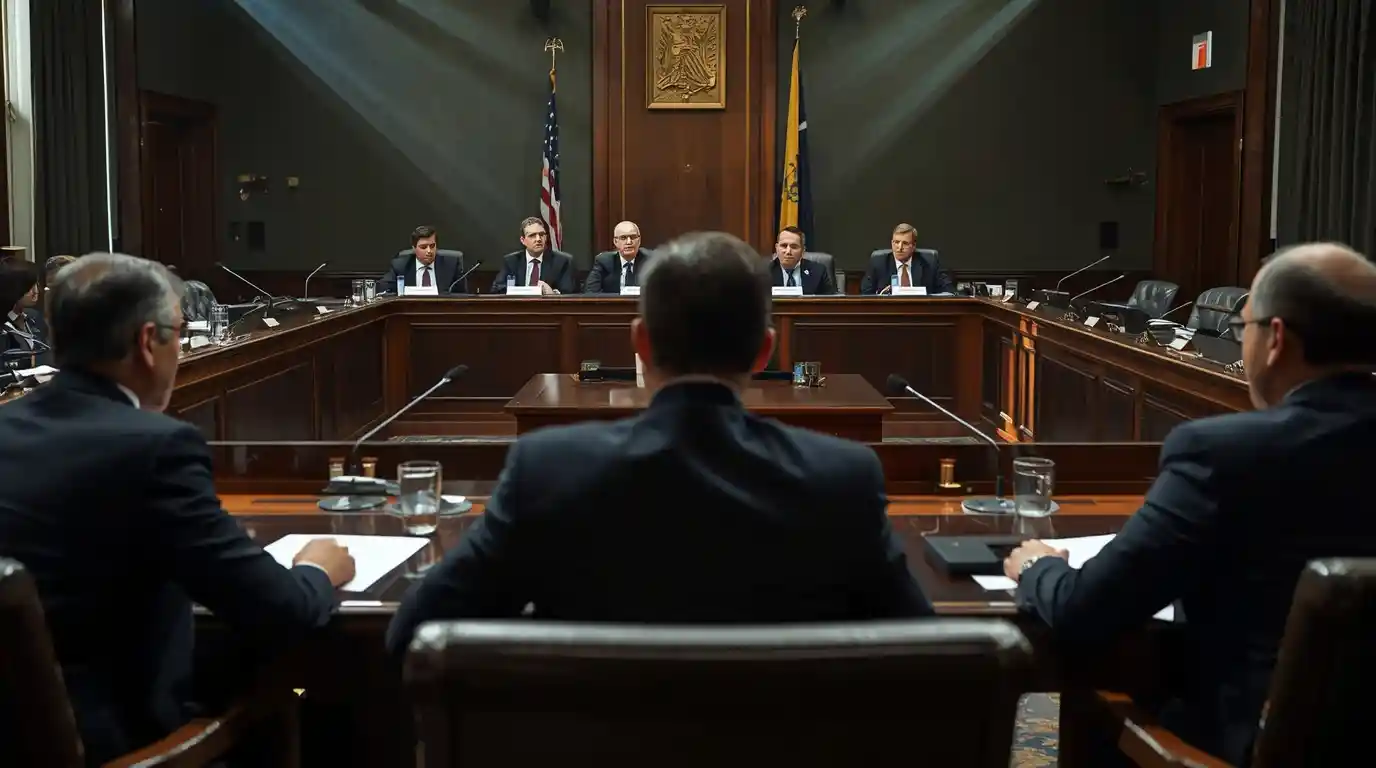
The KPMG audit scandal has already taken out the firm's chief executive, its chairman and its head of audit, and it is on track to take about 1,000 jobs with it. On Friday it took a day out of the diaries of four of corporate Australia's biggest names, who were called to Canberra to explain what a leaked-documents affair inside their auditor did to them.
Macquarie Group chairman Glenn Stevens and the group's chief financial officer, Westpac's audit committee chair, the chief executive of Optus and the chair of Dexus all fronted the parliamentary joint committee on corporations and financial services. Here's the part that hasn't changed: Macquarie, Westpac and Dexus are all still KPMG clients. Only Lendlease — the company whose confidential files sit at the centre of the whole thing — has actually walked, ending a relationship that ran 68 years.
That gap between outrage and action is the real story. Audits are the reason anyone believes a listed company's numbers. If your super fund holds Macquarie or Westpac shares, and most balanced options do, the sign-off on those accounts is the only independent check between you and management's own arithmetic.
What Actually Went Missing
A former senior KPMG audit executive alleged that partners got hold of confidential Lendlease material — including rival audit pitches from EY and PwC — and used it to chase new work. KPMG spent months calling the allegations unsubstantiated. In May it conceded that a senior partner had improperly accessed and displayed Lendlease documents, and that its handling of the whistleblower "fell short".
The Westpac tender
KPMG won Westpac's audit from PwC in March 2024. It is worth roughly $32 million a year, the single richest audit engagement in the country. Westpac later demanded the partner who led it be removed; she resigned in July. Westpac director Peter Nash, a former KPMG national chairman who had sat in on pitch meetings, stepped down from the bank's board on 1 July.
The Dexus pitch and the open laptop
KPMG picked up the Dexus audit in November 2024. Among the whistleblower's claims was an incident staff nicknamed "Lunchgate", in which a partner allegedly offered to leave a laptop open with confidential Dexus material on screen. KPMG has said that remark was a joke. Dexus was unamused enough to refuse to let the implicated partner sign its 2026 accounts.
The Optus files in a Telstra bid
Optus is in this because its confidential information was reportedly used while KPMG chased Telstra's audit — a bid it lost. In July the firm sanctioned seven partners and staff over it, with penalties running up to $180,000.
Why the Penalties Look So Small
Put the sanctions next to the money. The three partners disciplined in April were fined about $40,000, $22,000 and $19,000. The Westpac audit they were competing for brings in $32 million annually. The Macquarie engagement announced in November 2025 is worth more than $100 million over its life. Even the largest individual penalty is rounding error against the value of the work.
Compare it to PwC's 2023 tax leaks affair, which cost that firm its government consulting arm — sold for one dollar — and reset the entire market. KPMG's punishment so far has been mostly internal, plus a voluntary pause on bidding for new Commonwealth work until 30 September and a similar ban in Victoria.
What the Regulators Have Done
ASIC has formal investigations running into two registered auditors and, in July, launched a sector-wide review of how KPMG, Deloitte, EY and PwC handle internal complaints and whistleblower disclosures, using compulsory information powers. It also wrote to roughly 2,900 registered auditors warning of tighter surveillance. ASIC chair Sarah Court has called the conduct an egregious and serious breach of trust.
The Department of Finance has more than $270 million in Commonwealth contracts under review and commissioned Dr Ian Watt AC to examine KPMG's culture and governance, reporting by 30 September. Treasury's July options paper floats the bigger levers: splitting audit from consulting, licensing the large firms directly, and forcing companies to retender audits on a fixed cycle.
Why Nobody Has Sacked Their Auditor
Switching auditors mid-cycle is expensive, slow and disruptive, and there are only four firms with the scale to audit a bank. That is the structural problem the committee keeps circling: when your options are Big Four minus the one you just fired, and possibly minus another you fired three years ago, leverage evaporates. Macquarie's response was to commission an integrity review of its own tender rather than reopen it.
Committee chair and Labor Senator Deborah O'Neill said the companies giving evidence were doing a public service by "putting on the record how the failure of this audit sector has actually impacted them in a negative way".
What to Watch Next
Three dates matter. Watt's review lands on 30 September, the same day KPMG's Commonwealth and Victorian bidding bans lapse — that's when we find out whether governments treat this as closed. ASIC's cross-firm review will show whether the problem was one firm or four. And Treasury's reform options will either become draft law or quietly fade. If you hold shares directly, read the auditor's independence declaration in the next annual report and check the notes for non-audit fees paid to the same firm. That ratio is the simplest tell of whether your auditor is really an auditor.




Comments 0