

The Melon Joke Isn't Why Japan's Defence Minister Is Coming
Shinjiro Koizumi's Australian trip was locked in before melon-gate broke, and the real agenda is a frigate deal Tokyo wants New Zealand to join.

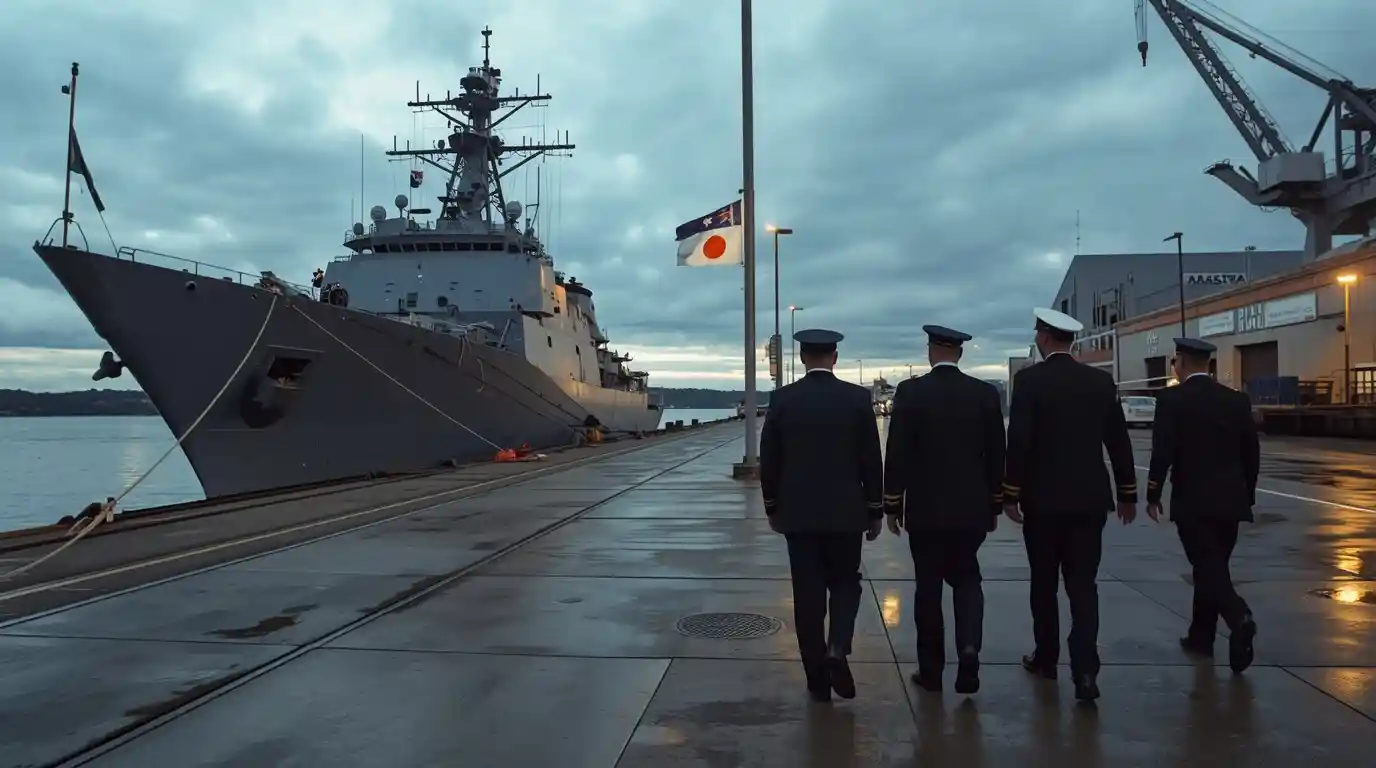
Japan's defence minister is on his way to Australia for talks with Richard Marles, and the trip has already picked up a nickname it never asked for. Shinjiro Koizumi's August travel plans were reported in Tokyo on 6 August, according to Nippon.com. Anthony Albanese's melon remarks only caught fire here in the days that followed. The visit was locked in before melon-gate existed.
What Koizumi is actually coming for is a warship. He is expected to sit down with Marles and New Zealand's defence minister, Chris Penk, for three-way talks, and the item on the table is Japan's upgraded Mogami-class frigate — the design Australia has already picked for its next generation of surface combatants. Tokyo and Canberra would both like Wellington to buy the same hull. Koizumi is due in India on the same swing.
That matters more to an Australian reader than a podcast gag. The frigate program is the biggest slice of defence industry this country has ever bought from Japan, it replaces the ageing Anzac-class ships the Navy is still sailing, and a serious share of the build is meant to land in Western Australia. If New Zealand signs on, three navies end up sharing one supply chain.
What Japan's Defence Minister Actually Wants Here
Strip out the fruit and the agenda is narrow: lock in the frigate, widen it, keep the schedule honest. Japan's defence exports have been thin for decades, and this deal is the closest thing Tokyo has to a flagship sale. A third customer would turn a one-off contract into something closer to a regional standard — which is precisely the interoperability argument officials on both sides keep making in public.
Why Australia picked a Japanese design
Australia ran a two-horse race for the general purpose frigate and landed on the upgraded Mogami over a German alternative. The pitch was speed and maturity: a design already in service with Japan's navy, able to be delivered faster than a clean-sheet ship. After twenty years of Australian shipbuilding programs running late and over budget, "it already exists" was a very powerful selling point.
What New Zealand is being asked to sign up to
New Zealand's frigate fleet is small and old. The case being put to Penk is that buying the same ship as Australia gives Wellington cheaper long-term sustainment, shared crew training and a common weapons fit across the Tasman. It also pulls New Zealand, traditionally more cautious about heavy defence spending, deeper into a Japan-Australia arrangement. Nobody expects a decision out of one meeting.
Where the hulls actually get built
Under the announced plan, the first ships come out of Japanese yards to get the class into the water quickly, with construction then shifting to Henderson in Western Australia. That split is the part with the most direct local consequence. The jobs, the skills pipeline and the supply contracts all depend on the transfer happening roughly on time rather than quietly slipping.
How a podcast joke became a diplomatic headache
The melon story started on comedian Nikki Osborne's podcast. Albanese was discussing fruit that Japanese Prime Minister Sanae Takaichi had brought as a gift. Osborne made a joke referencing Pamela Anderson, and Albanese replied that she brought two and that they were beautiful. Reported by The Nightly and repeated everywhere, it read to critics as a crack about the appearance of Japan's first female prime minister.
Murray McLean, a former Australian ambassador to Japan, called the exchange insulting and unthoughtful, arguing a visiting leader would not expect to be mocked that casually by her host. One Nation MP Barnaby Joyce went harder, calling it stupid and puerile. Social Services Minister Tanya Plibersek pushed back, describing the whole reading as a complete misinterpretation and the melons as a lovely gift.
It's not how you see it. It's how they see it. — Barnaby Joyce

Why Tokyo decided not to make a fuss
Japan brushed the comment off, CTV News reported. That is not the same as not noticing. Tokyo has spent the past year building the closest security relationship it has with anyone outside the United States, and there is a frigate contract, a reciprocal access agreement and a shared reading of the region riding on it. Picking a fight over a podcast serves none of that.
The 2016 submarine snub still hanging over this
There is history worth remembering. In 2016 Australia rejected Japan's Soryu-class submarine bid and chose France instead, a call that stung badly in Tokyo and cooled the relationship for years. The frigate decision is, in a sense, the reply — Japan finally winning a major Australian contract. It also explains why Japanese officials would rather swallow an awkward joke than reopen old wounds.
What to watch over the next few weeks
The meeting itself will be short on drama. The signal is in the wording that comes out of it, and in what does not get said. Three things are worth tracking once Japan's defence minister and his counterparts finish talking:
- Whether any joint statement names New Zealand as a likely Mogami customer, or falls back on "continued discussions"
- Any firm date attached to shifting frigate construction to Henderson
- Whether Albanese and Takaichi speak directly, which would close the melon chapter faster than anything ministers say
If you follow this story, follow the shipbuilding schedule rather than the gaffe. The joke will be forgotten inside a fortnight. The decisions taken in this room shape what the Royal Australian Navy sails for the next thirty years, who builds those ships, and whether the money stays in Western Australia. Keep an eye on the ministerial statements from both defence departments in the days after the talks.



Comments 0