

The Public Road Sale That Can't Fix the Council's Debt
North Sydney councillors have cleared the way to sell Cremorne's Monford Place to SCEGGS Redlands — but the law says the money can't go anywhere near the council's biggest problem.

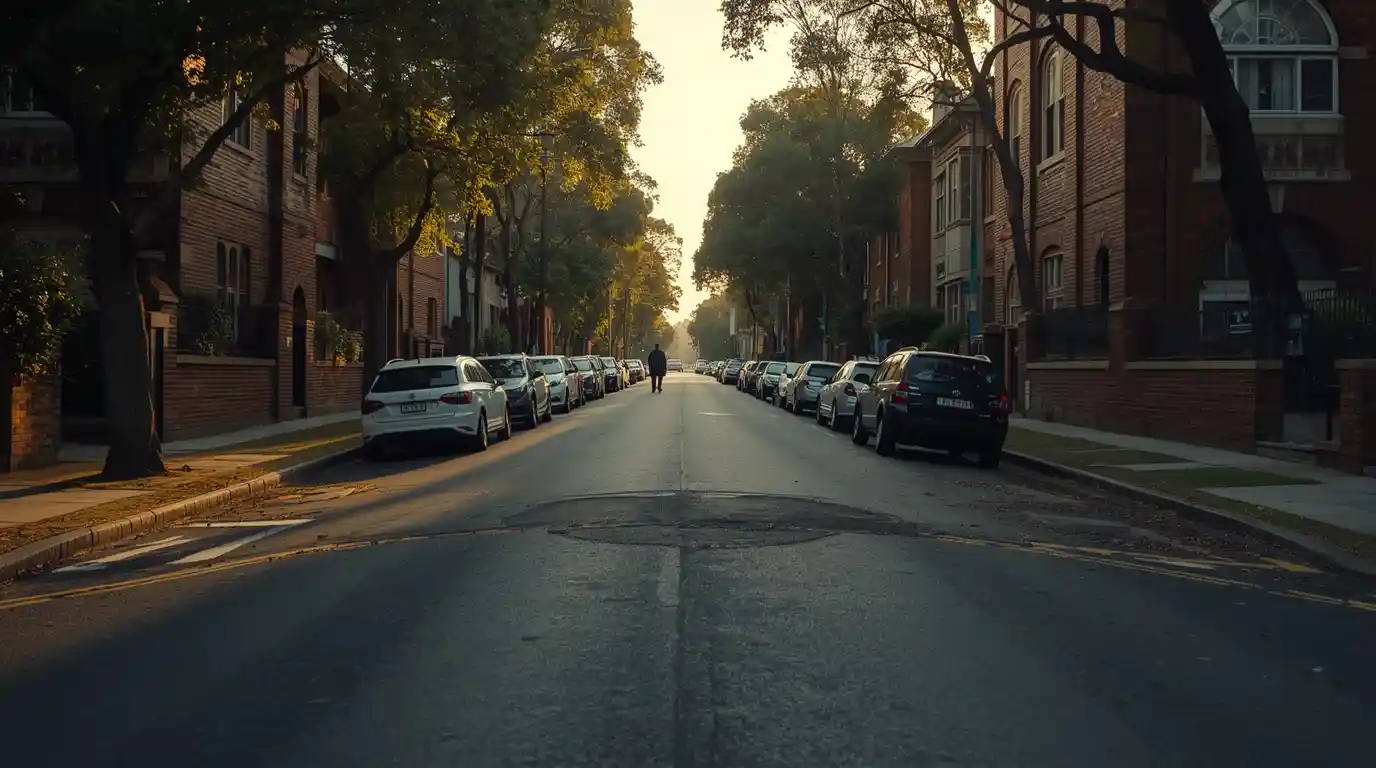
North Sydney Council has voted to press ahead with a public road sale that would hand an entire Cremorne cul-de-sac to one of Sydney's most expensive private schools. On Monday night, councillors backed closing Monford Place — a 791-square-metre dead-end running off Military Road — and selling it to SCEGGS Redlands. The same council rejected the same idea in June 2022.
The detail that makes this unusual isn't the money. It's the geography. Redlands already owns every single property fronting Monford Place, having picked up a dozen homes and sites around Military Road, Winnie Street and the lane itself over roughly three years. The road is legally public and functionally a school forecourt. Senior tuition at Redlands runs to $47,100 a year.
What sits on that bitumen is 18 public parking spaces, 10 of them unrestricted — and a council traffic manager recorded them at 88 per cent occupancy back in 2021, describing them as well used by locals. Losing them matters on a strip where street parking near Military Road is already a contact sport.
A Street the School Already Surrounds
Redlands has been assembling this block for decades, with the campaign to buy up neighbouring property stretching back close to 40 years. The formal approach came in May 2021, when the school wrote to council offering to buy the roadway outright. Council said no in June 2022. Redlands came back in March 2024, and by November that year councillors had agreed to reopen talks.
Redlands is willing to acquire Monford Place road at market value to facilitate the future expansion of our Senior Campus.
That line came from then-principal Stephen Webber. The school's argument has been consistent: folding the road into its title gives it flexibility to draw a proper master plan across a site currently cut in half by a public right of way. Council staff appear to have come round — a committee waved the proposal through 8-0 on 20 July before the full chamber signed off.
How a Pool Blowout Left the Council Squeezed
Context explains the change of heart. The North Sydney Olympic Pool redevelopment, first costed near $64 million, has climbed to about $122.2 million, according to Australasian Leisure Management. Council has faced legal action over the delays and asked ratepayers to cover the gap through a special rate variation with increases in the 45 to 84 per cent range — a cumulative jump of roughly 87 per cent across two years.
Sitting behind that is an infrastructure backlog estimated near $157 million, including about $20.1 million just to bring sealed roads back to an acceptable standard. A road nobody but a school uses starts to look like an asset rather than an obligation when your renewal bill runs to nine figures.

Why This Public Road Sale Can't Rescue the Budget
Here's the catch most coverage skates over. Under the Roads Act, proceeds from selling a closed public road are ring-fenced. The money must go towards acquiring land for roads or paying for road works. It cannot be tipped into general revenue, cannot service pool debt, and cannot offset the rate rise households are already wearing.
So the public road sale is real money, but it lands in a locked account. It may chip away at that $20.1 million roads figure. It will not change the number on anyone's rates notice. Anyone reading "financial pressure" as "this pays for the pool" has the story backwards.
The price itself is confidential, sealed in an independent valuation dated June 2024. That secrecy is why deputy mayor MaryAnn Beregi moved to delete any reference to the school's own offer from the resolution, replacing it with a requirement that the road sell for no less than the independent valuation price. Houses on and around that street have traded at $800,000 in 2015, $1.1 million in 2018 and $1.99 million in 2019, per realcommercial.com.au — a rough yardstick for what 791 square metres of Cremorne land is worth.
What Happens to the 18 Parking Spaces
The council's own papers concede the spaces won't be replaced. They'll simply stop existing, and the demand they currently absorb has to land somewhere within walking distance.
Where the Cars Are Expected to Go
Council has named the likely overflow streets: Winnie, Parraween, Murdoch, Hampden Avenue and Waters Road. If you park in that pocket, or run a business relying on customers finding a spot near Military Road, that's the practical consequence — 18 fewer bays feeding into already tight kerbside.
The 28-Day Window to Object
Monday's vote wasn't the end. A formal road closure process now begins, and it carries a mandatory public notification period of at least 28 days for written submissions. That's the point where residents get a documented say, and it's the only stage where objections are legally required to be considered.
What to Watch Over the Next 18 Months
Watch for the public notice — the submission clock only starts when council advertises the closure, and missing it means missing your say entirely. Watch whether the valuation is published once contracts exchange, because that number is the test of whether ratepayers got market value. And watch the roads budget: if this sale doesn't visibly shorten the repair list, the case for selling public land gets a lot harder to make next time. Council has indicated the full process could take 12 to 18 months.

Comments 0