

The Tomago Aluminium Smelter Uses 12% of All NSW Power
Two governments just committed $2.5 billion over a decade to one Hunter factory — because switching it off would have reshaped the entire New South Wales grid.

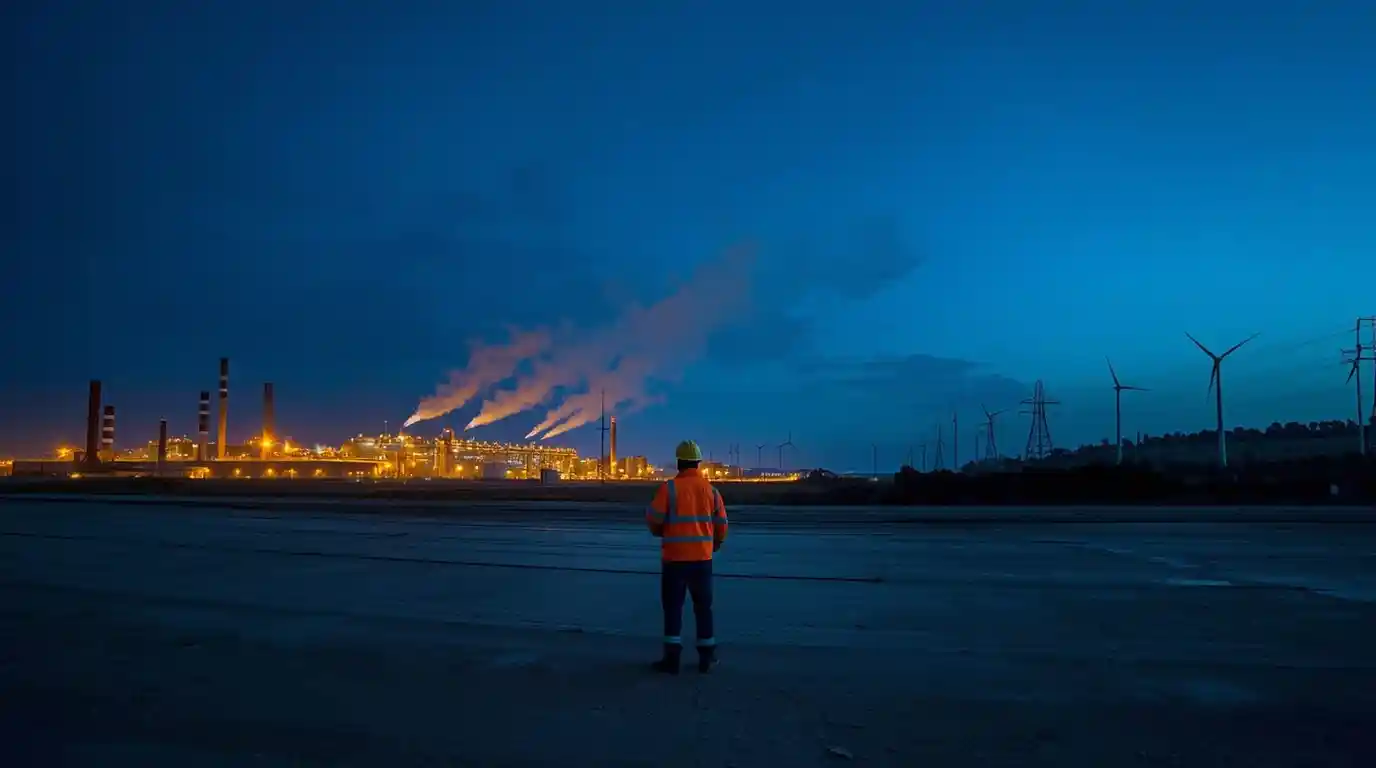
The Tomago aluminium smelter, 13 kilometres west of Newcastle, will keep running well past 2028 after the federal and New South Wales governments agreed to spend $2.5 billion over a decade holding down the price of its electricity. In return, the plant's owners will tip in $1.1 billion of their own money and commit to running the place entirely on wind and solar power from 2033.
Here's the figure that explains why two governments moved at once. Tomago draws about 950 megawatts almost continuously — day, night, weekends, Christmas. That's roughly 12 per cent of everything New South Wales consumes. Shutting it would not just have cost Hunter jobs. It would have knocked a hole in the demand forecasts that every wind and solar developer in the state is quietly building against.
Rio Tinto operates the smelter and owns 51.55 per cent of it, with Gove Aluminium Finance holding 36.05 per cent and Norway's Norsk Hydro 12.4 per cent. Together they produce up to 590,000 tonnes of aluminium a year, close to 40 per cent of Australia's total output. Around 1,000 people work there directly, alongside 200 full-time contractors and an estimated 5,000 supply-chain jobs.
Where the $2.5 billion actually goes
Not into Rio Tinto's bank account. The money splits evenly between Canberra and Macquarie Street — $1.25 billion each — working out at roughly $250 million a year from 2028 to 2038. It underwrites long-term electricity contracts managed through the federally owned Snowy Hydro, cutting what Tomago pays for power by about $35 a megawatt hour. Since electricity is close to 40 per cent of the smelter's running costs, that discount is the entire deal.
There's a return mechanism built in. When global aluminium prices run hot, the federal government shares in the revenue. Headline values reported elsewhere vary — Bloomberg put the package nearer $1.8 billion — mostly because the support is drip-fed across ten years rather than handed over up front.
Why the Tomago aluminium smelter matters so much
Its owners say the plant adds $2.2 billion a year to the economy and $3 billion in exports. But the quieter value is to the grid. Tomago can shed enormous slabs of load within minutes when the system is under stress, which is why it functions as an emergency reserve on 40-degree afternoons. Lose the smelter and you lose that cushion, plus 40 per cent of the nation's aluminium.
This site isn't just important for Newcastle and the Hunter, it's a critical asset for the country and our manufacturing future. — Prime Minister Anthony Albanese
How the switch from coal to wind will work
The transition runs in stages, and only the first is genuinely locked in. Everything after 2029 depends on projects that haven't been built yet, which is the part worth watching over the next few years.
The coal contract that ends on 31 December 2028
Tomago's current supply deal with AGL expires at the end of 2028. A new ten-year power purchase agreement starts on 1 January 2029 and runs through to 2038. Between 2029 and 2033 the mix shifts progressively; from 2033 the smelter is meant to be on 100 per cent renewable electricity, cutting 7.1 million tonnes of operating emissions a year.
Three gigawatts that still have to be built
Replacing a coal-fired baseload customer takes roughly 3,000 megawatts of new generation plus firming. RenewEconomy has named the likely candidates already circling the contract:
- Squadron's Spicers Creek
- Tilt Renewables' Liverpool Range
- Acen's Valley of the Winds
- Origin's Yanco Delta
- Spark's Dinawan and Goldwind's Coppabella
A big battery and a smelter that can switch off
AGL's 500 megawatt, 2,000 megawatt-hour battery at Tomago handles part of the firming problem. The rest comes from the smelter itself: $100 million of the owners' $1.1 billion is earmarked for decarbonisation and demand-response work, keeping the plant's ability to power down on command.

Is this a bailout or something smarter?
Roy Green, emeritus professor of innovation at UTS, argues it isn't a classic rescue at all but a structured investment vehicle — closer to what NSW did under Neville Wran in the 1980s to lock in industrial power. Former Clean Energy Finance Corporation chief Oliver Yates has pointed out that overseas smelters receive up to US$70 billion in state support, so the playing field was never level.
There's a precedent much closer to home. Rio's Boyne Island smelter in Gladstone secured roughly $2 billion in combined federal and Queensland support alongside $7 billion in renewable contracts. The Tomago aluminium smelter package is the bigger, second run at the same template.
What it means for your power bill
Directly, very little. Indirectly, quite a lot. Guaranteeing a decade of demand at a known price is what lets 3GW of wind and solar reach financial close — supply that eventually competes in the same market that sets your retail rate. The exposure sits on the other side: if wholesale prices land below the contracted price, governments cover the gap, and that's taxpayer money.
What to watch over the next 18 months
Three signals. Which of those wind and solar projects actually sign firm offtake deals, because announcements aren't contracts. Whether the model gets copied at other struggling industrial sites, with Whyalla the obvious test. And whether 2033 holds as the full-renewables date once construction timelines meet reality. If financial-close announcements stall past 2027, that date starts to slip — and the coal contract runs out regardless.


Comments 0