

Tiny Tourism Says Skip the Pub and Visit a Pharmacy
A UK creative platform's free report argues the cure for overcrowded cities is doing deliberately boring things — and Dublin has become the test case.

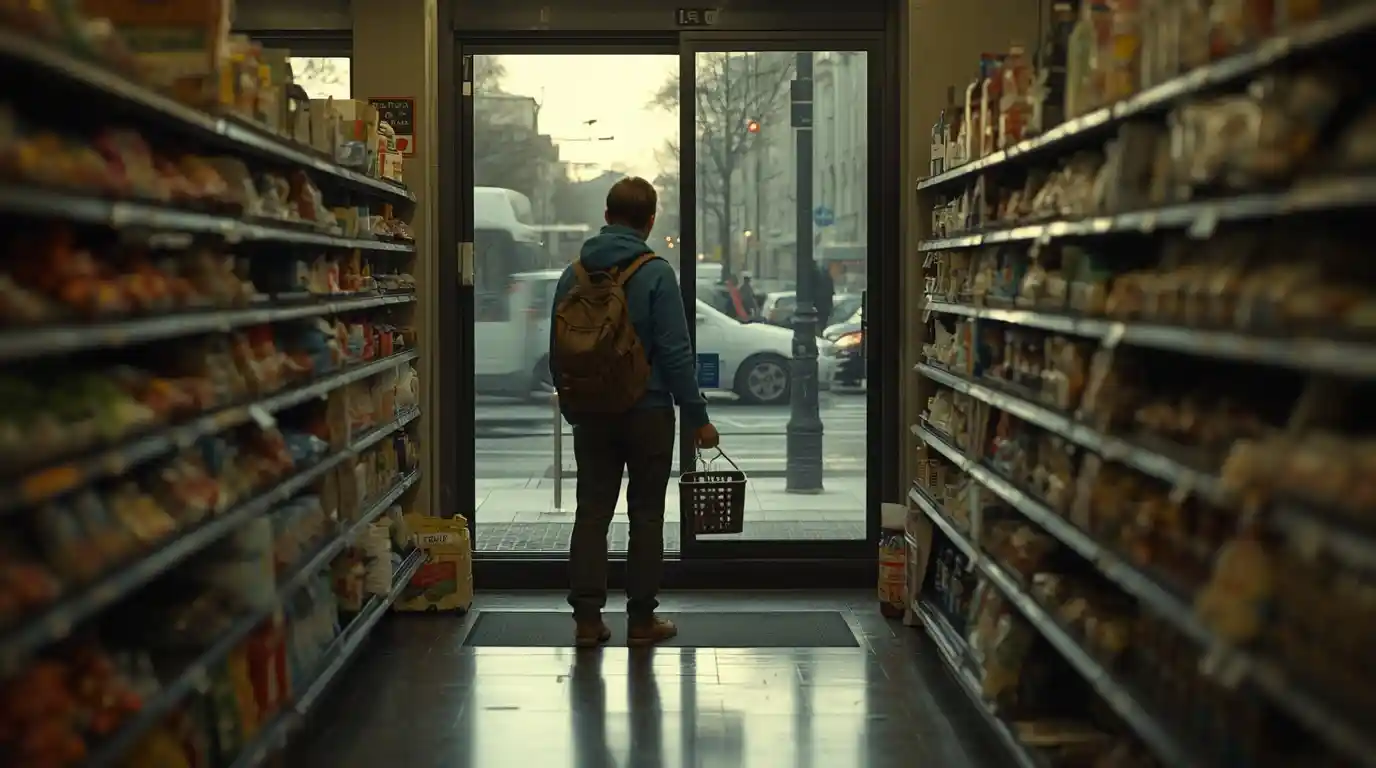
Tiny tourism is the argument that the most interesting thing about a foreign city might be its supermarket, not its cathedral — and that the polite response to overcrowding is to stop doing the famous stuff altogether. BBC Travel took the idea to Dublin in a piece published on 13 August, which is a fair test: few European capitals compress more visitors into fewer streets.
The trend has an actual paper trail, which is rarer than you'd think. The UK creative platform It's Nice That published The Tiny Tourist Report on 7 April 2026 through its Insights arm, written by senior editor Liz Gorny, with contributions from Sam Blenkinsopp of Trippin and Matthew Johnston of Lonely Planet. The governing rule is one line long: if something feels like an obvious tourist activity, consider doing something else instead. The suggested alternatives are deliberately unglamorous — a supermarket, a bus or tram route, a run, a look around a local pharmacy.
For British readers this is not an abstract debate. Visitors from Great Britain made up 38% of all foreign visitors to Ireland in 2025, the single largest group, according to the Central Statistics Office, out of a total that slipped 3% to 6.4 million. A Dublin weekend is the default short-haul break for a large chunk of the UK. Whether you spend it queuing or wandering makes a real difference to what it costs.
Where Tiny Tourism Actually Came From
The report's starting point is that travel passed its pre-pandemic peak in 2025 and the industry's response has been to keep selling scale — bigger lists, bigger sights, bigger crowds. Its counter-proposal is to shrink the unit of interest. Not a smaller trip necessarily, but a smaller field of view: one street, one shop, one hour with nothing booked. The pitch is aimed as much at marketers as at holidaymakers.
In a landscape under strain, we make the case for downsizing how we travel and how it is marketed.
That framing matters, because most anti-overtourism proposals are punitive — tourist taxes, cruise caps, day-tripper fees. This one asks for nothing except that you change your own itinerary, which makes it easier to adopt and much harder to measure.
The 97% Problem, in One Brussels Square
The sharpest evidence in the report isn't from Dublin at all. In Brussels, 97% of visitors reach the Grand-Place, while the Flagey and Châtelain areas see 20% and Saint-Gilles just 13%, as reported by Travel Tomorrow. Read that carefully and the picture flips. Brussels doesn't have too many tourists; it has too many tourists standing in the same few hundred square metres while whole neighbourhoods a tram ride away carry on largely undisturbed.
Once you see the shape of it, the same pattern shows up everywhere. Crowding is a distribution failure dressed up as a volume problem, and distribution is something individual travellers can genuinely affect.
Does Dublin Have a Crowding Problem?
Dublin is an odd case. It is not Venice, and locals will tell you so. But the concentration effect is textbook.
1.65 Million People, One Brewery Door
The Guinness Storehouse drew 1.65 million visitors in 2024, up around 10% year on year, making it Ireland's most-visited paid attraction for the fifteenth year running, according to Travel Extra. That works out at roughly 4,500 people a day funnelling through a single building at St James's Gate — before you add Trinity College, the Book of Kells and Temple Bar to the same afternoon.
What a Bed and a Pint Now Cost
Trade title Hospitality Investor cites Fáilte Ireland figures putting the average Dublin hotel rate at €174, roughly £150, up 23% in six years, with occupancy at 83.2%. Dublin Airport handled a record 36.4 million passengers in 2025. Meanwhile several Temple Bar venues pushed a standard pint past €10 — just under £9 — in early 2026, according to Travel And Tour World. Concentrated demand has a price, and you pay it in the postcodes everyone else is standing in.
Hidden Gems Don't Stay Hidden for Long
The obvious flaw is the one the report's coverage flags itself: a neighbourhood that goes viral as the authentic alternative simply becomes the new bottleneck, and residential streets are not attractions. There is also no proven metric showing this redistributes anything. It's a mindset, not a policy. Nobody has demonstrated that tiny tourism reduces overcrowding — only that it changes where one person's money and footsteps land.
How to Try It on a Dublin Weekend
The practical version costs nothing and takes no planning, which is rather the point.
- Buy breakfast and lunch in an Irish supermarket instead of a hotel or a café on a main tourist drag.
- Ride the Luas or a city bus to somewhere near the end of the line and walk back in.
- Pick one ordinary high street and stay on it — shops, not people's front gardens.
- Leave one afternoon completely unbooked and see what fills it.
If you're booking an autumn city break, the useful takeaway isn't ideological. Your flight from the UK is already cheap; the money goes on what you do after landing, and the queue is the expensive part. Watch whether tourist boards start actively marketing their quiet districts over the next year — that's the signal that this has moved from a designer's report to something that actually shifts crowds.


Comments 0