

Two Nights of Video Game Boosting Beat a Month at McDonald's
Dima Beseda's father threatened to send him to rehab over World of Warcraft; a decade later his gaming marketplace was clearing about $1 million a month.

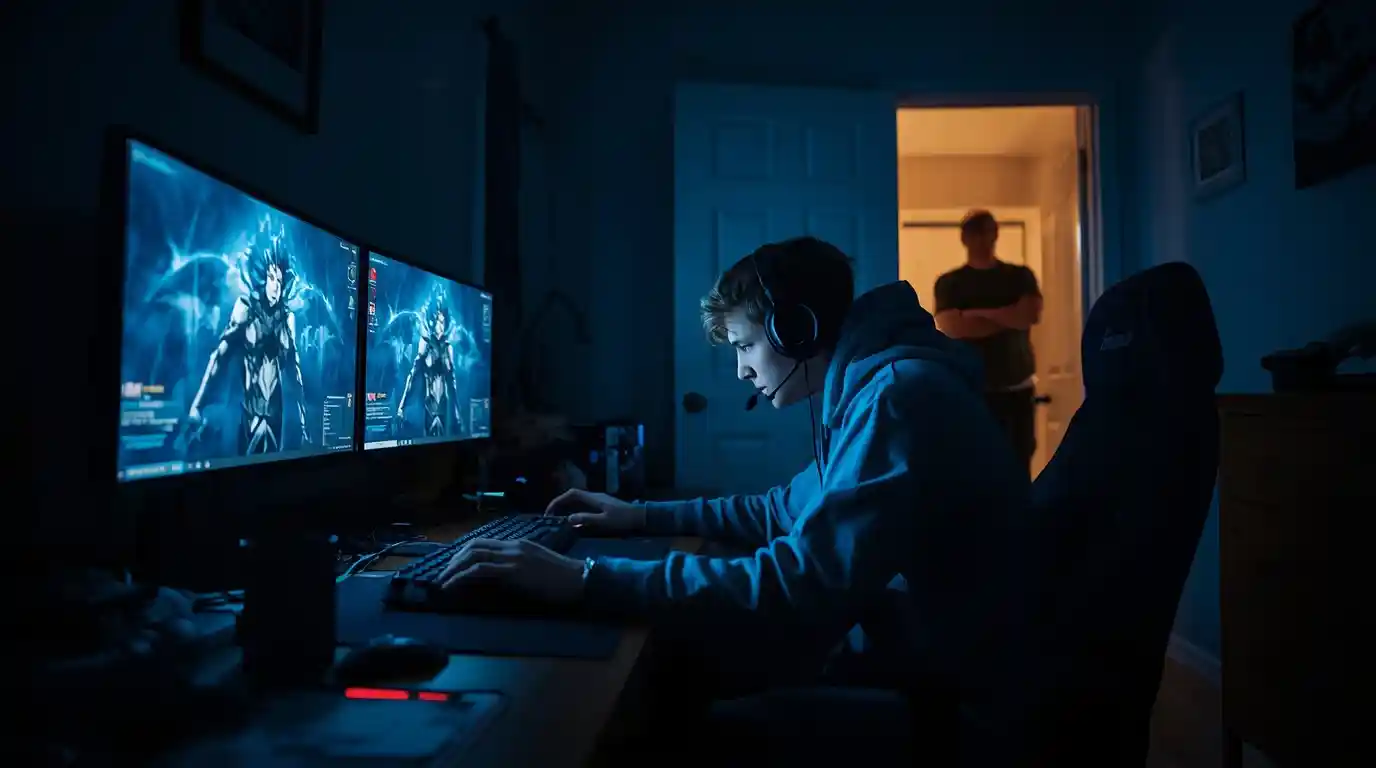
Dima Beseda's first real money from video game boosting came from a professional hockey player in Russia who wanted a stronger World of Warcraft character and had no interest in earning it himself. Beseda played the account for two nights and was paid roughly what a month behind a McDonald's counter paid at the time. He was a teenager. His parents, he told Business Insider, saw a kid throwing away his future at a keyboard.
He is 35 now. By around 27, he says, he realized he was a millionaire. He is a co-founder and CMO of Overgear, a marketplace launched in January 2017 that connects skilled players with customers who want help in games like World of Warcraft, Destiny, Path of Exile, Call of Duty and Valorant. Overgear has reported monthly revenue near $1 million and roughly 40% gross margins, with a team in the mid-30s.
The reason this lands differently in 2026 than it would have in 2010 is scale. Circana projects U.S. consumer spending on video games will rise about 3% this year to $62.8 billion, edging past the pandemic-era record of $61.7 billion set in 2021. Gaming is no longer a niche a parent can wait out. The argument at the dinner table has changed — but not as much as the headline suggests.
The Two Nights That Changed the Argument
Beseda started playing World of Warcraft at 13, the year the game arrived. He has described it as giving him clear goals and objectives, which is a fairly precise account of why the game consumed a generation of teenagers. His parents restricted computer time. Once he reached university, that restriction disappeared, and he skipped classes to play. Then he dropped out — with good grades and a scholarship already in hand.
His father's reaction was not subtle. According to the Business Insider account, he threatened to send his son to rehab. What the family could not see from the outside was that the hobby had already turned into income. Beseda was selling in-game items for real money and pulling in around $2,500 a month — roughly $30,000 a year, and, as he put it, big money in Russia at that point.
"I couldn't do anything else with this skillset and network," Beseda told Business Insider about the decision to leave school.
How Video Game Boosting Actually Works
Most people outside gaming have never heard the term, so it's worth spelling out. Boosting is a service economy layered on top of games that demand enormous time investment. Someone who has the money but not the hours pays someone who has the hours but not the money. It sounds trivial. It is a business with sales teams, refund policies and repeat customers.
Who Buys a Boost, and Why
The typical customer is an adult with a job. They want a raid completion, a competitive rank, a rare mount or a seasonal reward that would otherwise eat 40 hours. Overgear's founders have said more than 20% of their customers came back for five or more purchases, which tells you this is habit spending, not a one-time novelty.
Who Does the Grinding
The sellers are strong players, often in regions where a dollar stretches further. Overgear has publicly focused on recruiting boosters in Latin America while selling mainly to Europe and the U.S. That gap is the whole business model, and it's the same arbitrage that powers a lot of online gig work:
- Buyers concentrated in high-wage countries
- Sellers concentrated in lower-cost ones
- A platform taking a cut and handling trust, payment and disputes
The founders learned one lesson the hard way. A pure marketplace didn't work, because elite players turned out to be bad at selling. They hired an actual sales department and let the boosters play.
Where the Publishers Draw the Line
This is the part the success story skips. Account sharing violates the terms of service of most major publishers, including Blizzard and Riot Games, both of which have banned accounts over it. Buyers risk losing characters they've spent years on. That legal gray zone is a permanent business risk, not a footnote — a policy change from one publisher can wipe out a revenue line overnight.
The Part These Stories Usually Leave Out
Beseda didn't get rich by being good at a game. He got rich by noticing that other people would pay for what he was already doing, then building the boring infrastructure around it — payments, support, marketing, hiring. He later co-founded LF.Group, a free SaaS platform for gaming communities, which raised a $1 million pre-seed round from Grishin Robotics in 2022 alongside Prisma Labs founder Alexey Moiseenkov.
For every founder like him, there are millions of players who logged the same hours and got nothing but the hours. Skill at a game is not a business. A customer is.
Why $62.8 Billion Makes This Harder to Dismiss
The U.S. market is big but wobbly. Circana reported American spending of about $4.5 billion in July 2026, down 10% year over year, with subscriptions the only category still growing. So the money is real and the career paths are real, but the industry is also in a rough stretch of layoffs and studio closures. Treating gaming as a guaranteed on-ramp is as naive as treating it as a waste.
What to Watch If Your Kid Won't Log Off
Beseda's own advice to parents is to follow the child's curiosity rather than fight it. The practical version: watch whether the hours are producing anything outside the game — a Discord community they run, a client, a spreadsheet, a small payment. That's the tell that separates a hobby from a business. If none of it exists after a year, it's a hobby, and that's fine. If it does, the useful question stops being how much they play and becomes who's paying, and whether it breaks the game's rules.




Comments 0