

Victorian Goldfields World Heritage May Wait Until 2030
A four-year delay, a rival bid from South Australia and an 1855-era licence sit at the centre of a fight between heritage advocates and the people who still hunt gold on public land.

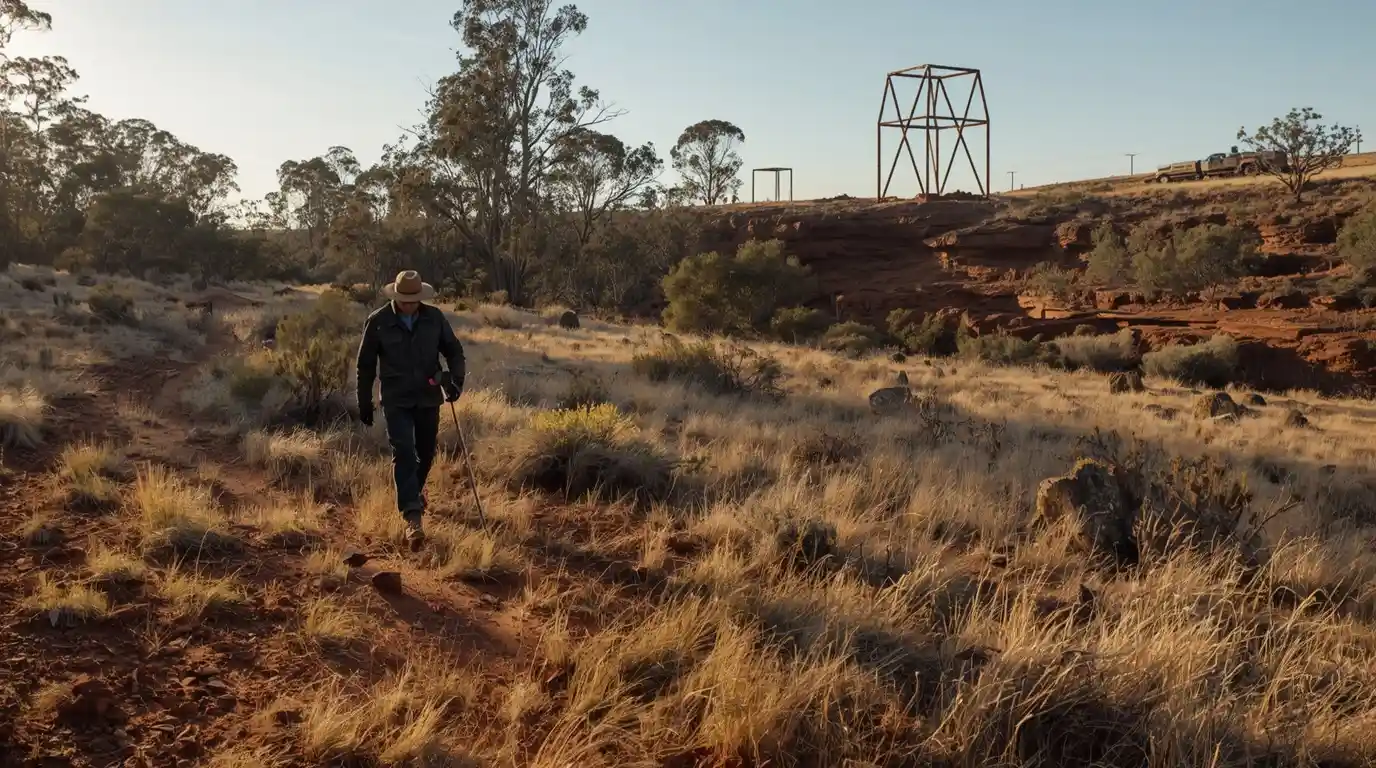
The push for Victorian Goldfields World Heritage status has slipped roughly four years down the calendar, and the people most rattled by it aren't council heritage officers — they're the men and women out past Maryborough with a detector and a shovel. On the revised timetable reported by the Bendigo Advertiser, a preliminary assessment can't be lodged before September 2026, a report back from the World Heritage Centre is expected around October 2027, the full nomination can't go in before February 2028, and a decision might land in 2030.
That's a long runway for a project that already has money behind it. The Victorian government put $2 million into the bid in 2023, on top of a $500,000 grant the year before. The region was added to Australia's UNESCO tentative list in early 2025, which everyone involved treated as the hard part being over. It wasn't.
The reason for the wait is straightforward and slightly awkward: the Flinders Ranges in South Australia went ahead of the goldfields in the national queue, and losing that slot forced the Victorian bid through a newly mandatory preliminary assessment step. Ballarat councillor Ted Lapkin, who chairs the city's heritage advisory committee, told the Bendigo Advertiser he was "a bit peeved". Meanwhile, ABC News reports prospectors are reading the history books and deciding not to take the reassurances on faith.
Why the Bid Fell Behind Another State
Australia can realistically drive one nomination at a time through UNESCO's process, and the federal government picked the Flinders Ranges as the priority. The goldfields didn't fail an assessment — they lost a race. The consolation is procedural: City of Ballarat economy and experience director Martin Darcy described the extra preliminary assessment stage as a chance to sharpen the case rather than a rejection. Four more years of consultation is also four more years for opposition to organise.
What the Victorian Goldfields World Heritage Bid Covers
This isn't one site. The bid is led jointly by the City of Ballarat and the City of Greater Bendigo, with 15 councils involved and the Dja Dja Wurrung as First Peoples partners. Six places made the tentative list — including the Bendigo historic landscape and the Castlemaine goldfields with their surviving townships — and three more are still being investigated. Together the goldfields region takes in about a fifth of Victoria and more than half a million residents.
Scale is the whole argument. Gold was found at Ballarat in 1851, and at the peak more than 6,000 miners a week were arriving from Britain, Ireland, China, the United States and elsewhere. Heritage consultant Barry Gamble assessed it in 2020 as the most extensive and best-surviving landscape anywhere that shows what the global gold rush actually did to a place.
Can You Still Swing a Detector Out There?
This is the question that decides whether the bid gets community backing, and the official answer has been the same for years. Premier Jacinta Allan put it plainly when the tentative listing was announced.
This does not impact current land use or current land ownership.
The Miner's Right, Unchanged Since 1855
Recreational prospecting in Victoria runs on a Miner's Right, a licence whose lineage goes back to 1855 and the years around Eureka. UNESCO's own tentative-list documentation treats fossicking as separate from industrial mining: it's permitted in designated areas, restricted to hand tools such as a pick, shovel, sieve, pan and metal detector, and it bans disturbance of Aboriginal places, historic places and archaeological sites. Nothing in a World Heritage listing rewrites that licence.
Why the Reassurances Aren't Landing
Prospectors have watched public land in Victoria get reclassified before, usually with an assurance attached. The suspicion isn't that listing bans detecting on day one — it's that a listing hands regulators a new reason to tighten access later, quietly, through management plans nobody reads. Once World Heritage values are on the books, protecting them becomes an obligation, not a preference. That's the gap between the promise and the fear.
The $440 Million Case for Saying Yes
The goldfields already pull in millions of visitors a year and contribute more than $1.8 billion to Victoria's regional economy. Backers estimate listing would add 2.2 million visitors over a decade and about $440 million. Spread across 15 council areas over ten years, that's real but not transformative — roughly the difference between a good tourism year and a great one, concentrated in Ballarat, Bendigo, Castlemaine and Maryborough.
What to Watch Between Now and September
The date that matters is September 2026, the earliest the preliminary assessment can be lodged. If you prospect, join your local club's consultation submission now rather than after the paperwork goes to Canberra — boundary and buffer-zone maps get drawn at this stage, and they're far harder to change later. If you're planning a trip, nothing changes: Sovereign Hill, the Bendigo mine tours and the Castlemaine diggings are all open, and no listing decision will touch them for years.

Comments 0