

What Happens When Rap and Council Policy Share a Room
An Arts Council-funded project is touring four places to find out whether a verse can do what a 60-page consultation document never has.
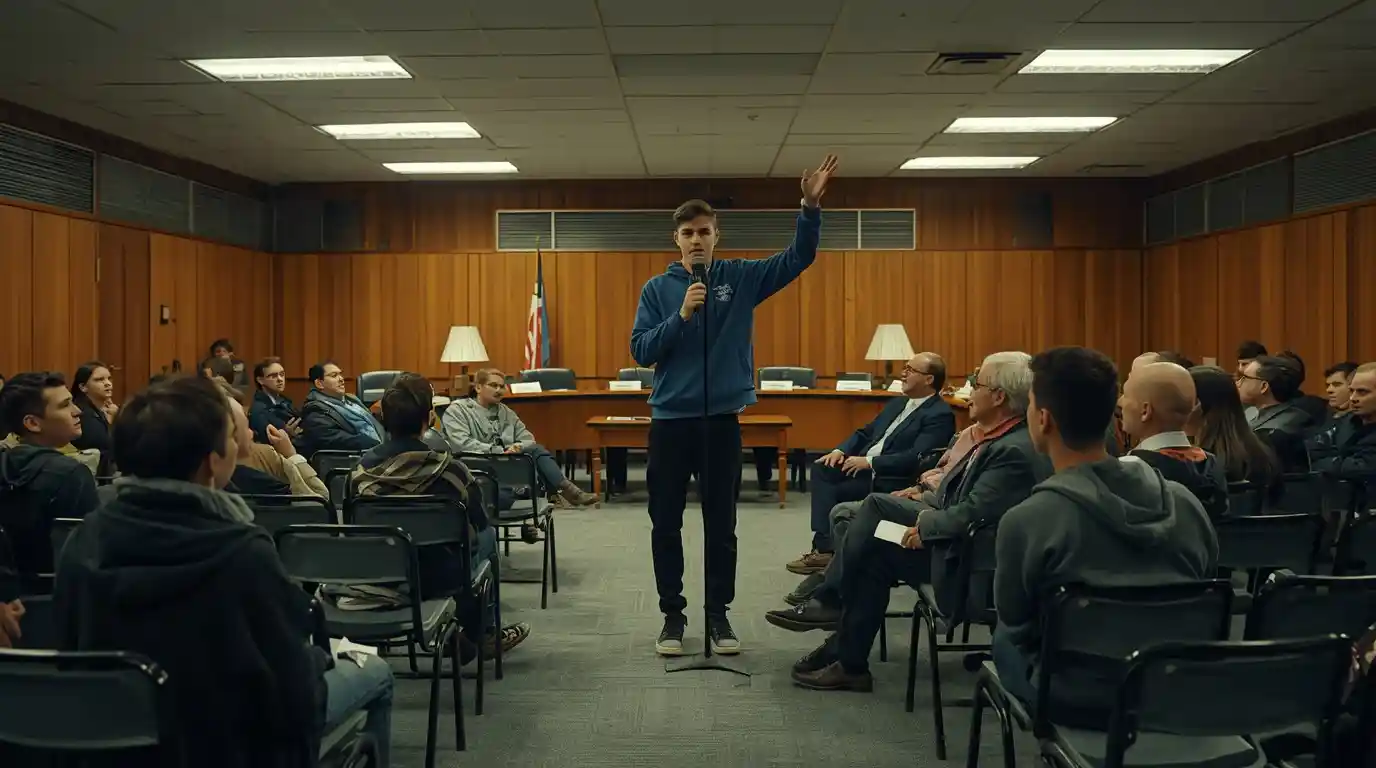
Rap and council policy are not two things you expect to meet, but a Croydon-born poet is trying to force the introduction. Jenniah Brown is leading Connecting Dots, an Arts Council England-funded programme that uses poetry, spoken word and rap to turn dense local-government material into something a 17-year-old might actually sit through. The first Cultural Research Exchange has already been held in Croydon.
The detail that lifts this above a nice idea is Brown's own background. Brown has worked in local government and saw at close range how wide the gap runs between what councils publish and the confidence a resident needs to engage with any of it. Connecting Dots puts the question bluntly: can poetry translate policy, and raise a new generation of leaders while it does it?
That question lands hardest where the money is tightest. Croydon council has issued a section 114 notice — the town-hall version of admitting it cannot balance its books — three times since 2020. The cuts that followed reached libraries, youth provision and street services. The people carrying most of that had the least say in any of it, and the youngest residents had least of all.
Why Croydon Is the Obvious Place to Start
Croydon is not a random pin on a map. It is one of the capital's largest boroughs by population and one of its youngest, and it became the first London borough to switch to a directly elected executive mayor after a referendum in 2021. It also held the London Borough of Culture title in 2023. So a project about explaining decisions to young people has both a live audience and a recent artistic infrastructure to plug into.
Where Rap and Council Policy Actually Meet
This is not a run of gigs with a civic theme bolted on. The programme is built from three separate moving parts, and each one is designed to put a different set of people in the same room at the same time — which is the bit consultations almost never manage.
Exchanges with officials actually in the room
The Cultural Research Exchanges bring together artists, local government, universities, community organisations, employers and residents. The mix is the point. A poet performing to other poets changes nothing; a poet performing to the officer who drafts the strategy, with residents watching both, changes the temperature of the conversation.
Workshops that end on a festival stage
Spoken word workshops run ahead of the festival's Sharing Spaces sessions, giving young creatives somewhere to develop a voice, build confidence and perform the results. That progression matters. Plenty of engagement schemes gather opinions and vanish; this one hands participants a stage and an audience at the end of it.
Four stops: Croydon, Lambeth, Bristol and Exeter
The programme travels across Croydon, Lambeth, Bristol and Exeter. Two London boroughs, two south-west cities — a deliberate spread that tests whether the format survives outside the capital, where devolution deals and civic budgets look very different.
The Jargon It Is Trying to Break Down
The topics on the list are devolution, creative health, the creative industries and levelling up. Every one of those has shifted underfoot recently. "Levelling up" stopped being an official Whitehall label in July 2024, when the department was renamed the Ministry of Housing, Communities and Local Government. Devolution then accelerated again with the English devolution white paper that December. That churn is exactly why rap and council policy ended up sharing a project.
Has Anything Like This Worked Before?
Councils have tried plenty: youth parliaments, citizens' assemblies on climate, participatory budgeting pots. The recurring failure is reach, not sincerity. A consultation PDF asks people to travel to the council's format, on the council's timetable, in the council's vocabulary. Connecting Dots reverses that journey. The honest caveat is that no published evaluation exists yet, and the real measure is whether anyone stays for the unglamorous part afterwards.
What You Can Do Before the Next Budget Lands
You do not need a funded arts programme to get a word in. Most English councils set their budget between December and February, and the consultation window sits inside that. A few things worth doing while it is open:
- Find your council's consultation page and check what closes this month — most run for a fixed number of weeks and then shut without warning.
- Ask whether your borough runs a youth council or youth mayor; these often have a formal route into committee papers.
- If you want to run something creative yourself, Arts Council England's National Lottery Project Grants start at £1,000 and individuals can apply, not just organisations.
Watch what happens after the Croydon exchange. If Lambeth, Bristol and Exeter produce the same room — officers, residents and performers facing each other rather than exchanging paperwork — the model has legs beyond one funding cycle. Whether rap and council policy stay in the same room once the grant runs out is the test that actually counts, and it will be answered in the next budget season, not on stage.
Comments 0