

What replaces Seatreat restaurant? No plan has been filed
Charlottetown approved the teardown of a University Avenue landmark four days after the application landed — and the city has nothing on file for what comes next.

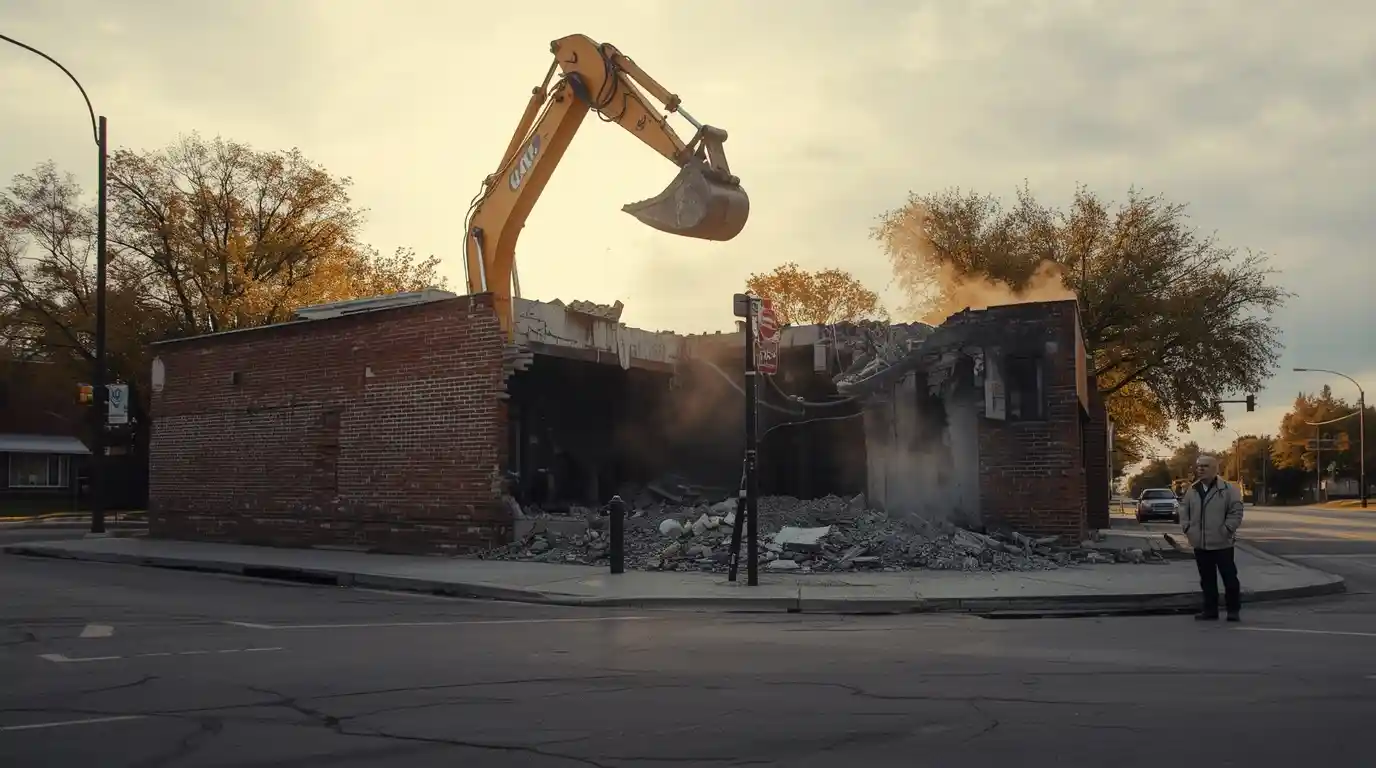
For a generation of Islanders, the Seatreat restaurant was simply the fish-and-chips place on University Avenue, and this summer the building that housed it is being pulled apart. The City of Charlottetown received a demolition application for 202 University Ave. on July 17 and issued the permit on July 21, according to CBC News. That is four days. What the city does not have, CBC reported, is any development plan on file for the property.
The odd part is what stood on that corner before the deep fryers arrived. CBC reported the building began as a service station at University Avenue and Euston Street. The fuel tanks came out, the bays became a dining room, and a place that once sold gasoline spent the next few decades selling seafood. Lots of buildings change jobs over 50 years. Not many change that completely and then get remembered for the second job.
The man behind that switch was Labeeb Abou-Rashed, an immigrant restaurateur who opened Seatreat in 1970 and ran it for close to 30 years, CBC reported. Do the arithmetic and his run carried the room into the late 1990s: one owner, one address, roughly three decades of dinner service in a province of fewer than 200,000 people. That is not a business. That is a working life.
From fuel pumps to fish and chips
Turning a garage into a restaurant is not a renovation, it's a rebuild. You need a commercial kitchen, hood venting, grease handling, washrooms, seating, and a parking lot that suits people lingering over a meal instead of drivers waiting on a fill-up. In 1970 an owner could take that on with far less capital than the same conversion demands now, usually with family labour standing in for a construction contract.
What the place became known for was plain food done the same way every time. CBC described Seatreat as a spot people went to for its fish and chips and its generous lobster burgers. That consistency is the entire recipe for a neighbourhood institution. Nobody crosses town twice for novelty. They cross town for the identical plate, cooked the identical way, for 20 years running.
Abou-Rashed put the feeling plainly when CBC asked how it sits with him to watch the building come down.
It's like part of you.
A permit in four days, and nothing filed behind it
A demolition permit and a development permit are separate pieces of paper, and they don't have to arrive together. An owner can legally clear a site and then take months or years deciding what to build, or sell the cleared lot to somebody else entirely. That gap is normal. It is also why a corner that anchored a street for half a century can go from landmark to gravel with no announcement about what follows.

What happens to the Seatreat restaurant corner now
If you want to know what lands there, don't wait for a news story. The paperwork shows up in public before the concrete does, and two trails are worth following on a site like this one.
Watch the city's permit approvals list
Charlottetown publishes building permit approvals through its resident services pages, and any rezoning or variance for the property would go through a public planning process with notice to nearby residents. If a developer wants something taller or denser than the current zoning allows on a main arterial like University Avenue, that request becomes visible well before a shovel moves.
Old fuel tanks leave a paper trail
The tanks were pulled decades ago when the station became a restaurant, per CBC's account. Even so, former fuelling sites in Canada are generally handled under provincial environmental rules, and buyers and lenders routinely want a site assessment before financing anything new. That step alone can add time between a cleared lot and a construction start.
Why nearly 30 years is a long shift
Independent restaurants are brutal arithmetic. Thin margins, wage costs, seasonal swings, and on Prince Edward Island a tourist calendar that swells in July and empties by November. Surviving that cycle once is luck. Surviving it for close to three decades, at a single address, with your own name attached to it, is something else. Most owner-operators sell, franchise, or burn out long before that.
It's also why the building mattered more than the menu. When a founder-run restaurant closes, the recipes usually leave with the owner. The room is what stays behind — the same booth, the same parking lot, the same corner you turned at on the way home. Once that comes down, there's no physical anchor left for the memory.
What Islanders actually keep
Charlottetown will not miss the square footage. University Avenue has plenty of commercial space, and a vacant lot on a busy arterial will find a buyer. What gets lost is harder to price: a small piece of the city's immigrant business history, the kind of story that rarely makes it onto a heritage plaque because the building itself was never architecturally special. It was a converted garage. It just happened to feed people for 30 years.
If this corner matters to you, do two practical things. Check the city's permit approvals and planning notices over the coming months, because that's where the site's future will appear first, and speak up during any public meeting if the proposal doesn't suit the street. And if you have photographs of the old dining room, send them to the P.E.I. Public Archives or a local heritage group now. Once the walls are gone, the pictures in people's drawers are the record.


Comments 0