

What We Still Don't Know About the Kochi Airport Restaurant Fire
A blaze gutted an eatery near Cochin International Airport on 17 August — but the cause, the casualties and the losses are all still missing from the record.

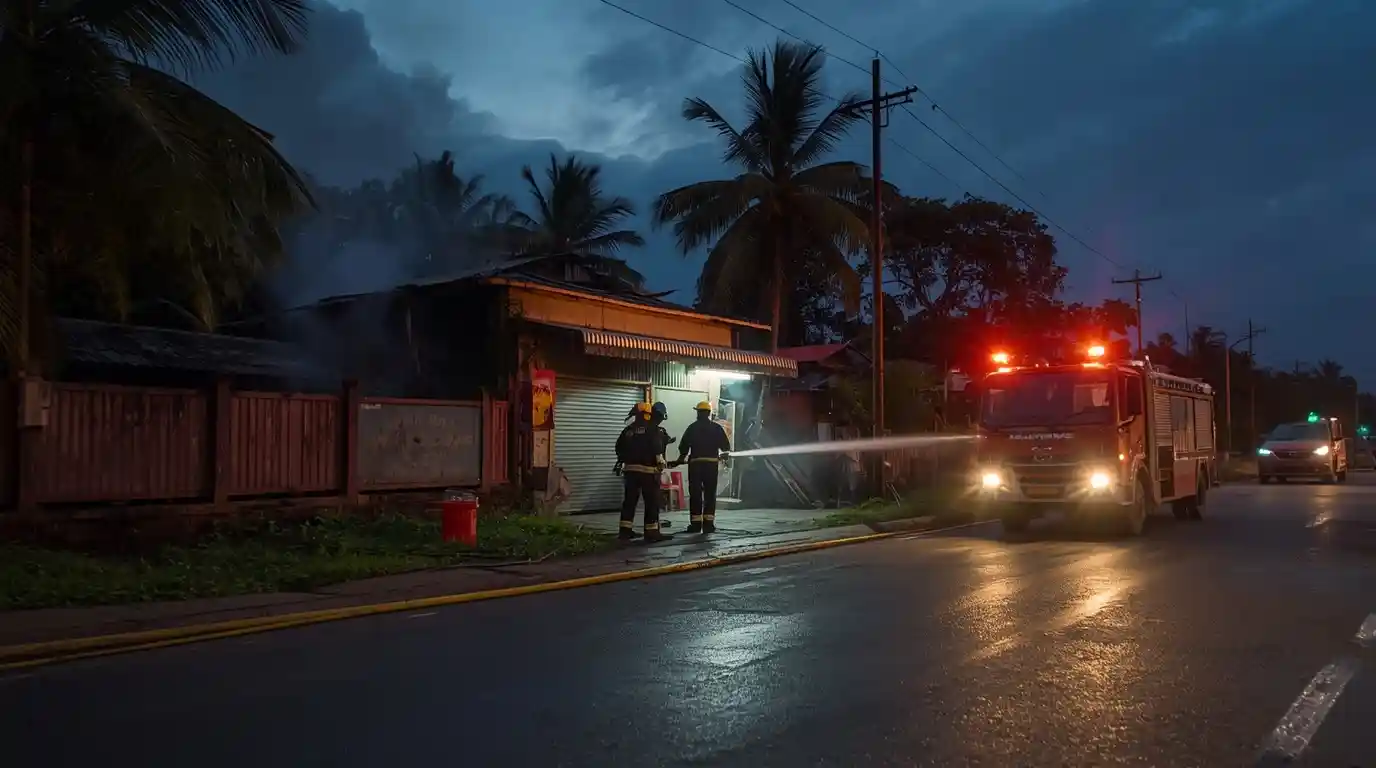
A Kochi airport restaurant fire made headlines across Kerala on Monday, 17 August 2026 — and then went strangely quiet. The Hindu reported that flames tore through an eatery near Cochin International Airport at Nedumbassery. Past that headline and that date, the public record is remarkably thin. No widely circulated name for the restaurant. No casualty figure. No confirmed cause.
That gap is worth sitting with rather than filling in. Restaurant fires in India tend to follow a script, and the script usually gets written in the first hour by people who weren't standing there. Within a day someone blames a cylinder, or a short circuit, or a clogged chimney duct. Sometimes that guess is right. Often the fire service's own report, filed weeks later, says something else entirely.
What we can say with confidence is where this happened, and why the where matters. The approach road to Kochi airport is thick with eateries — biryani joints, Kerala meals halls, chain grills, 24-hour places built for passengers landing at three in the morning. It's a high-turnover strip. High turnover means kitchens running hot for long stretches with almost no downtime for anyone to look behind the equipment.
What's Actually Confirmed So Far
Here is the whole verified list: The Hindu published the report on Monday, 17 August 2026, and its headline says fire ravaged a restaurant near the airport in Kerala. "Ravages" is a heavy verb for a news desk. It usually signals the structure itself took serious damage, not a contained flare-up someone knocked down with a extinguisher. Injuries, financial losses and the fire force response haven't surfaced in accessible reporting yet. Anyone stating the cause of the Kochi airport restaurant fire right now is guessing.
Why This Kochi Airport Restaurant Fire Is Worth Watching
Because of what usually sits next door. Commercial blocks on airport approach roads in Kerala are rarely single-use. A restaurant takes the ground floor, a lodge or a shop takes the first, a cylinder bank sits at the rear, and one staircase serves the lot. Once a kitchen fire gets into that stack, it stops being a restaurant fire and becomes a building fire. Airport roads also carry dense, slow traffic — which is exactly what an engine crew doesn't need.
Kochi Has Had a Rough Run With Fire
This isn't an isolated blip. In March 2026, Onmanorama reported one person killed and at least seven injured in a major fire at a lubricant firm in the Edayar industrial belt on the city's outskirts. Deccan Herald reported a big fire near a railway station in Kochi in which no casualties were recorded. And the district still carries the memory of the Brahmapuram waste-plant fire in 2023, when smoke sat over the city for days. Different causes, one uncomfortable pattern.

How Restaurant Kitchens Actually Catch Fire
Investigators working Indian restaurant fires tend to circle the same three places. None of them is the dramatic one people picture.
The Cylinder Bank Behind the Kitchen
Commercial LPG cylinders usually live in a row at the back, often under a tin sheet, sometimes beside a generator. Contrary to the movie version, they rarely explode. A worn regulator or a cracked hose leaks, finds an ignition source, and produces a sustained jet flame that nobody can get close enough to shut off.
Grease Inside the Exhaust Duct
Years of cooking vapour condenses into a fatty film along the inside of the chimney duct. One flare-up in a pan lights it, and the fire then travels the duct straight into the false ceiling — above the heads of everyone in the dining room and well out of reach of a hand extinguisher.
One Door, and Crates Stacked in Front of It
The thing that hurts people usually isn't flame. It's a rear exit converted into storage for gunny bags, oil tins and spare chairs, plus a dining room filling with smoke faster than anyone expects. Smoke, not fire, causes most casualties in enclosed commercial spaces.
What to Check Before You Sit Down
You're a diner, not an inspector, and nobody wants to audit a place before ordering a porotta. Still, a ten-second scan while you walk in costs nothing:
- Can you see a second way out — a back door or side passage that isn't stacked with goods?
- Is there a fire extinguisher on the wall, and does its pressure gauge needle sit in the green?
- Are you seated in a basement or a windowless upper floor with a single staircase?
- Do you smell gas near the kitchen or the rear passage at any point?
- Is the space obviously over-packed with tables beyond what the room was built for?
If two or more of those look wrong, eat elsewhere. It's a five-second decision.
What to Watch for Next
Three things will tell you whether the Kochi airport restaurant fire becomes a story or stays a paragraph. First, the Kerala Fire and Rescue Services preliminary finding on origin. Second, whether the building held a valid fire NOC and when it was last renewed — that single detail decides whether this reads as an accident or a lapse. Third, the loss figure, which in a fitted-out restaurant climbs into lakhs of rupees fast once you count tandoors, chillers, interiors and stock.
If you run a food business anywhere on that strip — or on any strip like it — treat this week as the prompt. Check the pressure gauges on your extinguishers, get the exhaust duct degreased if it's been more than a few months, and walk your rear exit to make sure a person could actually get through it. None of that is expensive. All of it is cheaper than the alternative.



Comments 0