

Why a Law From 1930 Just Escalated the US-Canada Trade War
A 50% duty on about $20 billion of Canadian goods took effect Saturday under a Depression-era statute that had never been used for tariffs before.

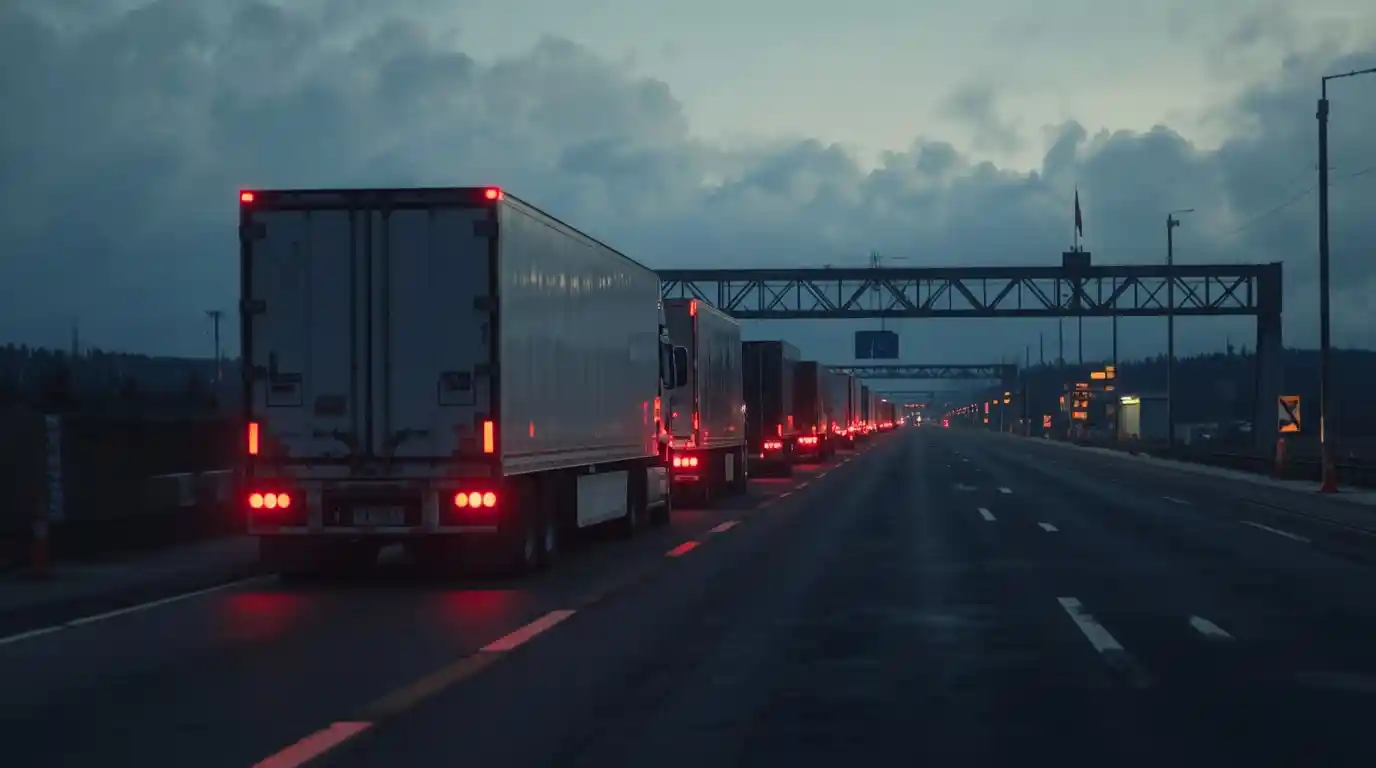
The US-Canada trade war escalated at 12:01 a.m. Eastern on Saturday, when a 50% American tariff on roughly $20 billion of Canadian goods took effect after negotiations collapsed the night before. Prime Minister Mark Carney suspended talks and recalled his negotiating team. US Trade Representative Jamieson Greer said the point was protecting American workers and supply chains. Neither side sounded close to a deal.
Twenty billion dollars sounds huge until you put it next to the $880 billion in goods and services the two countries trade in a year. It's about ten days' worth of the $2 billion in freight that crosses the border daily. That's the catch, though. The list is narrow, but the rate is brutal, and most of what's on it is finished product headed for an American shelf.
Furniture, wood products, plastics and electrical machinery carry the new duty. Energy, potash, fish and critical minerals were carved out — exactly the inputs that would have hit US factory and farm invoices inside a week. Consumer goods got no such shelter. As of now there's no announced product exclusion process and no category-level relief for small shipments.
What Got Taxed at 12:01 a.m. Saturday
The covered list runs from the mundane to the absurd. Fortune reported that hockey sticks and tongue depressors are both on it. More consequentially, so are furniture, wood products, plastic goods and electrical machinery — categories where Canadian plants have supplied US buyers for decades without anyone thinking twice about origin.
According to RBC Economics, the action covers about 5% of Canada's exports to the United States, and more than 80% of Canadian shipments stay duty-free under the continental trade agreement. But the average tariff facing Canadian goods roughly doubles. Global Trade Alert put the jump at 1.89 percentage points, landing at 6.27% overnight.
Why a Law From 1930 Is Doing the Work
This didn't come through the emergency-powers route used earlier in the trade fight. President Trump signed three proclamations on July 20 invoking Section 338 of the Tariff Act of 1930, a Depression-era provision allowing duties of up to 50% on a country found to discriminate against US commerce. It had never been used to impose tariffs before.
The administration pointed to Canadian practices on automobiles, provincial liquor-board restrictions on American alcohol, and the dairy supply-management quota system. The legal detail matters commercially: importers who spent the past 18 months qualifying Canadian suppliers under USMCA rules of origin are holding certificates that buy them nothing against this particular action.
Who Pays in the US-Canada Trade War
Tariffs are collected from the US importer of record at the border, not from the exporter. That's the part that gets lost. Somebody in America writes the check to Customs and Border Protection first, then decides whether to absorb it, renegotiate with the supplier, or move it onto the price tag.
Shoppers Buying Furniture, Lamps and Small Appliances
A 50% duty on a $400 Canadian-made sofa is $200 owed at the crossing. Retailers rarely eat that. Expect the increase to show up at the shelf only once pre-tariff inventory sells through, which is why the sticker shock tends to arrive weeks after the headline does.
Factories Waiting on Canadian Plastics and Wiring
Electrical machinery and plastic components aren't only consumer items — they're inputs. A US manufacturer buying molded parts or wiring assemblies from Ontario now faces a cost line that didn't exist in July, with no obvious domestic substitute qualified and ready to ship this quarter.
Small Importers With Nobody on Retainer
Large firms will file, lobby and reroute. A 12-person importer can't. With no exclusion process announced, the practical options are narrow: renegotiate terms, source elsewhere, or raise prices. That asymmetry is the quiet story in almost every tariff round.

Canada's Answer Arrives September 8
Carney has promised to match the measure dollar for dollar, with retaliation starting September 8. The targets reported so far include steel products, dairy, appliances, agricultural equipment, pulp and paper, and electronics — a list built to be felt in specific American states rather than spread thinly across the economy.
You're at war when you get attacked.
Carney also accused Washington of turning decades of economic integration into a weapon, and said the American side asked too much and offered too little. Roughly 72% of Canada's goods exports go to the US, so he's negotiating from a weak hand and knows it. That's part of why the response is targeted.
How This Round Differs From February 2025
The opening salvo in February 2025 was blunt: 25% on most Canadian imports, 10% on energy, met by Canadian retaliation that grew from C$30 billion to C$155 billion in three weeks. This round is the opposite in shape — small list, maximum rate, and a statute with no built-in valve for exclusions.
Zoom out and the arithmetic is unforgiving. Tariff trackers estimate US measures now touch more than half of all goods imports, with the average applied rate near 11.7%, against roughly 1.5% in 2022. Each narrow action looks survivable. Stacked, they're a broad consumption tax nobody voted on.
What to Watch Before September 8
Three things. Whether Washington publishes an exclusion process, which would signal the tariff is leverage rather than policy. Whether the energy and potash carve-outs survive the next escalation — that's the line between an irritant and a genuine inflation event. And whether talks restart before Canada's list activates.
If you buy imported furniture, appliances or anything with a Canadian-made electrical component, check origin codes on invoices now and lock pricing where a supplier will let you. And if a purchase can reasonably be pulled forward a few weeks, this is one of the rare moments when doing so is more than a hunch.




Comments 0