

Why a Melon Joke Now Shadows a $10bn Japan Frigate Deal
Japan's defence minister arrives in Australia this week for trilateral talks on warship exports, days after a podcast gag about a gifted melon blew up in Canberra.

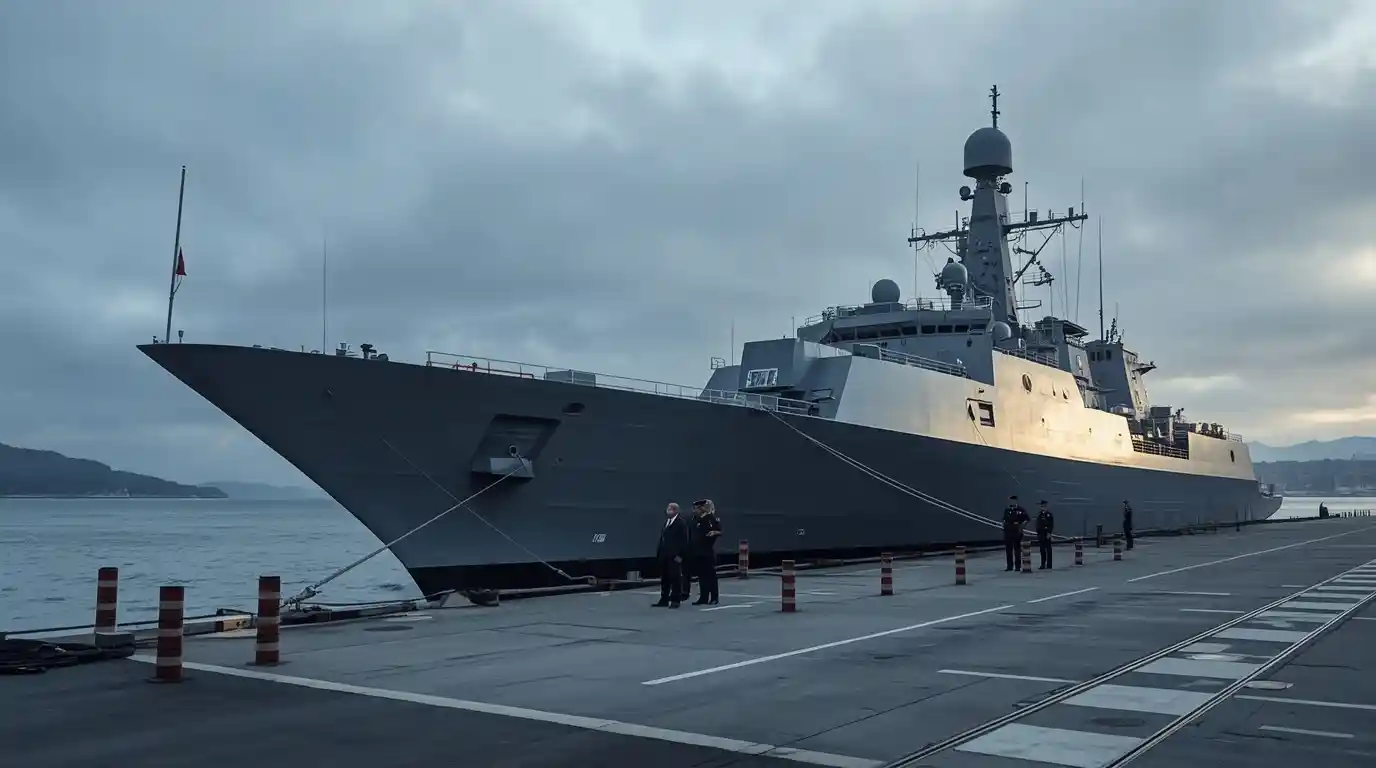
Australia's Japan frigate deal — eleven warships, A$10 billion committed so far, the biggest defence export Tokyo has ever signed — walks into its most uncomfortable week of diplomacy so far. Japan's Defence Minister Shinjiro Koizumi is due in Australia around 18 to 20 August to sit down with Deputy Prime Minister and Defence Minister Richard Marles. He lands days after Anthony Albanese spent question time declining to apologise for a joke about fruit.
The gag came on a podcast called Bush Deep, recorded at the prime minister's official residence with host Nikki Osborne. Asked what he'd had to declare coming through customs, Albanese said he'd picked up a couple of melons — a nod to a gift from Japanese Prime Minister Sanae Takaichi, who visited Australia in early May. The double meaning was not subtle, and the clip travelled fast once it aired on 11 August.
Here's the detail that makes it sting in Tokyo. Premium Japanese melons aren't supermarket fruit. They're grown to specification, boxed like jewellery and handed over as a formal courtesy. Japan's former ambassador to Australia put the price of a single one at more than A$270 — about what a lot of households spend on a full week's groceries. It was a considered gesture, and it got turned into a punchline.
How a Podcast Answer Became a Diplomatic Headache
The opposition leader called the remarks insulting and demanded an apology. Albanese refused, telling parliament he rejected the assertion in the question, though he did apologise over separate comments about Kylie Minogue made in the same interview. Foreign Minister Penny Wong offered the softest available landing, saying the prime minister had not meant the remarks to be read the way they had been.
Prime Minister Takaichi is a friend of Australia and a friend of mine.
That was Albanese's own summary. It is also, roughly, the line Canberra needs to hold for the next fortnight — because the person flying in represents the government whose leader was the subject of the joke.
What the Japan Frigate Deal Actually Buys
Strip away the noise and this is one of the largest procurement bets Australia has placed in a generation. Under Project Sea 3000, the Royal Australian Navy is replacing its ageing Anzac-class frigates with an upgraded version of Japan's Mogami class — a smaller crew, heavier missile load and a hull designed around a reduced radar signature.
Three Ships From Nagasaki, Eight From Western Australia
The contract signed in April 2026 with Mitsubishi Heavy Industries covers the first three vessels, built at the company's Nagasaki yard, for about A$10 billion. The remaining eight are slated for construction at Henderson in Perth from the early 2030s, with Austal in the frame. Canberra has set aside an initial A$12 billion to build out the Henderson Defence Precinct itself — money that lands squarely in Western Australian jobs.
Why December 2029 Is the Date That Matters
The lead ship is scheduled for handover in December 2029 and entry into service the following year, with the third operational by 2034. Total spend across the program has been put at up to A$20 billion over the decade. Australian naval shipbuilding has a long history of schedules slipping to the right; the 2029 date is the first real test of whether buying a proven foreign design actually avoids that.

New Zealand Is the Real Item on the Agenda
Koizumi isn't flying south to smooth over a podcast. According to Jiji Press, the centrepiece is a three-way meeting with Marles and New Zealand Defence Minister Chris Penk, aimed at persuading Wellington to buy the same upgraded Mogami. Three navies operating one hull means shared spare parts, shared training pipelines and crews that can slot onto each other's ships. It would quietly turn the Japan frigate deal from a bilateral purchase into a regional standard. Koizumi then travels to India to meet Rajnath Singh about defence equipment cooperation, including exports of Japan's Unicorn communications antenna.
Why Tokyo Decided to Shrug
Japan has played the melon business down, and the reasons are structural rather than gracious. This sale broke a decades-old ceiling on Japanese defence exports and gave its industrial base a customer beyond its own military. Reopening the argument over a joke would risk a contract Tokyo spent years chasing. The commercial logic points hard at forgetting it, and both governments know that.
Compare it with the last time these two countries had a submarine-sized falling out. In 2016, Japan lost the Collins-class replacement bid to France and the sting lingered for years in Tokyo. Ten years on, Japan is the supplier and Australia is the buyer — a reversal that gives Canberra rather less room to be careless.
What to Watch Over the Next Month
Three things will tell you whether this was a bad news cycle or something with a tail. First, whether a joint statement comes out of the trilateral with any concrete New Zealand commitment, or just warm language about ongoing discussions. Second, whether Albanese speaks to Takaichi directly before Koizumi leaves. Third, and most telling for taxpayers, whether the December 2029 delivery date survives contact with the first progress report. Watch that date more closely than the apology.


Comments 0